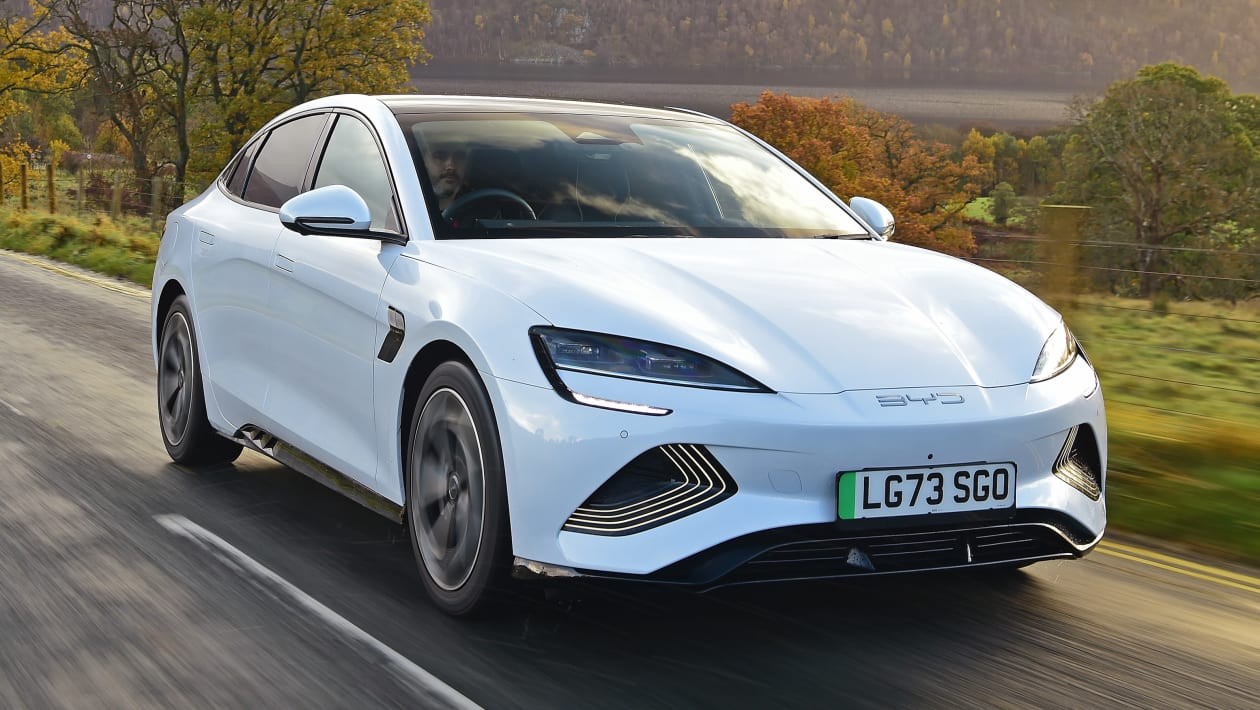
The BYD Seal represents a significant step forward for the Chinese automaker in the competitive UK electric vehicle (EV) landscape. Offering impressive range, efficiency, and performance, the Seal aims to challenge established players like Tesla, Audi, and BMW. However, its pricing strategy marks a departure from BYD’s previous value-focused approach, positioning it directly against premium EV offerings.
Зміст
Performance and Driving Experience
The BYD Seal delivers ample power, with the rear-wheel drive Design trim proving surprisingly capable. Acceleration from 0-62mph takes just 5.9 seconds, outpacing comparable models from BMW and Tesla. While the Seal offers a comfortable ride, it falls short of the engaging driving dynamics found in rivals like the BMW i4. The accelerator response could be sharper, and the transition between regenerative and mechanical braking feels less refined.
The Seal utilizes BYD’s e-Platform 3.0, adapted for a saloon body style. It’s the first BYD model sold in the UK to switch to rear-wheel drive, though a four-wheel drive Excellence variant is available for those prioritizing traction. Despite the performance potential, the throttle response lacks the immediacy expected in high-performance EVs, giving it a slight lag reminiscent of older turbocharged cars.
Range, Charging, and Efficiency
The Seal boasts a usable 82.5kWh battery, providing a claimed range of 354 miles in the rear-wheel drive model. However, real-world efficiency tests reveal it lags behind competitors like the Tesla Model 3, which achieves a greater range on a single charge. Charging speeds peak at 150kW, slower than some rivals capable of exceeding 200kW.
While residual values are strong, high insurance costs and slower charging speeds are drawbacks. The battery warranty – retaining 70% capacity for eight years or 125,000 miles – is competitive but doesn’t entirely offset these concerns.
Interior and Technology
The Seal’s interior strikes a balance between high-end technology and premium materials. Standard features like ventilated front seats and a panoramic glass roof enhance comfort. The central touchscreen is responsive but lacks physical controls for climate functions, which some drivers may find inconvenient. The optional rotating screen feels gimmicky, while the infotainment system’s menu layout isn’t intuitive on the move.
Exterior design is sleek and modern, with reasonably priced premium paint options available.
Pricing and Market Positioning
BYD has abandoned its previous strategy of undercutting rivals, pricing the Seal competitively with premium EVs. The base Design trim starts at £45,695, while the Excellence AWD reaches £48,695. Leasing options begin at £338 per month. While these prices reflect the Seal’s improved quality and features, they place it in a more scrutinizing market segment.
Conclusion
The BYD Seal is a compelling EV that delivers strong performance, range, and a well-appointed interior. It may not match the driving refinement of some competitors, but its competitive pricing and long warranty make it a worthwhile consideration for buyers seeking a premium electric saloon. However, its higher price point introduces closer scrutiny against rivals that offer superior driving dynamics, faster charging, and greater practicality.