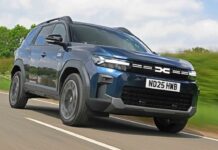
DS, the premium brand under Stellantis, is preparing to overhaul its smallest model – currently known as the DS 3 – with a strategy that aims to blur traditional automotive classifications. Instead of simply replacing the existing car, DS leadership suggests the next iteration will intentionally defy easy categorization, potentially “inventing” a new market segment.
Зміст
The Current DS 3: A Market Stabilizer
Launched in 2018, the DS 3 has been crucial for establishing the brand’s presence in Europe. Sharing a platform with vehicles like the Vauxhall Mokka, Jeep Avenger, and Peugeot 2008, it has become DS’s best-selling model, especially in the UK. This success highlights the demand for a premium small car, but DS believes the market is evolving beyond rigid segment definitions.
The “New Segmentation” Approach
DS boss Xavier Peugeot explicitly stated the company’s ambition to not just compete within existing segments but to create entirely new ones. This strategy is already evident in the DS N°8, a model described internally as a “D-Cross” – a car that blends saloon and SUV traits. Audrey Amar, DS product director, confirms this direction, noting that traditional distinctions like “B-hatch” or “C-SUV” are becoming less relevant.
“When you look at previous segments, it was very clear… Now it’s not that obvious any more.” – Audrey Amar, DS product director
This shift is driven by a desire to stand out in an increasingly crowded market and appeal to broader demographics. The N°4, with its SUV-inspired design yet compact footprint, is being positioned as the first step in this new segmentation strategy.
Technical Transition and Dual-Model Strategy
The next-generation DS 3, internally dubbed “N°3,” is expected to transition to Stellantis’s new STLA Small platform, designed primarily for electric vehicles. While Vauxhall plans an electric-only Corsa on this platform, DS may maintain a combustion engine option alongside the new EV model. This dual-strategy would allow the brand to cater to both price-sensitive buyers and those prioritizing zero-emission driving.
What This Means
DS’s move signals a broader trend within the automotive industry: the fragmentation of traditional segments as manufacturers seek to differentiate themselves. Instead of competing head-to-head in established categories, brands are now crafting niche offerings that blend elements from multiple segments. The DS 3’s successor may not fit neatly into any existing box, but that’s precisely the point.
The first details of the new model are expected within months, as the current DS 3 has been on sale for seven years and rivals like the Corsa and 208 are due for renewal in 2024.