


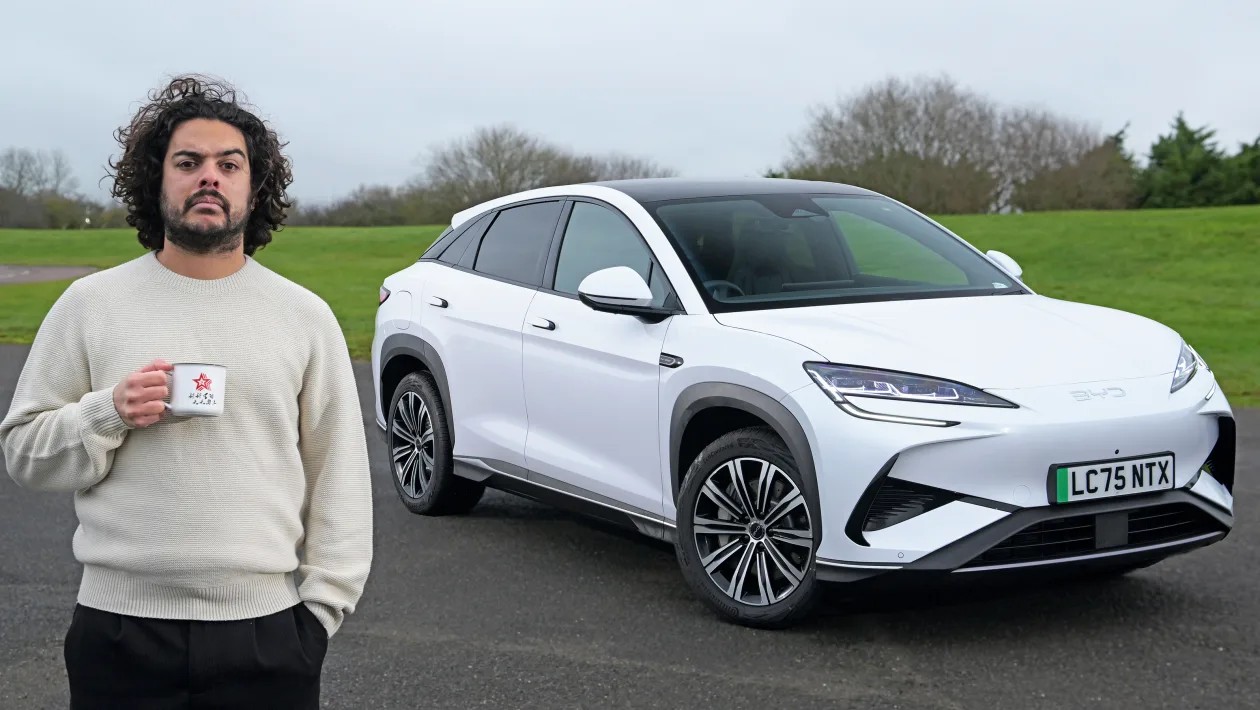
Chinese automotive brands are rapidly expanding their global footprint, aiming to challenge established players with competitive pricing and feature-rich vehicles. BYD, a leading Chinese manufacturer, is pushing into the electric SUV market with the Sealion 7, its largest all-electric model. This long-term test examines whether the Sealion 7 delivers on its promise of value and performance – or if it falls short of established rivals.
Зміст
Initial Impressions: A Product, Not Yet a Car?
Despite aggressive expansion, many Chinese-branded cars still feel engineered as a product rather than a car with soul. The Sealion 7 aims to break this perception, starting at £47,000 for the base Comfort trim, with our test vehicle adding £1,100 for optional white paint, bringing the total to £48,100.
The SUV is generously equipped, featuring a 15.4-inch touchscreen, panoramic roof, heated/cooled front seats, and a 12-speaker Dynaudio stereo. However, it lacks features common at this price point, such as adaptive headlights or massaging seats. The focus on equipment over refinement raises questions about whether BYD is prioritizing features over the overall driving experience.
Performance and Efficiency: Competitive, But Not Revolutionary
The Comfort trim utilizes a single rear-mounted motor producing 308bhp, powered by an 82.5kWh battery. BYD claims a 0-62mph time of 6.7 seconds and a range of 300 miles. The battery supports up to 150kW charging, potentially reaching 80% in around 32 minutes.
However, the Sealion 7 struggles to stand out. A Volkswagen ID.5 is £10,000 cheaper, offers similar performance, and provides an extra 45 miles of range. The flagship Ultimate model improves range and charging to 329 miles and 230kW, but at £59,000, it competes directly with BMW’s iX3, which offers 500 miles of range and 400kW peak charging.
Interior and Tech: Functional, But Not Intuitive
The Sealion 7’s interior prioritizes space over luxury. The high seating position and sloping roofline create a less airy environment, though the panoramic roof helps mitigate this. The touchscreen is responsive, but simple functions are buried in menus. The novelty of rotating the screen is impractical.
Initial efficiency tests show 2.9 miles per kWh, slightly below BYD’s claims, likely due to urban driving and cold weather. This is not a bad number, but it does not yet set a new benchmark for efficiency.
The Verdict: A Wait-and-See Approach
The BYD Sealion 7 is a bold attempt to disrupt the electric SUV market with an ambitious price tag and feature-rich package. However, it must prove its value by delivering a driving experience that matches its legacy-branded competitors. Only time will tell if the Sealion 7 can overcome the initial perception of being more product than car.
Rating: 3.5 stars
Model Tested: BYD Sealion 7 Comfort
On Fleet Since: December 2025
Price New: £47,000
Powertrain: 82.5kWh battery/1x e-motor
Power/Torque: 308bhp/380Nm
CO2/BiK: 0g/km/3%
Options: Premium paint (£1,100)
Mileage: 588 miles
Efficiency: 2.9mi/kWh
Any Problems: None so far


