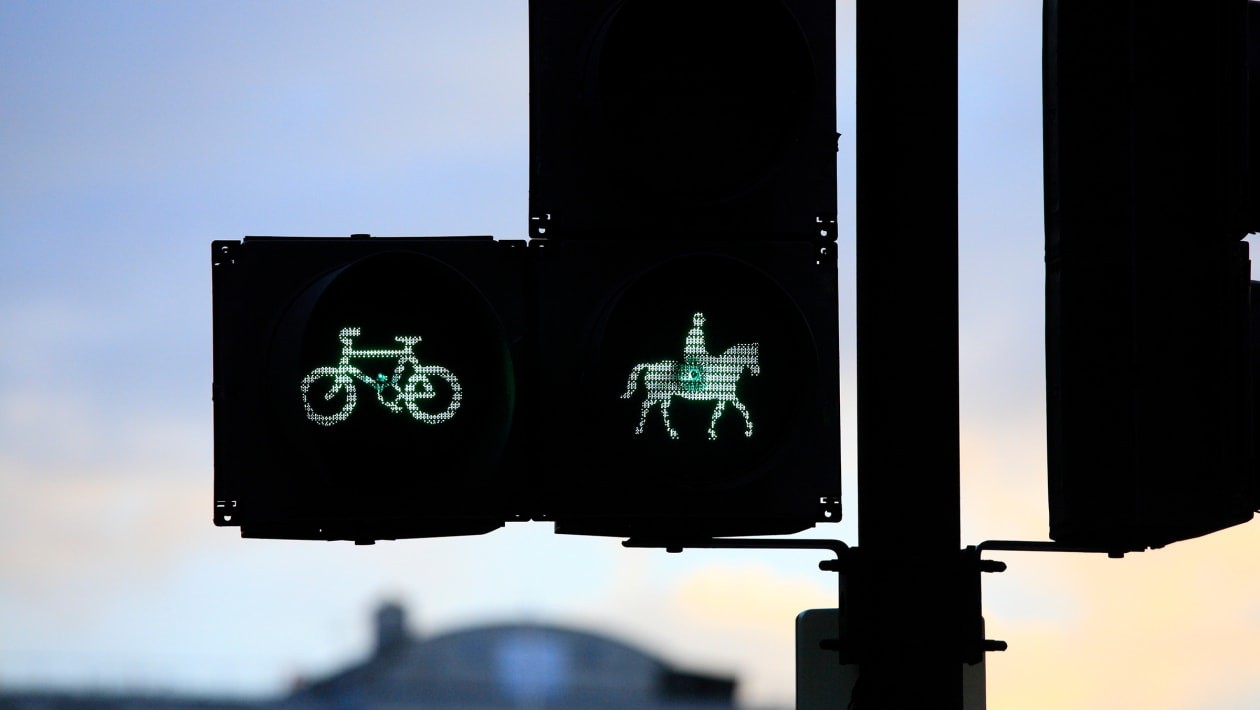
Pegasus crossings, also known as Equestrian crossings, are specialized pedestrian signals designed to accommodate horse riders crossing roadways. These crossings are typically located on bridleways – designated paths for horses – and in some cases, are paired with standard pedestrian or cyclist crossings for broader access.
How Pegasus Crossings Work 🚦
Like conventional pedestrian crossings (such as Toucans and Puffins), Pegasus crossings utilize sensors to detect waiting or crossing traffic. However, they are notably wider to provide ample space for horses. A key feature is the elevated button height, allowing riders to activate the crossing without dismounting.
The design addresses a unique safety need: horses are easily startled by loud noises. Therefore, drivers approaching Pegasus crossings should avoid revving engines or honking horns, even if the crossing signal permits movement. In some situations, turning off the engine completely may be the safest option to prevent spooking the horse and potentially injuring the rider.
Rules for Users 🐴🚗🚶
For Horse Riders:
Press the crossing demand button and verify all traffic has stopped before proceeding.
For Drivers:
Treat Pegasus crossings identically to other pedestrian crossings (Puffins, Toucans, and Pelicans), but anticipate the possibility of horses crossing. Maintain quiet operation: no honking and minimal engine noise.
For Pedestrians and Cyclists:
Follow standard crossing procedures while being mindful of horses and riders.
Pegasus crossings represent a growing recognition of equestrian traffic as a legitimate road user group. While still uncommon, their presence highlights the need for infrastructure that supports diverse transportation methods, ensuring safety for all road users.