


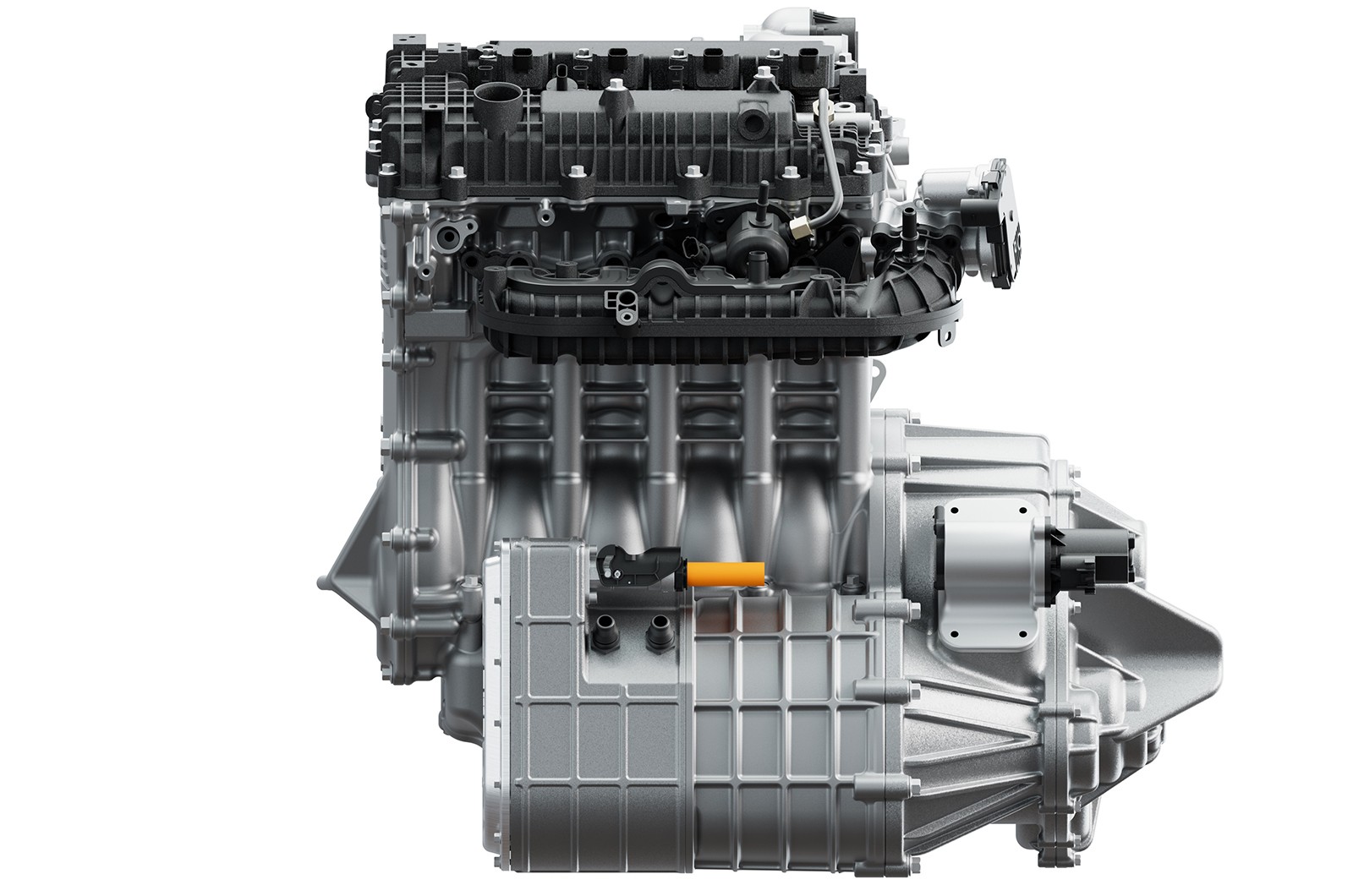
Horse Powertrain has unveiled a novel powertrain system designed to bridge the gap between pure electric vehicles (EVs) and hybrids, potentially offering a cost-effective route for manufacturers struggling with EV-only transitions. The company’s “Future Hybrid Powertrain” aims to convert existing EV platforms to hybrids with minimal re-engineering.
Зміст
The Core Concept: Retrofitting Hybrids
The core idea is simple: replace a front-mounted EV drive motor with a compact petrol-electric powertrain. This approach sidesteps the expensive process of designing entirely new hybrid platforms from scratch. Horse Powertrain offers two main variants:
- Performance (740mm wide): Features dual electric motors integrated with the engine and transmission.
- Ultra-Compact (650mm wide): A streamlined version with a single electric motor between the engine and transmission.
A three-cylinder variant, further reducing width by 70mm, is also under development. These units are part of the X-Range family, Horse Powertrain’s broader category for combustion and hybrid tech integration into existing EV architectures.
Key Technical Features
Both variants utilize a 1.5-liter four-cylinder engine paired with a hybrid transmission and a complete suite of power electronics. This includes a DC/DC converter, an onboard charger, and an 800V charging booster. The powertrain is designed for transverse mounting, ensuring compatibility with crash regulations, and can be adapted for either front-wheel drive or all-wheel drive configurations.
Manufacturers can use this system to create full hybrids, plug-in hybrids, or range-extended EVs. Critically, the packaging is designed to reduce front overhang by up to 150mm compared to conventional hybrid powertrains, minimizing structural changes. The units mount on existing EV subframes, reusing as many original parts as possible to streamline production.
Fuel Flexibility and Infrastructure Considerations
Horse Powertrain’s engines are designed to run on various fuels, including petrol, E85 ethanol, M100 methanol, and synthetic fuels. This flexibility could be particularly valuable in regions with diverse fuel standards.
However, a key challenge remains: retrofitting EVs requires accommodating fuel tanks. Horse Powertrain notes that space freed up by replacing larger EV batteries with smaller HEV or PHEV batteries can be used for fuel storage. The existing HVAC systems can be retained, as the compact hybrid unit allows for their integration.
What This Means
Horse Powertrain’s approach could provide a much-needed solution for automakers facing consumer resistance to pure EVs or regulatory hurdles. By offering an easily integrated hybrid option, manufacturers can retain existing EV platforms while meeting emissions standards or consumer demand for flexible powertrains.
The commercial rollout is expected in early 2026, with more detailed performance and compatibility data emerging as testing progresses. This development could reshape the short-term trajectory of EV platform utilization, delaying full EV transitions in some markets.


