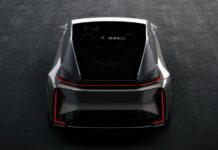
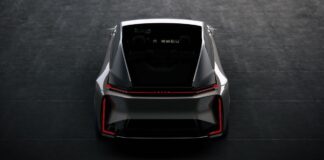
Hyundai’s upcoming Santa Fe refresh, anticipated in showrooms by 2027, is shedding its polarizing styling in favor of a more conventional design, as evidenced by recent spy photos. The changes signal a broader shift in Hyundai’s exterior design language, aiming for greater consistency across its vehicle lineup while preserving individual model identities.
Revised Exterior Styling
The next Santa Fe will move away from the current model’s boxy silhouette and distinctive, low-set tail lights. Spy shots reveal narrower headlights, a simplified front grille, and a more traditional vertical brake light arrangement connected by a horizontal light bar. While retaining the sharp window lines of the fifth-generation Santa Fe (introduced in 2024), the updated design draws inspiration from the “Art of Steel” aesthetic first seen on the Nexo hydrogen fuel-cell SUV.
This design direction will also influence other Hyundai models, including the upcoming Kona SUV (expected in 2028), as the automaker seeks to align its vehicles’ exteriors more closely.
Tech and Powertrain Updates
Inside, the Santa Fe facelift will feature a larger center screen, indicating an upgrade to Hyundai’s next-generation “Pleos” operating system. Developed in 2025, Pleos—an Android Automotive-based platform—is slated for rollout across 20 million Hyundai and Genesis vehicles by 2030. It is expected to debut first in the i30 and Tucson alongside the updated Santa Fe.
The powertrain options are expected to remain largely unchanged, with the current 1.6-liter turbocharged hybrid and 2.5-liter turbocharged engines continuing. There’s a potential for an extended-range electric vehicle (EREV) variant, though its availability in Australia remains unconfirmed.
Despite customer complaints in some markets regarding the eight-speed dual-clutch transmission, Hyundai Australia has no current plans to replace it in local models.
Wider Hyundai Lineup Changes
Beyond the Santa Fe, Hyundai’s larger Palisade SUV will also receive lineup expansions in Australia during the second half of 2026, including new entry-level and range-topping model grades. These updates underscore Hyundai’s commitment to refining its offerings and aligning them with evolving consumer preferences.
The shift toward a more unified design language across Hyundai’s lineup indicates a strategic move to strengthen brand recognition while ensuring each model retains its unique character. The inclusion of the Pleos operating system further positions Hyundai at the forefront of in-vehicle technology integration.