


Key Takeaway: Nearly 20% of all new cars sold in Europe last month were fully electric, surpassing combined sales of plug-in hybrids and diesel vehicles. This trend suggests that even without a full combustion engine ban, the shift to EVs is accelerating rapidly.
Зміст
EV Adoption Surges Across Europe
Data from the European Automobile Manufacturers’ Association (ACEA) reveals that electric vehicles (EVs) captured a 19.7% market share in January 2026. This includes all 27 EU member states, the UK, Iceland, Liechtenstein, Norway, and Switzerland – representing the vast majority of European car sales.
- Growth Trend: EV share has risen from 16.7% in January 2025, indicating consistent growth as lower-cost models enter the market, such as the Renault Twingo and upcoming Volkswagen ID.2 Polo.
- Competition Intensifies: The pace of EV adoption means automakers may not need to rely heavily on combustion engines even after 2035, when the EU allows them to continue selling ICE-powered vehicles.
Combustion Engine Decline Accelerates
The shift to EVs is directly impacting traditional fuel types.
- Diesel’s Fall: Diesel sales continue to shrink, now accounting for just 7.2% of total sales.
- Hybrid Dominance: Hybrid vehicles remain popular, with a 38.5% share, while gasoline cars decline to 22.5%.
- PHEV Lagging: Plug-in hybrids (PHEVs) hold a 10.4% share, trailing behind pure EVs.
Volkswagen Leads the EV Market
Preliminary data from market researcher Dataforce shows Volkswagen remains the dominant EV seller in Europe.
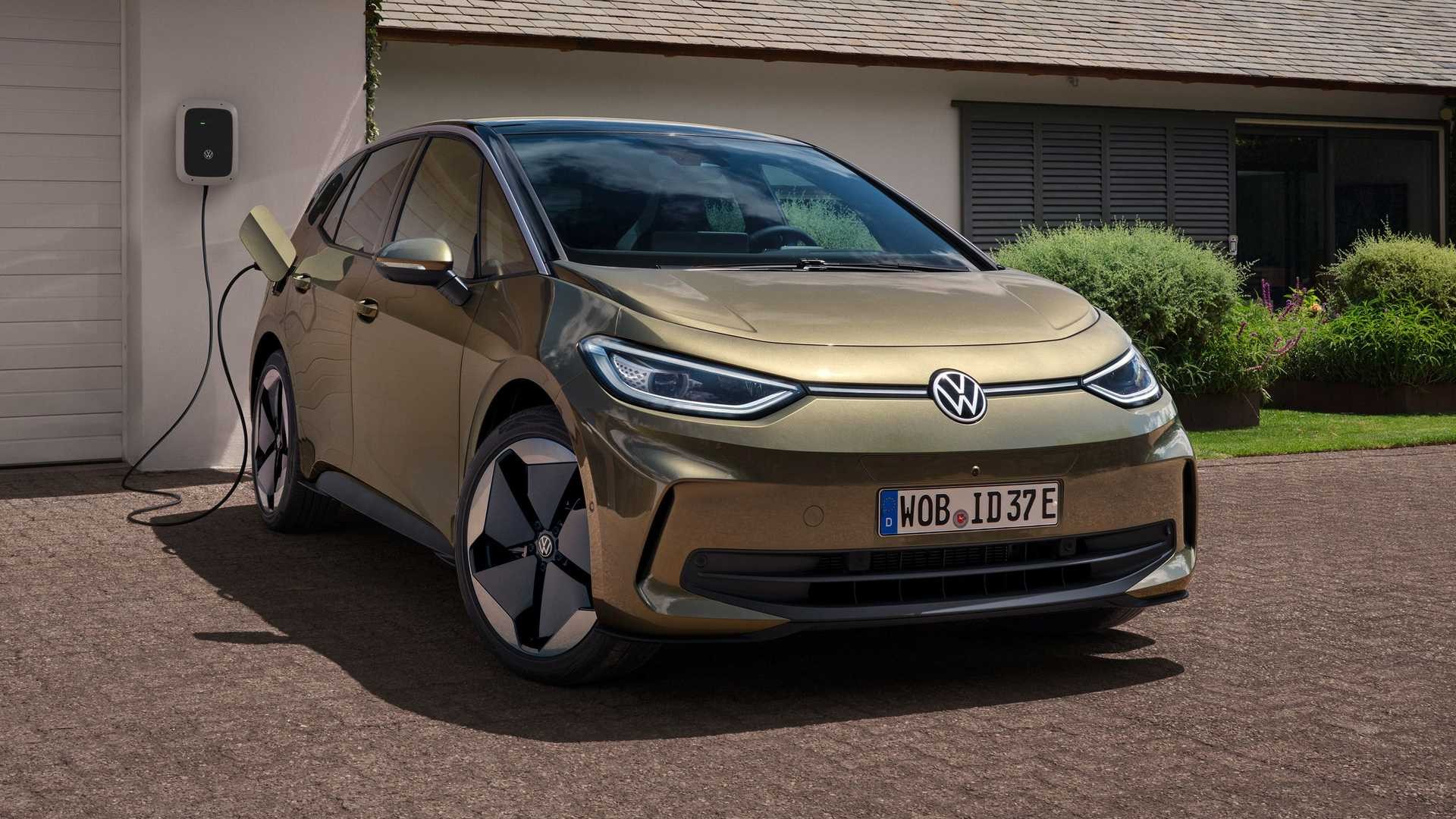
- Volkswagen’s Lead: The German automaker registered 17,230 EV sales in January, with the ID.3 leading at 5,417 units, followed closely by the ID.4 and ID.7.
- Renault and Skoda Follow: Renault secured second place with 14,447 units (primarily from the 5 E-Tech), while Skoda rounded out the top three with 14,022 units, driven by the Elroq crossover.
Regulatory Pressure and Future Outlook
The EU’s emissions regulations and the approaching Euro 7 standards are pushing automakers to reduce CO2 levels.
- Emissions Targets: Automakers face a 55% fleet emissions reduction by 2030, escalating to 90% by 2035, compared to 2021 levels.
- Incentives and Affordability: Government incentives and the introduction of cheaper EVs, such as the planned Volkswagen ID.1 in 2027, will likely accelerate the transition.
Conclusion: Europe is rapidly moving toward an all-electric future, driven by both regulatory pressure and increasing consumer demand. While combustion engines still dominate at 80% of sales, the accelerating EV trend suggests that the automotive landscape will continue to transform dramatically in the coming years.


