


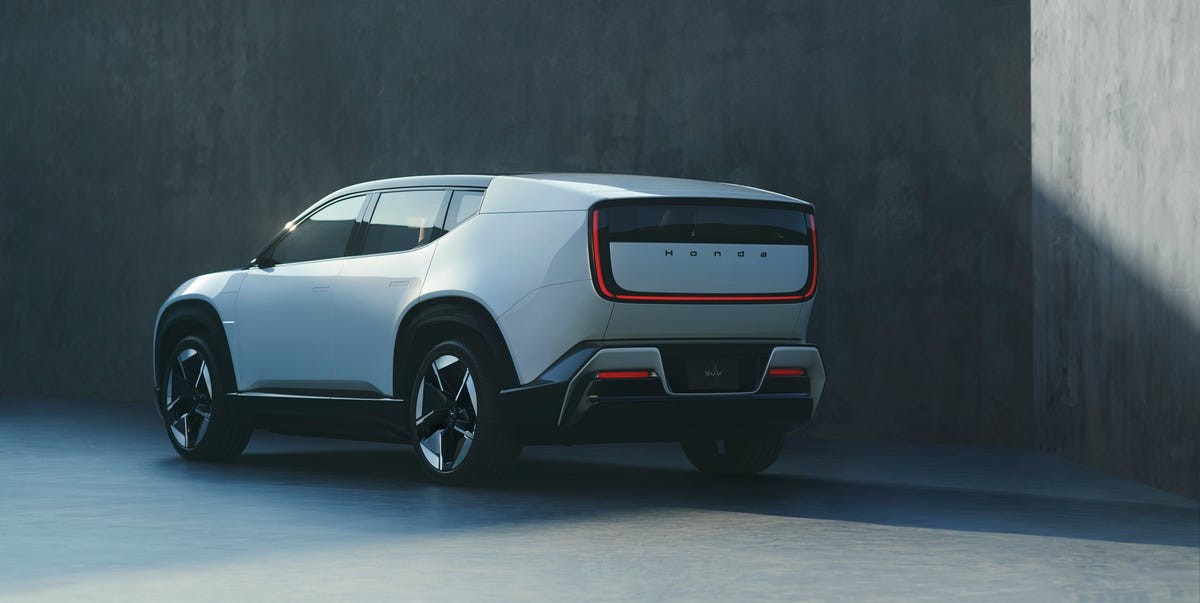
Honda has abruptly canceled plans to manufacture three electric vehicles – the 0-Series SUV, 0-Series Saloon, and Acura RSX – in the United States. The decision, announced by the automaker, stems from a confluence of factors: unstable US trade policies, fluctuating EV incentives, and a rapidly evolving automotive market dominated by aggressive Chinese competitors. The move will result in significant financial losses for Honda, with projected impacts reaching up to $15.8 billion.
Зміст
The Policy Barrier
The core reason for the reversal is simple: economic uncertainty. Honda explicitly criticized American tariff policies and the inconsistent nature of EV subsidies, making it impossible to forecast long-term profitability. The US landscape is shifting too quickly for the company to reliably invest billions in production without guarantees.
China’s Rise and Consumer Shift
Beyond US policy, Honda acknowledged a critical shift in consumer preferences, particularly in China. The world’s largest automotive market now prioritizes software features and connectivity over traditional metrics like fuel efficiency or interior space. This trend is being spearheaded by Chinese EV manufacturers who are outcompeting established brands like Honda in value-for-money offerings.
Impact and Executive Accountability
The cancellation impacts Honda’s Ohio manufacturing facility, which underwent extensive retooling in preparation for EV production. Rather than proceed with the launch, Honda will focus on restructuring to reduce fixed costs and reassess its long-term EV strategy. To demonstrate accountability, top executives are voluntarily reducing their salaries by up to 30% for three months.
Future Strategy
Honda is scheduled to unveil its revised mid-to-long-term strategy in May. The company’s decision underscores the challenges faced by legacy automakers in adapting to the fast-paced EV landscape. The move is a clear signal that market volatility and shifting consumer demands are forcing major adjustments, even at the expense of previously committed investments.
The situation raises questions about the stability of the EV transition in the US, as well as whether other automakers will follow suit in scaling back their domestic EV commitments.


