


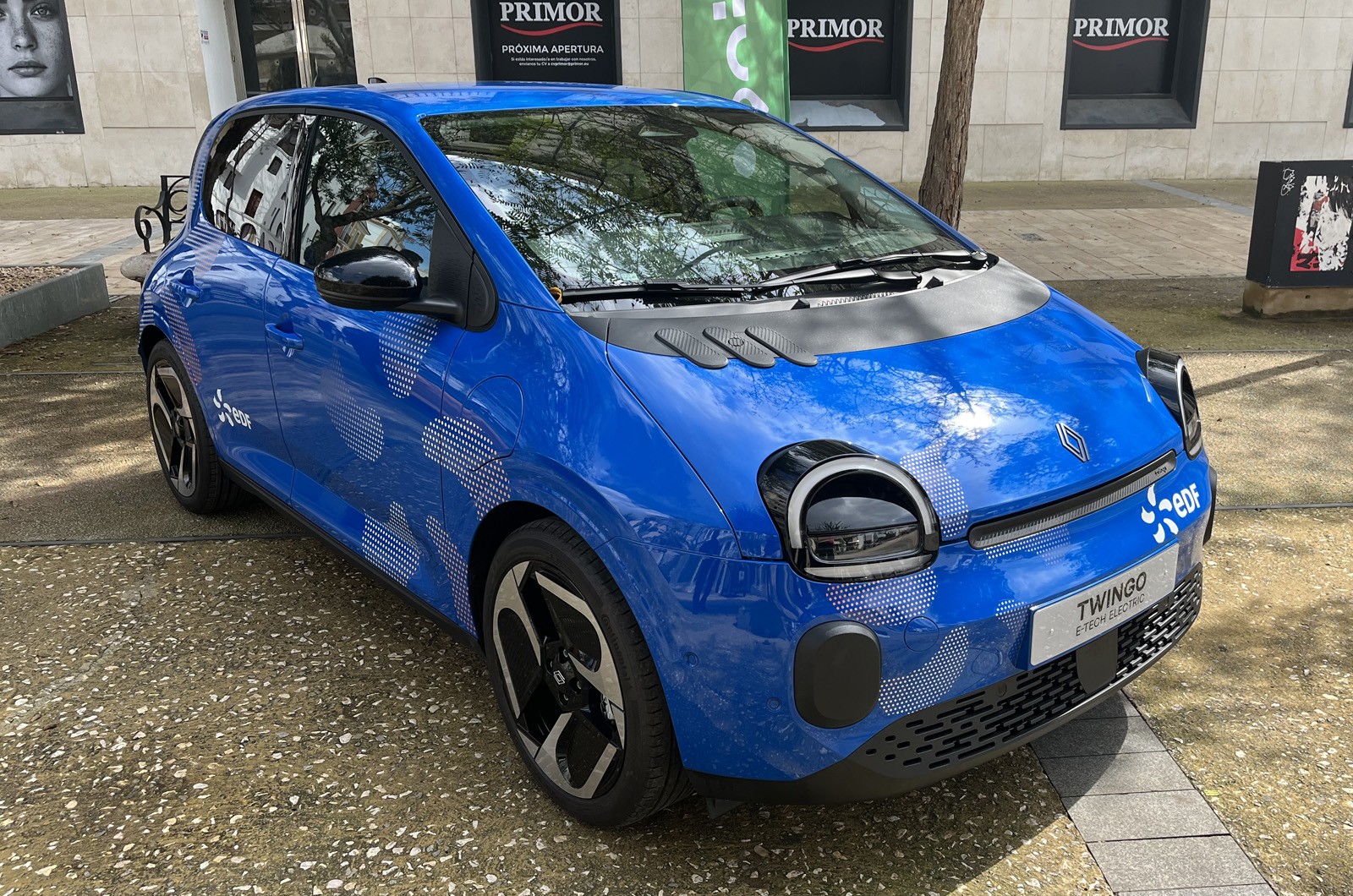
Renault has unveiled a new commercial variant of the Twingo electric hatchback, adapted into a small van for French energy provider EDF. This conversion significantly expands the vehicle’s cargo capacity to 797 liters, more than double the standard Twingo’s 360-liter maximum.
Enhanced Cargo Capacity and Reversibility
The key modification involves the complete removal of the rear seats, replaced by a secure metal cage with protective covers. A mesh bulkhead separates the cargo area from the driver and passenger compartment, ensuring both security and compliance with commercial vehicle standards. Notably, this conversion is fully reversible, allowing vehicles to be easily returned to standard hatchback configuration after their service period, preserving resale value.
Distinctive Fleet Branding
Visually, the van variant stands out with black headlight surrounds and bold blue paintwork aligned with EDF’s corporate branding. Rear windows are heavily tinted to obscure the contents of the cargo bay. While currently presented as a concept, the simplicity of the conversion suggests potential for future commercial availability.
Historical Precedent and Market Outlook
Renault has previously offered similar conversions with the first-generation Twingo in the 1990s. This latest model follows a pattern of other automakers adapting compact city cars into vans; Ford commissioned cargo versions of the original Ka, and Fiat has historically offered Panda van variants.
However, Renault has indicated that a production version of this Twingo van is unlikely to be sold in the UK market. Despite this, the concept demonstrates a growing trend of repurposing small electric vehicles for commercial applications, driven by the need for agile and efficient last-mile delivery solutions.
This conversion highlights the versatility of small electric vehicles and their adaptability to evolving logistical demands. While not yet available widely, the Twingo van serves as a proof-of-concept for compact, urban freight solutions.


