


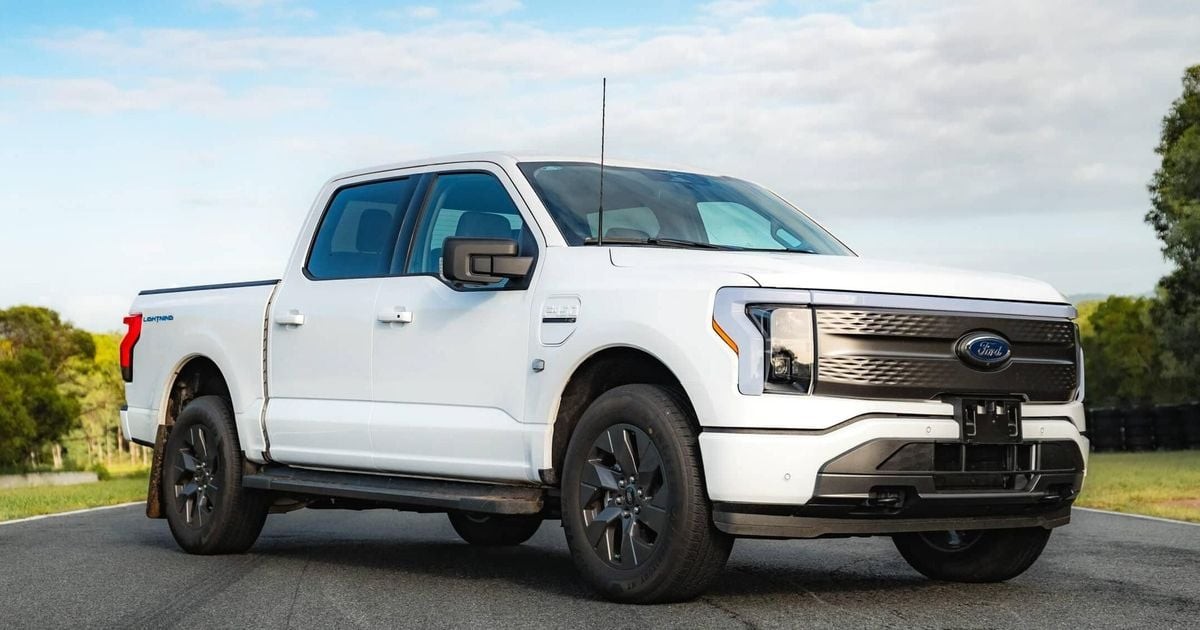
A nationwide safety recall has been issued for 146 right-hand drive Ford F-150 Lightning pickups converted by Australian company AUSEV. The issue centers on a potential overheating fault in the Combined Charging System (CCS2) port during DC fast charging, which could cause burns or serious injury if touched immediately after use. Owners are advised to avoid DC fast charging and use AC charging instead.
The recall is complicated by AUSEV’s recent collapse into receivership. The company, which imported and converted US-made electric Ford F-150 Lightnings for the Australian market, is now defunct, leaving vehicle owners without a clear path to repair. The AUSEV website is offline, email inquiries bounce back, and phone calls go directly to voicemail.
The original recall notice states that owners should have been contacted for free repairs at an AUSEV dealership, but with the company dissolved, this is now impossible.
AUSEV’s parent company, BossCap, confirmed its receivership on March 17, 2026, citing Ford’s decision to discontinue the electric F-150 Lightning in December 2025. This move, according to BossCap, “significantly disrupted the company’s forward pipeline” after AUSEV had already stopped converting combustion vehicles in 2024.
The situation highlights a gap in the Australian market: while Ford and Ram offer factory-backed right-hand drive remanufacturing for combustion pickups, no such official process exists for electric models like the Lightning. This previously created an opportunity for firms like AUSEV, but the market remains limited. Currently, the largest electric utes available in Australia are the LDV eT60 and KGM Musso EV.
The recall’s effectiveness now hinges on whether another entity will step in to fulfill the repair obligations, or if owners will be left with potentially unsafe vehicles.
The affected Vehicle Identification Numbers (VINs) are available for review, as is the full recall notice. The failure of AUSEV underscores the risks of relying on third-party conversions, particularly in a rapidly evolving automotive landscape where manufacturer decisions can quickly render such businesses unsustainable.


