The race for electric vehicle (EV) supremacy has shifted from 0–60 mph acceleration to a different metric: how fast can you get back on the road? In this high-stakes competition, China’s Geely has announced a breakthrough that technically outstrips even the recent performance claims made by BYD.
Зміст
The New Benchmark: Geely’s “Golden Brick”
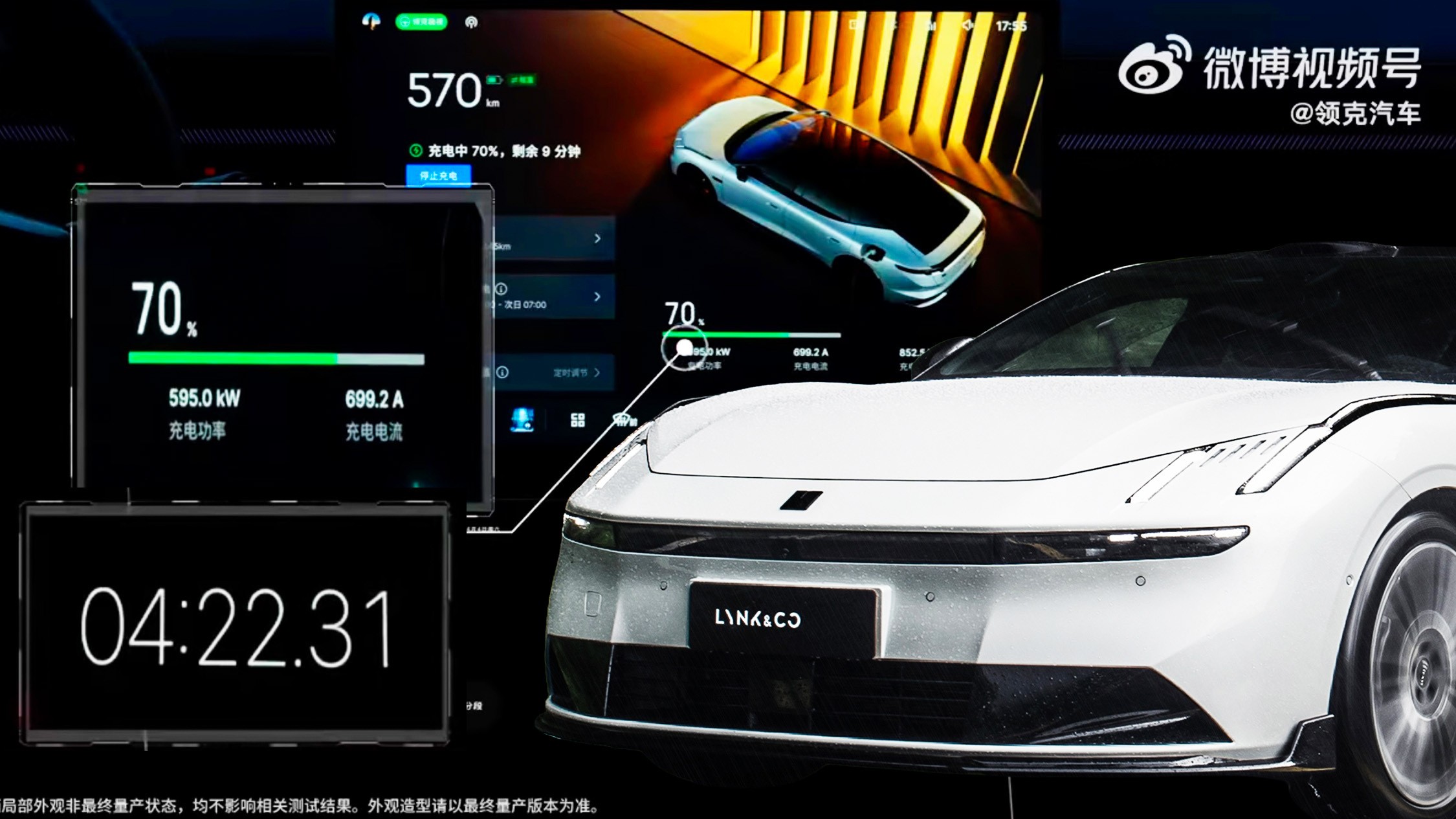
Geely’s Lynk & Co brand has unveiled its 900V Energee Golden Brick, a 95 kWh battery designed for extreme rapid charging. The technical specifications suggest a level of performance that challenges the current industry leaders:
- 10% to 70% charge: Completed in just 4 minutes and 22 seconds.
- 10% to 80% charge: Completed in 5 minutes and 32 seconds.
- 10% to 97% charge: Completed in 8 minutes and 42 seconds.
To put these numbers in perspective, BYD’s recent “megawatt flash charging” technology requires 5 minutes to reach a 70% charge and 9 minutes to reach 97%. While the margin is slim, Geely has officially taken the lead in raw charging velocity.
The Technical Edge
The “secret sauce” behind this speed is a combination of a high-voltage architecture and massive power throughput. The Golden Brick system can handle a peak power of approximately 1,100 kW. Even as the battery nears capacity—a stage where charging typically slows down significantly—it maintains a high input of 350 kW at a 97% charge level. This is higher than the peak rates found in almost all Western EVs currently on the market.
The Infrastructure Gap: A Critical Bottleneck
While the battery technology is impressive, a significant practical problem remains: you cannot use these speeds if you cannot find a plug that supports them.
Extreme charging speeds require specialized, high-output hardware. This creates a massive divide between theoretical capability and real-world usability:
1. Hardware Requirements: To hit these speeds, drivers need next-generation megawatt chargers, not standard fast chargers.
2. Network Disparity: Currently, Geely’s high-speed charging network is significantly smaller than BYD’s. Reports suggest Geely’s infrastructure is roughly one-quarter the size of BYD’s rollout.
In short, Geely has built a faster engine, but BYD is building more gas stations.
The Industry Debate: Speed vs. Stability
Not all manufacturers believe that faster charging is the ultimate goal. BMW has emerged as a vocal skeptic of the “speed at all costs” approach.
Markus Fallböhmer, BMW’s head of battery production, has warned that optimizing for a single metric often comes with hidden costs. The industry’s central question is whether pushing for ultra-fast charging will lead to:
* Reduced battery longevity (faster degradation due to heat).
* Higher manufacturing costs (more expensive cooling and voltage systems).
* Diminishing returns in daily driver convenience.
“It is possible to optimize one single performance indicator, but you have to make compromises on other sides,” says Fallböhmer.
Conclusion
Geely has successfully pushed the boundaries of battery physics, proving that near-instant charging is possible. However, until the charging infrastructure catches up to the technology, these lightning-fast speeds will remain a laboratory feat rather than a daily reality for most drivers.