While much of the global conversation around automotive emissions focuses on tailpipe pollutants, a different, more pervasive kind of pollution is moving into the spotlight: tyre and road wear particles.
As the industry transitions toward electric vehicles (EVs), the focus is shifting from what comes out of the exhaust to what is left behind on the asphalt.
Зміст
The Growing Challenge of Particulate Matter
Tyre wear is a dual problem. From a consumer perspective, high wear rates represent poor value for money. From an environmental perspective, the friction between a tyre’s contact patch and the road surface generates microscopic particulates that enter the air and water systems.
This isn’t just about the rubber itself; as tyres wear down, they also contribute to the degradation of the road surface, creating a complex cocktail of debris. According to industry experts at Continental and the European Tyre and Rim Technical Organisation (ETRTO), several factors dictate the rate of this wear, ranked from least to most influential:
- Weather conditions
- Temperature
- Tyre design
- Vehicle type
- Road surface quality
- Route topology (the “shape” of the journey)
- Driving behavior (the most significant factor)
Regulatory Pressure: The Euro 7 Catalyst
The urgency to solve this problem is driven by upcoming legislation. The Euro 7 emissions regulations are expected to introduce strict limits on tyre wear emissions within the EU starting in 2028.
This regulatory shift means that manufacturers can no longer focus solely on engine efficiency; they must now engineer tyres that minimize particulate shedding without compromising the vehicle’s most critical function: safety through grip.
Technological Breakthroughs in Measurement
To meet these new standards, industry leaders like Michelin and Continental are developing sophisticated ways to “see” and measure these invisible particles. Traditional methods struggle to distinguish between different sources of pollution, but new technologies are changing that.
Advanced Detection Systems
Recent innovations involve specialized hardware designed to capture data at the “point of origin”:
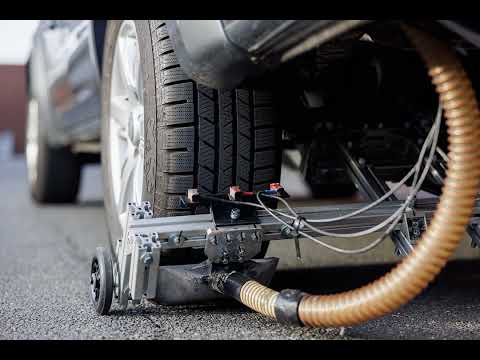
– Vacuum-based Collection: New systems use vacuum devices mounted directly behind driven wheels at road level to physically suck up particles as they are shed.
– Source Differentiation: Using advanced sensors, these systems can now distinguish whether airborne particles originated from the tyres, the brakes, or the road surface itself.
– The OLRAP Project: Continental recently completed a project titled ‘Online analysis of airborne tyre wear particles at the point of origin and differentiation from other sources’ (OLRAP) to better understand these dynamics.
Precision Data and Tyre Design
New “multisampler” devices allow researchers to categorize particles based on specific driving actions. For example, engineers can now differentiate between particles released during a straight-line cruise versus those released during heavy cornering.
By correlating particle size, quantity, and structure with speed profiles and lateral acceleration, manufacturers can feed high-precision data back into their R&D departments. This allows for the optimization of tyre compounds and designs to reduce wear specifically during high-stress driving maneuvers.
The Safety Paradox
The central challenge for engineers is a fundamental physical paradox: Grip requires friction, and friction causes wear.
A tyre’s primary responsibility is to transfer vehicle forces to the road to ensure control and braking. Reducing wear too aggressively could inadvertently reduce grip, compromising passenger safety. The goal for the next generation of automotive engineering is to find the “sweet spot”—minimizing environmental impact through smarter chemistry and design while maintaining the uncompromising friction levels required for safe driving.
Conclusion
As regulatory frameworks like Euro 7 approach, the battle for cleaner air is moving from the tailpipe to the tarmac. The industry’s success will depend on its ability to balance the physical necessity of friction with the environmental necessity of reduced particulate emissions.