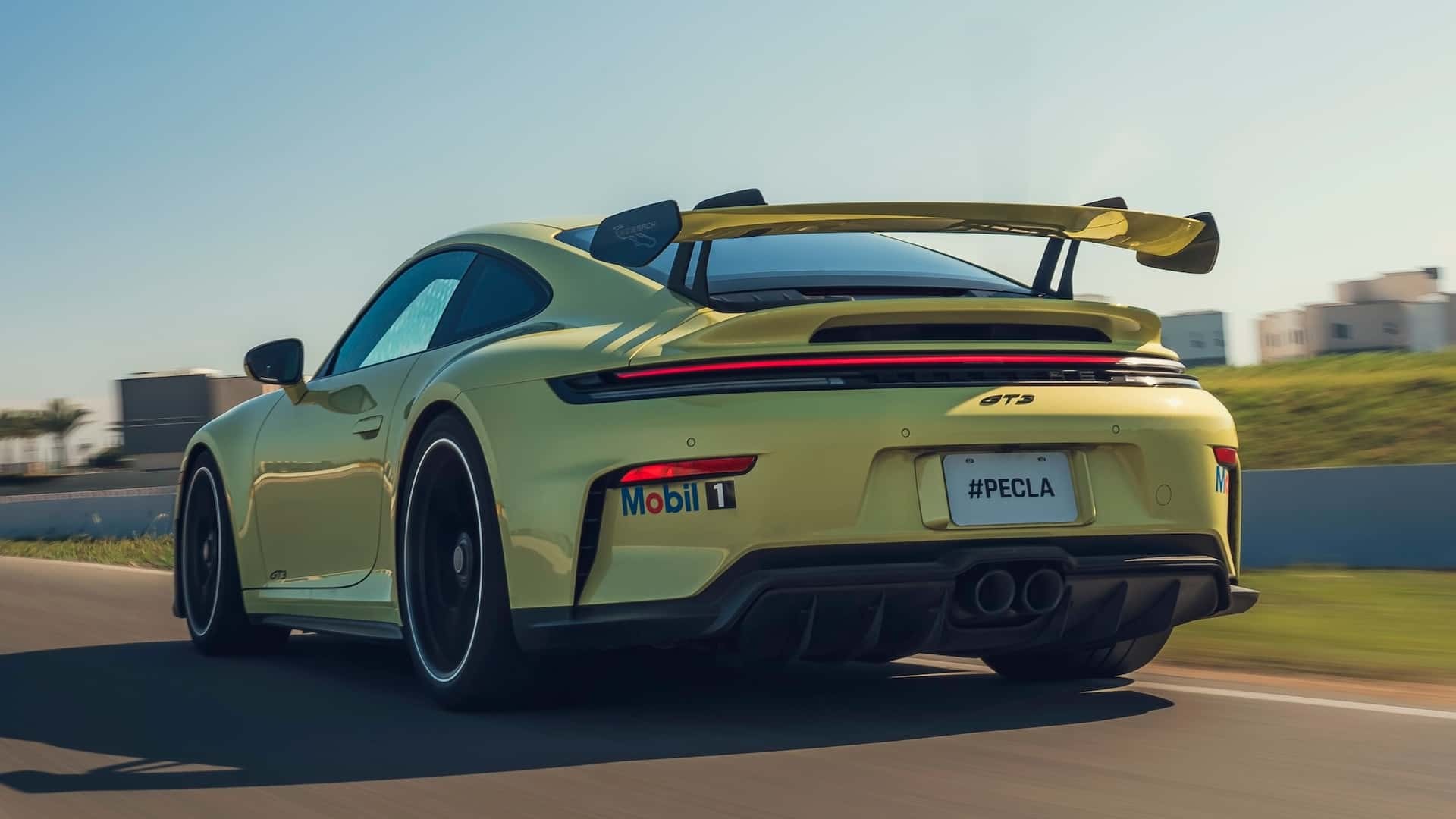
For decades, the soul of the Porsche 911 GT3 has been defined by its naturally aspirated (NA) flat-six engine. The instant throttle response and visceral sound of an engine without a turbocharger have made it a holy grail for driving purists. However, recent insights from Porsche suggest that this era is nearing its twilight.
Зміст
A Regulatory Collision Course
The primary driver behind this potential shift isn’t a lack of desire for performance, but rather the tightening grip of environmental legislation. In Europe, the transition away from naturally aspirated engines is being forced by aggressive CO2 reduction targets set by the EU.
The timeline for these changes is aggressive:
– By 2030: Automakers must reduce fleet emissions by 55% compared to 2021 levels.
– By 2035: That target rises to a massive 90% reduction.
These mandates make it increasingly difficult and expensive to produce high-performance, high-emission engines. Forced induction (turbocharging) offers a way to extract massive power while maintaining better efficiency and lower emissions, making it the logical, albeit controversial, choice for manufacturers facing these penalties.
The Regional Divide: Europe vs. America
Andreas Preuninger, head of Porsche’s GT department, has signaled that the future of the GT3 is uncertain. When asked directly if the model might adopt a turbocharger, his response was telling: “It might be.”
Currently, a geographical split is emerging:
– In Europe: The current 4.0-liter NA engine is “living on borrowed time” and likely only has a few years of viability left due to strict local laws.
– In the United States: More lenient emissions regulations mean the current engine can remain in production for “quite some time.”
However, this regional divergence presents a massive logistical challenge. Developing two different versions of a flagship performance car—one turbocharged for Europe and one naturally aspirated for America—would require astronomical R&D investments that even a company like Porsche might find difficult to justify.
Porsche’s Stretched Resources
The decision to turbocharge the GT3 is further complicated by Porsche’s current financial and engineering commitments. The company is currently juggling several high-stakes projects that are stretching its budget and manpower:
1. The 718 Revival: Developing six-cylinder versions of the Boxster and Cayman despite the initial push for EVs.
2. New ICE Models: Developing a combustion-engine successor to the original Macan.
3. New Flagships: Managing the rollout of a new three-row flagship SUV.
With so many internal combustion engine (ICE) projects on the horizon, Porsche must prioritize where its engineering talent is deployed.
The Long-Term Outlook
While the 911 is facing significant pressure, it remains a cornerstone of Porsche’s identity. The company has indicated that the 911 will likely be the last of their models to rely solely on combustion engines; while hybrids are entering the fold, a fully electric 911 is not expected this decade. Other models, like the Panamera and Cayenne, are expected to retain ICE power well into the next decade.
The 911 will likely outlive the rest of the lineup, but it will have to evolve—and potentially sacrifice its naturally aspirated roots—to survive the regulatory landscape of the 2030s.
Conclusion
The potential move toward turbocharging for the 911 GT3 represents a fundamental shift where environmental necessity meets automotive tradition. While it may satisfy regulators, it poses a significant question for enthusiasts: can a GT3 truly retain its identity without the pure, unadulterated scream of a naturally aspirated engine?