Renault’s Emblème concept car is more than just a stylish showroom. This is a declaration of intent. The French automaker claims this car represents the future of zero-emission travel, but it achieves that goal with technical compromise that many purists might really appreciate.
The powertrain combines an electric motor and the hydrogen fuel cell. This configuration offers a specific advantage. it sidesteps the range anxiety that plagues pure battery electric vehicles (BEVs). the Emblème offers a viable option for drivers who refuse to switch to full electrification due to limited battery range. This enables long-distance travel without hours-long charging stops, bridging the gap between traditional refueling habits and reducing carbon dioxide emissions.
Зміст
Radical carbon dioxide removal starts from zero
Aggressive carbon removal is the core of Renault Emblème. This is not retrofitted to a traditional platform. This is built into the entire process from the first draft to the final scrapyard. The goals are concrete. It’s even brutal. The goal of the vehicle is to limit its entire life cycle carbon footprint to 5 tons of CO2e.
Compare this to today’s standard electric cars of the same size. You aim to reduce emissions by 90%. This is no small improvement. This is a fundamental rethinking of the cost of cars to the planet.
To achieve this, Renault must innovate everywhere. It moves away from the virgin materials. The program is heavily based on low-carbon recycled parts. The factories? Powered entirely with renewable energy. There is no gray power here. The design itself prioritizes circularity. Parts can be reused, reused and recycled. This is a “second life” strategy for all bolts and panels.
Inspired by the “Human First Vision” concept (reflecting the silhouette of the new Scenic E-Tech), the Emblème takes this logic one step further. We are exploring all possible ways to reduce our ecological shadow.
How a dual energy hydrogen powered electric car works
Modern travel requires more than alleviating distance anxiety. You need flexibility. Emblème responds with a new bi-energy powertrain. This configuration combines two different technologies into one unified system.
At its core is a 40 kWh battery. This is a modest capacity, about the same size as the second generation Renault Zoe battery. Not designed for cross-country hauls. Designed for the daily commute. Use all-electric power for short distances. Zero emissions. instantaneous torque.
However, when the range dips, the system changes the strategy. Hydrogen fuel cells take on this role. This hybrid setup offers the best of both worlds. Get the efficiency and refinement of an electric car for local driving. By refueling with hydrogen, you can expand your cruising range and travel long distances. This is a practical solution to the infrastructure gap. Not all areas have dense charging networks. The number of hydrogen filling stations is few, but growing. This dual energy approach fills this gap.
The Emblème combines a small 40 kWh battery for everyday use with a hydrogen fuel cell to achieve an extended range, offering the efficiency of an electric vehicle and the flexibility of hydrogen.
This configuration is more than just a specification. It’s about real usability. As batteries get smaller, they rely less on key minerals like lithium and cobalt. Reduce the initial carbon debt during manufacturing. Fuel cells could take the burden of long-distance travel. This reduces the need for large, resource-intensive batteries. This is a balanced approach to the future with limited resources.
Questions remain. Can this dual energy model be scaled, or is it still a niche experiment? The answer lies in how quickly the hydrogen infrastructure can catch up with the technology. For now, the Emblème is just a proof of concept. A radical step towards a truly low-carbon car industry.
Range and refueling: daily compromises
Mathematics is very practical. Equipped with a 40 kWh battery, it’s ready for your daily commute to work, school and grocery shopping. This is the electric backbone. you plug it in at home at night. No need to make a fuss. But what if you need a weekend getaway? The hydrogen fuel cell kicks in, pulling from the 2.8 kg hydrogen tank.
This setting increases the range before you’re hunting for a station to 350 km (about 217 miles). What about the refueling process? It’s shockingly familiar. It’s 5 minutes. that’s it. You pump, you go. It mimics the comfort of a traditional gas engine, which is the essence of this whole architecture. This is not the first time Renault has used this technology. A few weeks ago, the company launched the Renault Master vehicle with similar specifications. But the car? This is new.
Engine and chassis
Things get technical under the metal. The electric motor is a 160 kW (220 hp) wound-rotor. Attention to detail: Contains no rare earth materials. Does not contain cobalt. Does not contain neodymium. This is an advantage for the supply chain and can also lead to cost savings.
Located on the AmpR Medium platform. Why is this important? Because the platform is optimized for mass distribution. Low center of gravity. The weight is balanced. It’s not just about looks. It’s all about how the car hugs the curve. You can feel it in the chassis. Reduces body roll. It is more stable.
Design language: Form follows efficiency
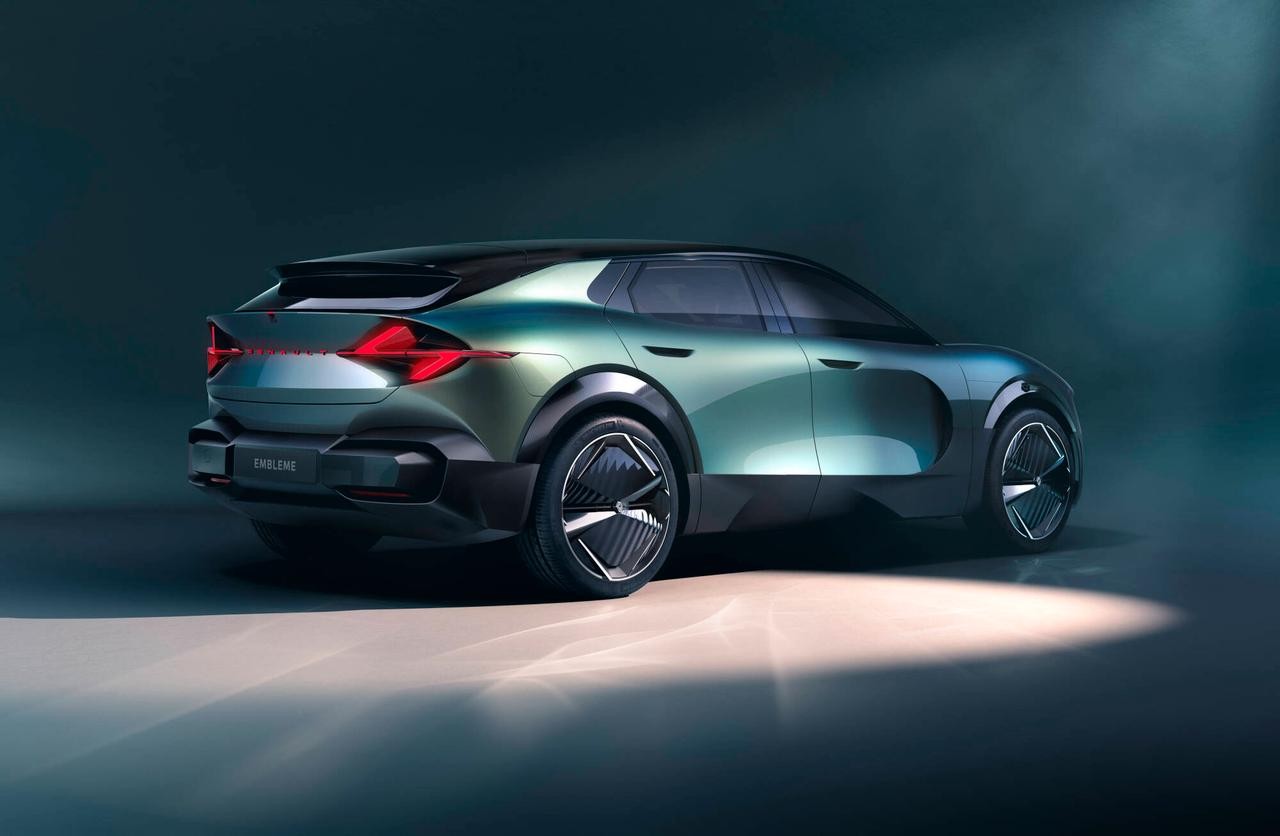
Renault Emblème does not hide its purpose. This is the Shooting Brake, a term that usually refers to a rugged wagon, but here it’s sleeker, more elegant. The design language prioritizes aerodynamic efficiency.
The line is tight. Curves are certainly seductive, but they also cut through the air. The total length is 4.80 meters. Although the footprint is large, it doesn’t feel heavy. It has a smooth silhouette from nose to back, with sharp breaks. Inside? The spaciousness matches the exterior. The legroom is spacious. Plenty of luggage space. A family hauler that doesn’t sacrifice style for practicality.
Is it perfect? Probably not. But this is a serious attempt to bridge the gap between the reality of electricity and the hydrogen fantasy. The question is whether the infrastructure will catch up to the car.
It’s the front end that makes the story interesting. That confident grille and sharp cutting lines? Yes, it really feels like a real Alfa Romeo. Such positivity is a very welcome change to the family’s electric cars. But style is more than just superficial. The aerodynamic work is very precise. Its effective drag coefficient is 0.25. This number is important. This means less energy is wasted fighting the wind.
Then there’s the color. The body of the car is painted with dichroic green paint. It is more than just a painting. It varies a bit depending on the point of view. Capture light in a different way. It adds a visual depth not available in standard metal finishes. This combination of elegance and technology underlines Renault’s DNA. Build low-carbon cars without losing your innovation.
So is Renault Emblème the perfect solution for future mobility? It’s a compelling concept. Why? Because I feel like I can avoid the headache. Anxiety in the area is still a problem for many people. Another problem is the long charging time of high-voltage batteries. If this car can solve these problems, it will be more than just fun. This might be the answer we’ve been waiting for.
The future of charging and range
The real problem with this concept is the charging infrastructure. High-voltage batteries charge quickly, but only if the power grid can meet the demand. Only if you have a suitable plug. Eblème heralds a future where batteries are no longer a bottleneck. The charging time reduces the comfort of use. If Renault’s approach works, range anxiety will become a thing of the past. You don’t have to worry about how far you can go because you can travel anytime and anywhere without waiting.
Design as an expression
The Alfa-inspired front end is more than just a gimmick. This is a statement. He says electric cars don’t have to look like spaceships or minimalist sculptures. It can have personality. Dichroic paint reinforces this. This is brave. In a sea of white and gray electric cars, the green finish stands out. This indicates that the personalization is not yet complete. You just need the right fabric.
Is this the right way to do it?
Renault is betting on a certain type of driver. People who appreciate design. People who don’t like waiting at charging stations. People who want a family car that doesn’t look like a home appliance. Emblème tries to achieve all three goals simultaneously. This is a difficult task. But the numbers tell it. The drag coefficient of 0.25 is more than just a technical detail. It leads to real efficiency. Smaller resistance means longer range with the same size battery. Or the system is optimized to load faster.
This is a dangerous model. Aggressive grilles on electric cars don’t always go down well. Some consider it an unnecessary air intake for cars that don’t need cooling. But Renault’s implementation seems well thought out. There’s a reason the lines are so clear. Controls air flow. Produces downforce without adding bulk. This is design disguised as style.
What about dichroic paint? Very expensive. it’s complicated. But it’s a sign of confidence. Renault is not taking a cautious stance. they cross boundaries