


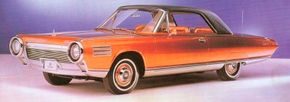
You are probably familiar with the Chrysler Turbine Car. That bronze Thunderbird’s elegant hardback banshee-like whine. It’s a cult classic, a copper rocket from the 1960s that captured the public’s imagination. But this single production model was only the tip of the iceberg.
It was the visible result of an extensive, ambitious development program that produced several turbine concepts in the late 1950s and early 1960s. The promise was enticing: turbine power in your driveway. And for a while it was true. About 200 people drove 50 production Turbine Cars in a three-year consumer testing program. Chrysler was closer to perfecting a practical turbine vehicle than any other automaker.
Events ultimately reduced this futuristic powerhouse to nothing more than hot air. The promise went unkept. The technology faded, leaving only whispers and a few rare specimens.
Зміст
From Jet Fighters to Driveways
A gas turbine is basically a scaled-down jet engine. Frank White patented the core concept in England in 1930. Rolls-Royce accelerated the development of jet fighters. They arrived too late to change World War II, but proved decisive in the Korean War.
America’s three major car manufacturers followed this development closely. Chrysler built a turboprop for the U.S. Navy Bureau of Aeronautics in 1948. Ford and GM focused on aircraft applications. Road vehicles only entered the discussion in the mid-1950s.
British Rover’s 1952 experimental turbine car may have inspired the change. Detroit noticed. However, only Chrysler seemed to be serious about turbine cars. Ford and GM relegated most of their turbine focus to trucks. Chrysler went all in on passenger cars.
How it works (no jargon)
The basic element is simple. A wheel equipped with blades or vanes. The fuel-air mixture flows past these vanes, causing the wheel to rotate. This produces power.
Most Chrysler models included a “power turbine” connected to a “first stage turbine” connected to a compressor. The compressor squeezed the mixture for firing. Ignition took place with an igniter similar to a spark plug.
Chrysler liked this simplicity. Fewer parts meant less maintenance. The turbine promised the owners smooth operation, which was unknown in reciprocating engines. It originally created the rotary motion. No pistons. No valves. Just spin.

The turbine offered benefits that seemed magical to anyone used to a cold start in January. Warming up was almost immediate. In bad weather, you can use the engine’s heat in the cab. Starting in the cold was no lottery. Chrysler swore the turbine could chew up anything you put in the tank. Peanut oil. Chanel No. 5. The list was insanely long. Oil consumption was negligible. Antifreeze was obsolete.
Then came the reality check.
Four major problems threatened to destroy the project before it could even start. The interior temperature rose to over 2000 degrees Fahrenheit. The engine behaved best at steady speed, like a jet in the sky, not like a car in traffic. It lacked engine braking, a feature drivers rely on when going downhill. And large amounts of nitrogen oxides were pumped out.
Chrysler did not ignore these shortcomings. They spent 25 years fixing them.
Fighting the heat
The temperature was the enemy. To combat this, George Huebner Jr. led a team that developed something called a regenerator. He was nicknamed “Mr. Turbine” at Highland Park for good reason. The device was a rotary heat exchanger. It absorbs heat from the exhaust gases. It cooled the engine’s core. It also improved fuel economy more than would be achieved with a turbine alone.
Engineers also researched materials that could withstand extreme heat. They wanted more flexibility in how the engine operated.
The development continued on the next page.
More information about concept cars and their predicted production models can be found at:
-
concept cars
-
Old cars
-
Consumer Guide Auto Show Reports
-
Cars of the future
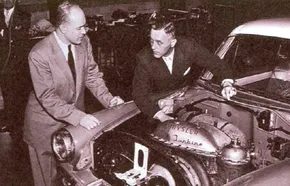

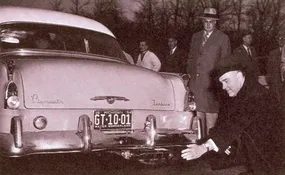
By 1954, Chrysler produced the first CR (Car Research) gas turbine engine for passenger cars. The Chrysler CR1 was a modest car with only 100 horsepower. It was used on a stock-looking 1954 Plymouth Belvedere hardtop. The vehicle successfully drove to the opening of Chrysler’s new proving ground in Chelsea, Michigan, giving the public their first glimpse of the technology in action. The second Belvedere was a 1955 four-door model that also had the same engine.
The improvement was quick. In 1956, Chrysler modified the CR1 using more exotic metallurgy to withstand greater stresses. This upgraded engine powered the Chrysler Turbine Special Belvedere sedan during the famous cross-country race. The car ran well, but efficiency was a problem. It returned only 13 miles per gallon. That figure was excessive even by the standards of the 1950s, when fuel economy was not a major concern for most buyers.
Next is CR2. This version is more powerful and produces around 200 horsepower. The power breakthrough comes from cheaper, stronger alloys that are more resistant to heat and oxidation. These materials allow engines to run hotter and longer without degrading, a key hurdle for early turbine developers.
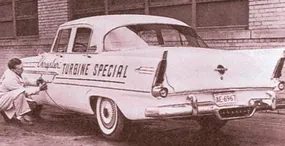

Before the Plymouth became a famous celebrity car, the powertrain was quietly testing its limits. It was fitted to another 1956 Plymouth Sedan and entered service between 1957 and 1958 when it finally became the focus. First up was the 1959 Fury-based Turbine Special Hardtop Sedan. It’s more than just a show. This car has proven it can hit the road. On a 1,200-mile demo drive from Detroit to Princeton, New Jersey, we got a respectable 18 mpg.
By 1960 third-generation CR2A turbine was completed. Engineers focused on two major updates to address the growing pains of the previous model. First we introduced the rotating fuel nozzle mechanism. The first stage turbine vanes were then designed to take one of three angles depending on the throttle position.
Why is this important? These mechanical changes made a big difference. They introduced engine braking, a major flaw in early turbine engines. In older models, you couldn’t just release the gas pedal and expect the car to slow down effectively. Now, you could.
This update also improved the power delivery. The lack of engine braking combines with strong acceleration and greatly reduces the annoying “throttle lag” that plagued previous versions. The difference in response time is amazing. While the previous CR1 took 7 seconds to go from idle to full power, the CR2A reduces latency to just 1.5-2.0 seconds.
Improved response times will change the way drivers interact with their vehicles. The hesitation is gone. The power was instant. However, turbine control remains difficult, and the next challenge is cooling and efficiency.
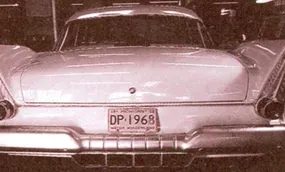

The CR2A engine doesn’t just exist in the lab. It hit three different 1960 vehicles. You almost have Plymouth Fury hardcover in stock. Then there’s the big 2.5 ton Dodge truck. Finally, there is the TurboFlite. This show car was so extreme that it didn’t see the light of day until 1961.
Designed by Maury Baldwin. He later called it the last masterpiece of the Virgil Exner era.
“We’ve put a lot of fun into it. This is probably one of the best show car models we’ve ever created.”
Baldwin isn’t just talking about style. He talks about functionality. The entry system is weird. The entire cabin above the belt line has been raised. There were no passengers on board. They stepped under the rising shell.
Between the huge tail wings are retarder flaps. You know the one. Used in racing cars to reduce speed without relying solely on the brakes. Headlight? retractable. Put away when not in use.
Gia made the body. The team started small. First up is the 3/8 scale model. Then there is the full size drawing. It was precision engineering training.
This is not just a vanity project. These models are a test field. They pave the way for the next step. This machine defines Chrysler’s turbine heritage.
Road to the turbine car
How does a show car become a production test? By proving that the concept works. TurboFlite demonstrates that gas turbines can provide acceptable performance for vehicles. This shows that heat, noise and fuel problems can be solved.
CR2As demonstrated engine performance under real-world conditions. It’s not just a dynamo. on a hard roof. in the truck. Inside a futuristic show car.
Each application is tested at different limits. Fury’s reliability has been tested. Dodge tested the torque. TurboFlite tests aerodynamics and integration.
What happened next was inevitable. Chrysler has obtained the information. They improved the design. made cars.
Turbine cars are not speculation. This is a logical conclusion. This is a direct result of the lessons learned from these three 1960 vehicles.
Why turbine cars are important
People forget the context. It was in the early 1960s. The price of oil is low. Efficiency doesn’t matter. However, the oil shock was coming.
Chrysler saw this. They needed an engine to replace the internal combustion engine. A car that can use different fuels. jet fuel. kerosene. Even peanut oil.
The turbine has a high power/weight ratio. Works smoothly. Low emissions. then.
But it’s not just about fuel flexibility. This is all about performance. Turbines spin tens of thousands of revolutions per minute. There is no piston. There are no valves. It just keeps coming back.
TurboFlite is a proof of concept. The turbine car was a prototype for mass production.
是什么让涡轮汽车与众不同?
这不仅仅是引擎更换。 整个车辆进行了重新设计。 涡轮机需要不同的冷却。 不同传输集成。 不同的尾气管理。
涡轮汽车使用了改良的 CR2B 发动机。 比 CR2A 有所改进。 更可靠。 更有效率。
它的特点是
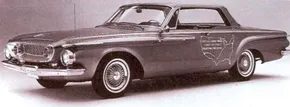

Chrysler didn’t come up with the idea of building a turbine car in the 1960s. This project started in the 1950s. Three different versions of the turbine engine came out of the laboratory.
The third CR2A was the winner. In 1962 it operated a small fleet of test mules. Two Dodge Darts and two Plymouth Furies were on the road. They were dubbed Turbo Darts.
One Dart ran a durability test from New York to Los Angeles. In terms of fuel efficiency, it beat the piston-powered control vehicle. It also arrived earlier than the 1956 Turbine Special.
These cars are not hidden. Dealerships showed them off. They traveled to Europe and track demonstrations at Montlhery in France and Silverstone in England. All responses were positive. Chrysler saw green for a larger program.
They decided to build 50 turbine-powered cars for consumers to evaluate. The result was the bronze hardtop, which was introduced in May 1963.
The Engelbird Design
Elwood Engel designed the car specifically for this consumer program. two years prior, he replaced Virgil Exner as Chrysler’s chief design officer.
Engel comes from Ford. He had worked on the 1961-63 Thunderbird from 1961 to 1963. His influence is clear. This turbine car looked so much like the T-Bird that people called it the “Engelbird”.
But it’s not quite the same. The wheelbase is 110 inches. This is 3 inches shorter than the Thunderbird. The styles on both ends are different.
The front is simple. Some call it blunt. The back is wild. The deep boomerang cavities has huge angled taillights. The Backup lamps is placed in the large turbine housing.
A rotating blade pattern is used in the center of the headlight bezel and hub cap. All 50 consumer cars have black vinyl roofs. This contrasts nicely with the Turbine bronze paint.
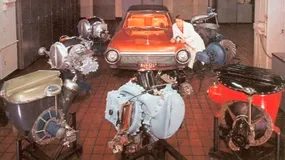

The cabin doesn’t even try to hide its purpose. The interior is finished in a bronze color that matches the metallic soul of the machine. The seating arrangement is for four people, each with their own vinyl-covered bucket seat. Between them is a full-length cylindrical center console that dominates the space.
Nor is it a stripped down test mule. It has all the modern conveniences like power steering, power brakes and power windows. The climate control system included air conditioning and the audio equipment includes a radio. However, the instrument panel is equipped with special gauges that are specialized for the characteristics of the vehicle, such as the tachometer and the turbine entrance temperature gauge, The dashboard told the real story, though. Under the bonnet, the transmission is an improved TorqueFlite automatic tuned to handle its unique power supply.
A-831 The heart of a gas turbine
Under the hood is Chrysler’s fourth-generation gas turbine called the A-831. This is a significant improvement over the previous generation CR2A. The main innovation here is the addition of constantly variable first-stage turbine vanes. These blades adjust according to the throttle position, giving you better control over the engine’s breathing.
The architecture is also different. The A-831 has twin regenerators rotating in vertical planes, one on each side of the central burner. This design makes the motor smaller and lighter than the CR2A. But more importantly, it changes the way the car feels.
It was quieter. It was more responsive. Throttle lag, the frustrating delay between pressing the pedal and feeling the power, has been reduced to just 1.0-1.5 seconds. The gear reduction reduces the engine’s top speed from the CR2A’s 5360 rpm to 4680 rpm, but the trade-off is worth it. Horsepower is down 10 units to 130, but torque is up from 375 pound-feet to 425 pound-feet. You’ll notice this low-end grunt when merging onto the freeway or driving down a two-lane road.
Unconventional Construction
Despite the exotic appeal of the turbine car, its chassis is surprisingly traditional. It has Chrysler’s standard “unibody” construction. The TorqueFlite automatic transmission is tuned to eliminate unnecessary torque converters for continuous power delivery to the turbine engine. The result is a car that looks and feels like a regular Chrysler, minus the sound and smell of burning fuel.
ギヤコネクション
「量産」タービン車は 50 台のみで、試作車は 5 台しか製造されませんでした。これらのプロトタイプのうち 3 台は、屋根と塗装が独特でした。生産量が非常に少なかったため、クライスラーはデトロイトでそれらを製造しませんでした。彼らはイタリアでギアウイルスに感染した。 なぜ? 料金。 ギアは、クライスラーが社内で行うよりも低コストで、これらの小規模なバッチを組み立てることができます。
クライスラー タービン車のパフォーマンスの詳細については、次のページに進んでください。
有关概念车及其预测的量产车型的更多信息,请查看:
- 概念车
- 老爷车
- 消费者指南车展报道
- 未来汽车
汽轮机评估程序
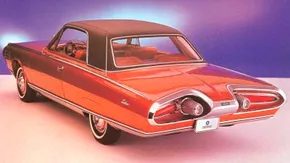

The real verdict on Chrysler’s gas turbine experiment
When Chrysler announced its Turbine Car evaluation program in Highland Park, it wasn’t just the phone lines that were ringing; they melted. More than 30,000 inquiries flooded the headquarters, a surreal response to the offer asking ordinary people to live with a jet engine on wheels. The company was not looking for engineers. They wanted “consumer representatives”.
The selection process was extensive. 203 participants were selected from all 48 continental states, ranging in age from 21-70. From 1963 to early 1966 these drivers were behind the wheel of 50 turbine cars. This was the definitive Chrysler Turbine Car Field Test, a massive real-world stress test conducted decades before “beta testing” became a marketing buzzword.
The data was available in 1967. Chrysler’s report was clear: maintenance was negligible. Compared to similar piston engine cars of the time, the turbine required little or no maintenance. No oil change in the traditional sense. No spark plugs. No tune-ups. It was mechanical simplicity disguised as complexity.
Why the Miles Were Hidden
But there was a glaring gap in the official report. Mileage figures were never released.
Why hide fuel consumption? Because it was embarrassing. By modern standards, the turbine was a thirsty beast. Every fourth driver complained about the gas guzzler. While some may have joked that they were out of peanut oil (the fuel Chrysler eventually standardized on), the reality was less culinary and more thermodynamic. The engine simply burned fuel to produce torque.
The response to the gas pedal was another sore point. One of the three drivers grumbled about throttle lag. In a turbine, the turbine wheel has mass. It takes time to spool up. When you press the pedal, there is a delay before the power comes on. This wasn’t just a minor annoyance; It completely changed the way you drive.
Silence and speed
Despite the fuel costs and the delay, the praise were genuine. Drivers were impressed by the vibration-free operation. There was no vibration. The ride was silky smooth, almost eerie in its smoothness. The style was also praised as snazzy. These cars attracted attention not only because they looked like spaceships, but also because of how they moved.
Journalist John Lawlor was one of the few outsiders to drive one. Chrysler never allowed press access, but Lawlor got behind the wheel late in the test. His experience mirrored consumer data:
- Smoothness: Impressive.
- Engine braking: Non-existent. This was a major annoyance. Without compression braking, deceleration required constant pressure on the brake pedal.
- Throttle lag: Confirmed 1.0-1.5 seconds.
- Acceleration: Surprisingly strong. 0-60mph in under 10 seconds for a 4,100-pound vehicle.
Lawlor’s fuel economy was 11.5 mpg. He primarily ran on kerosene, which was cheaper than the peanut oil used by some consumers, but did not save mileage. Still, the acceleration silenced rumors that the turbines could
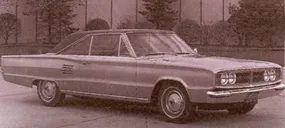

The technology of the Dodge Charger Fastback and Coronet 500 Hardtop was anything but standard. They had a split accessory drive system, which completely changed the way ancillary components operate. Instead of the main crankshaft, the power steering pump was driven directly by the power turbine. Meanwhile, the compressor turbine kept the fuel pump and other critical engine systems running. It wasn’t just about looks. It was about improving engine braking with a mechanical setup that few had ever seen.
Chrysler wasn’t just toying with the idea. They actually had plans to build 500 retail turbine-powered Coronets. The factory was ready to put them in the showrooms. But then the regulatory hammer fell. Imminent government emissions standards killed the project before it could start. The cars were too clean for the old rules, but not yet compliant with the new ones.
However, this 1966 hardtop didn’t disappear into the ether. It stayed with Chrysler Engineering for years. It remained there until 1972, gathering dust and curiosity. By then, the turbine story had taken a sharp, unexpected turn that few outside the inner circle knew about.
More information about concept cars and their predicted production models can be found at:
-
concept cars
-
Classic Cars
-
Consumer Guide Auto Show Reports
-
Cars of the future
Government Oversight of the turbine car
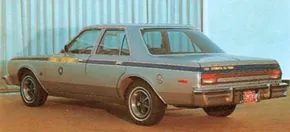

Nitrogen oxide emissions continue to plague Chrysler’s Turbine Car program. This wasn’t just a technical glitch. With increased government regulation in the 1970s, it became a political issue. However, the Environmental Protection Agency (EPA) didn’t walk away.
In 1972, the newly founded facility was persuaded to continue its operations. Project engineer George Huebner made a convincing proposal. The result? A $6.4 million grant to continue to continue development.
The money is attached. The goals are very concrete.
* Control nitrogen oxides.
* Increase mileage.
* Reduce manufacturing costs.
* Comparable to the performance and reliability of traditional piston powered small American cars.
Seventh-Generation Refinements
クライスラーは単にお金を使うだけではありません。 They built。
1973 年に 3 台の中型ダッジ セダンとプリマス セダンをテストした後、同社は第 7 世代タービンを導入しました。 It went back to basics with a single regenerator。 しかし、But the fuel control? より正確かつelectronic。
このエンジンは 2 台の 1976 ダッジ アスペンに搭載されました。 また、ユニークなワンオフ T ルーフ クーペにも動力を供給します。 This wasn’t just a LeBaron。 これは、knife-edgeフロントフェンダー、隠しヘッドライト、スリムな垂直グリルで改造された 1977 年のクライスラー LeBaronです。
Power numbers dropped。 新しいタービンは 104 馬力を発生します。 6代目はhad produced 150、なぜ減ったのでしょうか? It ran hotter。
クライスラーはfound a workaround。 コンプレッサー入口Water injectionと再配置された入口ガイドベーンの組み合わせにより、出力が 125 馬力に向上しました。
The Federal Contract and DC Days
Chrysler is not alone in its search for the perfect turbine. The Energy Research and Development Administration (ERDA), later merged into the current Department of Energy (DOE), had similar contracts with General Motors and Ford.
The engineering team made gains.
*Throttle lag is practically eliminated.
* Hydrocarbon and carbon monoxide emissions are within the statutory limits.
* Fuel economy is close to similar piston engines.
Under the terms of the agreement, Chrysler sent two turbine-powered Aspen to Washington, D.C., where they ran flawlessly.
1979 年的柏林墙
到了 1979 年,终点线似乎正在移动。
降低氮氧化物水平仍然是不可能的。 物理学对他们不利。 与此同时,克莱斯勒正加速走向破产。 严重的经济衰退hit hard。 联邦计划面临全面削减。
涡轮机并没有在实验室里die。 它在现实世界中died。 活塞发动机幸存的地方。
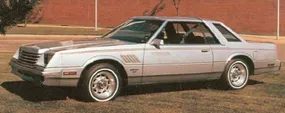

The end came with closing the checkbook. In early 1981, the Department of Energy pulled the plug and eliminated the last state subsidy. Chrysler didn’t just slow down. They abandoned the turbine program altogether.
It lasted more than a quarter of a century. Over $100 million in Chrysler’s own cash. Another $19 million in taxpayer money. All gone.
The last turbine car built was a ghost. A 1980 Dodge Mirada that looked almost stock. No wild fins. No screaming turbines can be seen from the hood. Just a sedan that carried the flame to the end.
The Engine That Never Was
It hurts to think about what didn’t happen. According to insiders, the eighth-generation turbine died during the design phase. It was supposed to live in the K-car. The front-wheel drive compact cars that saved Chrysler in the 1980s.
Tämä puuttuva moottori olisi ollut erilainen.
- One shaft instead of two. Einfacher. Lighter.
- Electronic fuel delivery. Precise injection instead of the old messy carburettor technology.
- 85 hp. Modest by muscle car standards, but sufficient for a compact family car.
It would have been the cheapest turbine on a large scale. The holy grail of cost-effective and highly efficient energy supply.
The engineers also dreamed of a variable geometry burner. A design that could solve the problem of NOx emissions once and for all. The long-sought answer to clean combustion.
But the money ran out. Time was running out. The blueprints stayed blueprints. A foam model was the only physical evidence.
Saving the Artifacts
Chrysler had to choose between history and bureaucracy. 58 turbine cars were imported from Ghia in Italy. US Customs had waived the import duties because they were part of a federal testing program.
The program ended.
Now they were “foreign” vehicles. Chrysler could send them back to Italy. Or pay high tariffs to keep them in America.
They decided to keep ten.
The rest were cut under the watchful eyes of customs officials. You can’t just leave exotic, government-funded prototypes in the parking lot. The metal had to go.
Of the ten saved, nine were accounted for. Chrysler still owns three. The remaining six live in museums across the country. They are the only tangible remnants of a future that almost existed.
A Future That Failed
Today, turbine drives are as important to the future of cars as rumble seats. Or tail fins.
We switched to hybrids. Changed to batteries. We switched to direct injection and a turbocharging. The turbine died in the 1980s because it was too expensive, too loud and too complex for market that emerged.
But the story is still captivating. A brave experiment. A huge investment. A technology that promised the world and delivered a few museum pieces.
We have the tale. We have objects.
The future that never happened is quiet now.


