


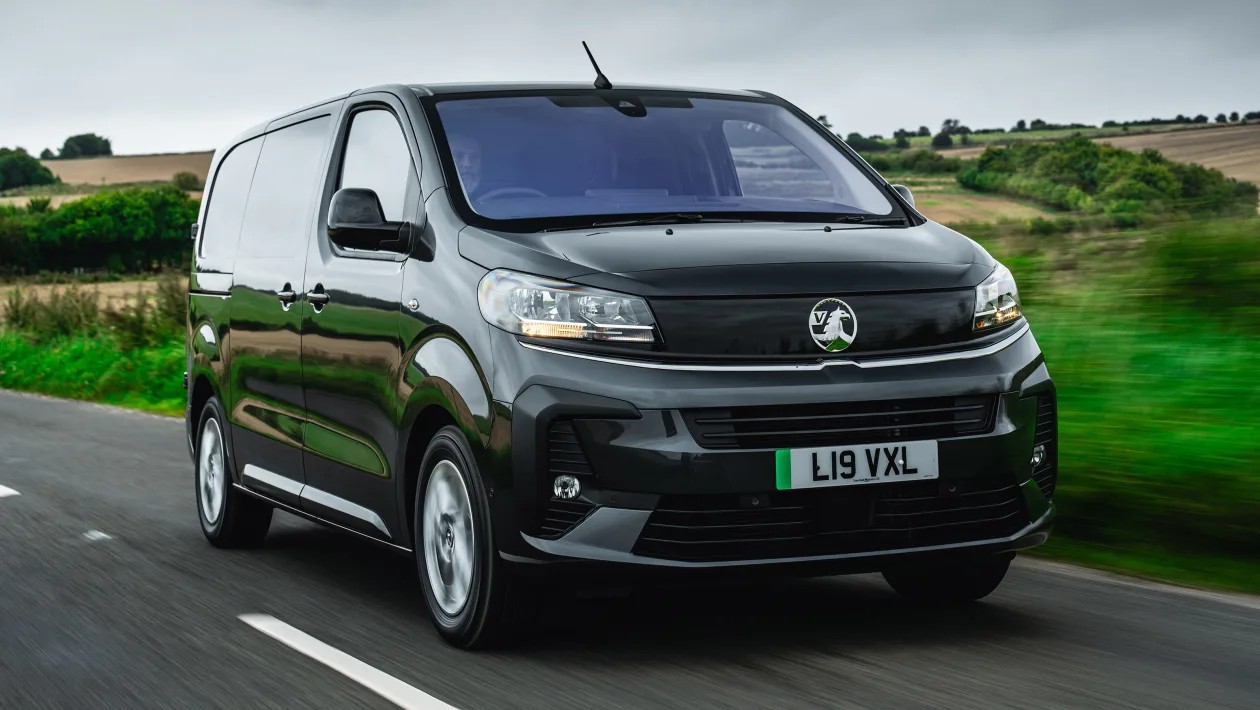
The Vauxhall Vivaro sits comfortably. It feels like a car. That is its main selling point for medium-sized commercial buyers.
It appeals to drivers who hate the idea of hauling a boat on wheels. You get choices, too. Diesel. Electric. Standard length or the stretched XL model. The menu looks full.
The catch? The platform is old. Since 2019. A 2024 facelift tried to paper over the cracks. But rivals like the Kia PV5 feel fresher. Newer.
Зміст
Built on a Budget, Shared by Many
Stellantis owns Vauxhall now. So the Vivaro wears a badge but borrows a body. Underneath, it is identical to the Citroen Dispatch, the Peugeot Expert, and the Fiat Scudo. Add the Toyota Proace to the mix.
They are all siblings. Stablemates.
This matters for parts availability, sure. But it means the Vivaro doesn’t feel unique. Not really. You are buying engineering off a shelf. Prices fluctuate between brands. Check them.
Lengthwise, you have two boxes. Standard or XL. The extra length on the XL sits behind the rear axle. Same wheelbase, either way. Good for tight turns.
Gone is the high roof. If you need headroom, look away. But the Double Cab remains. It seats five. Comes in both lengths. Useful for crews that need more than a driver.
Diesel Efficiency vs Electric Anxiety
The mid-life refresh simplified things. No more engine jungle. Just diesel or electric.
The diesels are efficient. Surprisingly so. Most assume the tiny 1.5L Turbo D wins on economy.
Wrong.
The weaker 2.0L engine actually pulls ahead with 45.6 mpg on the combined WLTP cycle. The smaller engine sits at 44.8 mpg. A fraction, yes, but points matter when fuel prices spike.
Want the zesty 148bhp version of the 2.0? You drop to 43.5 mpg. Still respectable.
Opt for the automatic transmission? Pay an economy penalty. The computer prefers comfort over conservation.
And the AdBlue. Do not forget the AdBlue. The 22.5-liter tank needs topping up every few thousand miles. The trip computer watches you. It judges you. Ignore the warning light long enough, and the van refuses to start. Not a gentle suggestion. A hard lockout.
“The EV has fewer moving parts… provided the range suits your needs.”
The electric model offers simplicity. Theoretically easier maintenance. But does a 219-mile range cover your daily circuit?
Charge times are decent. A 100kW rapid charger gets you from 5% to 80% in 45 minutes. Home charging? Your typical 7.4kW wallbox takes roughly 10 hours for a full tank. Plan accordingly. Sleep while it charges.
Load Space: Width is King, Height is Dead
Roominess is standard here.
You get standard or XL. Lengths measure 4,959 mm and 5,309 mm respectively. The extension is rear-axle only.
Cargo volumes:
– Standard: 5.3 cubic meters.
– XL: 6.1 cubic meters.
Fit a bulkhead hole for pipes or planks?
– Standard expands to: 5.8 cubic meters.
– XL expands to: 6.6 cubic meters.
But look at the competition. The Ford Transit Custom gives you 5.8 cubic meters in standard form. The Transit XL hits 6.8. The Vivaro trails. Slightly.
The killer for tall loads? No high roof. At all. You are stuck with a slightly taller-than-average standard roof, but not enough to matter if you need significant vertical clearance.
Payload varies wildly. The 1.5L diesel carries up to 1,180kg roughly (specifically 1,173 kg). The low-power 2.0 lifts 1,320kg (1,326 kg). Auto gearboxes eat payload. The powerful 2.0 auto drops to 1,290kg. The Electric version maxes out at 1,210 kg. Heavy loads die faster on electric batteries.
Access is… fiddly. The new body shape means smaller rear doors. Shorter height, narrower width. Ten centimeters here, ten there. It adds up. Loading large furniture gets frustrating. Side doors are standard, thank goodness. They save you when the rear ramp fails you.
Safety First, Mirrors Second
Safety is excellent. The electronics come from the EMP2 platform used in the C5 Aircross.
Lane departure warning. Adaptive cruise control. Autonomous emergency braking. All standard. The Euro NCAP gave it a gold rating in 2024 after retesting. That says something. Reliability follows suit. These components are everywhere. In Peugeots, Citrojans, Fiais. If it breaks, you know the fix.
The downside? Visibility.
Old Vivaros had a second tiny mirror below the main one. Wide angle. Gone now. Why? Aesthetics over utility.
Want to fix it? Pay for the Dynamic Surround View pack. Cameras, sensors, blind-spot assist. Cost: £1,250. Not standard. On a work tool, that is a lot to spend just to see what you are reversing into.
Alarms? Optional. Do you really trust your van with the doors open and no alarm? Maybe not.
Driving Dynamics: Comfort Over Excitement
Climb in. You are low. The running gear makes this a car.
It is not commanding like an SUV or a traditional truck. It sits lower than its predecessors. This helps handling, maybe. It certainly helps aerodynamics.
But comfort takes a hit.
The seats are supportive but soft. Lumbar support is there. No passenger armrest, though. Just lean forward. Rest your arm on the door sill. It feels wrong.
For three-abreast trips, the manual gear stick invades knee space. If your colleague is on the middle seat, they will feel it. Electric models hide this issue behind silence.
Driving it is easy. Quick steering. Low center of gravity. Nimble when empty. Add cargo, and stability returns. Suspension is tuned for loads, not sport. When empty, there is a bounce. A floaty feeling. Not harsh, but noticeable.
The 1.5L engine is fine for empty runs. Add weight, and you struggle. Shift constantly. Cancel the fuel savings. The 2.0L, especially with the automatic gearbox, is superior for daily hauling. The eight-speed auto smooths out the highway commute. No more hunting for gears.
Soundproofing? Good. Better with cargo. A full van deadens noise. An empty van rattles a bit more. Diesel clatter fades, but the lack of big mirrors lingers in the mind. You cannot see what is in the blind spots. Not really.
Ownership and Alternatives
Who is this for?
Short hauls, town runs? Electric. Tax savings. Tolls in London. Silence. Long hauls? Diesel. Range. Cost. The auto gearbox makes motorways less stressful.
Consider the twins.
– Citroen Dispatch / Peugeot Expert / Fiat Scudo: Same bones. Different badges. Sometimes better prices.
– Toyota Proace: Better warranty. Usually more expensive.
If you want something different, look at the Ford Transit Custom. It is the enemy here. Sells more. Handles better. But costs more.
New electric threats emerge daily.
– Kia PV5 Cargo: Fresh.
– Volkswagen ID. Buzz Cargo: Retro.
Dimensions Snapshot:
– Standard Width (mirrors): 2,204 mm
– XL Width: Same
– Standard Height: 1,904 mm
– XL Height: 1,935 mm
It works. The Vivaro works well. It is comfortable. Efficient enough. Safe.
But does it inspire loyalty? Hard to say when five other vans look exactly like it on the inside.
Will it be replaced before its time? Likely. The market moves faster than Stellantis does. For now, it waits in the middle. Competent. Forgettable. Reliable.
Does it matter if it is just okay?
“40 mpg isn’t too difficult… and the automatic takes a lot of effort out.”
If that is what you need, buy one. If you need space or height, drive away.
What remains is a question of preference over platform. The van drives like a car. But sometimes, you want a truck.


