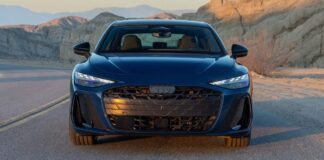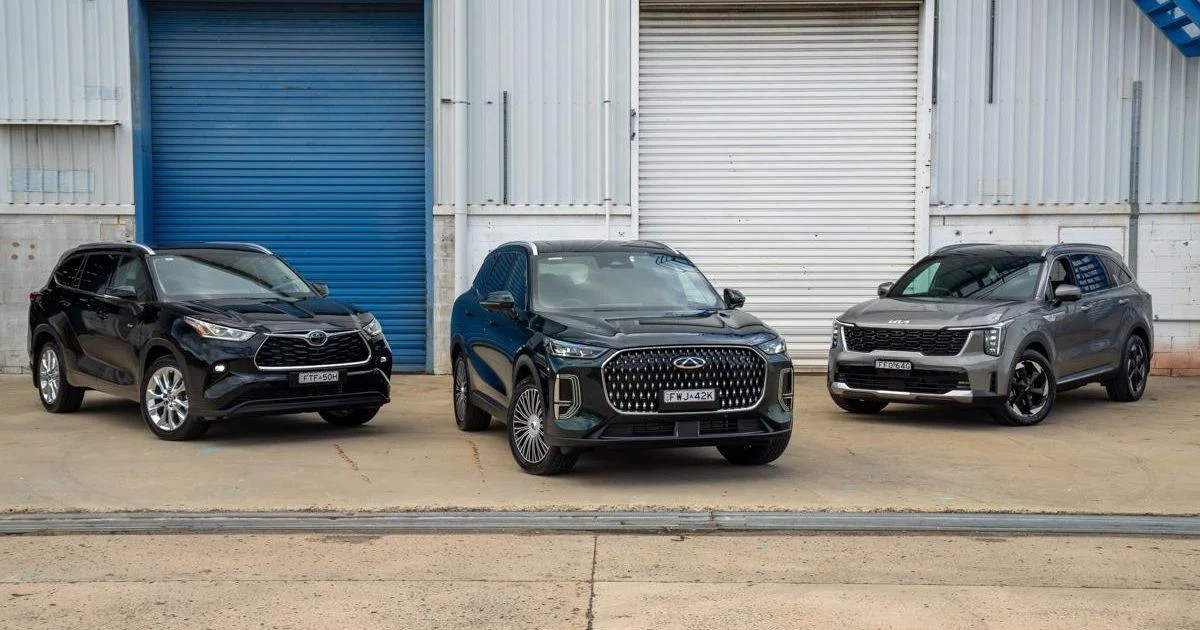
Family cars have changed. A decade ago? You bought a wagon or a sedan. Now, suburban driveways look like off-road rallies waiting to happen. SUVs. Utes. It doesn’t really matter. What matters is the space inside. If you have three kids or a dog that eats socks, you’re looking at seven seats. And if you want luxury that doesn’t cost a mortgage payment, these three are your only real options.
The Toyota Kluger. The veteran. Reliable as stone.
The Kia Sorento. The award-winner. Sharp styling, better tech than you’d expect.
The Chery Tiggo 9. The newcomer. From China. And it’s bringing serious heat.
It’s a snapshot of automotive history in one garage. Japan led first. Korea caught up. China is now sprinting past. Let’s see who actually wins on the road.
Зміст
Price tag reality
Money talks. Chery starts shouting immediately.
The Tiggo 9 Super Hybrid Ultimate sits at $59,990. Before on-roads. That is aggressively priced for what you get. One of two variants, but it’s the one that matters here.
Kia? It’s complicated. The entry-level petrol Sorento S looks cheap at $51,630, but good luck finding that spec in the wild with the bells and whistles we’re discussing. You’re looking at the flagship GT-Line Hybrid for $74,540. Go for plug-in hybrid? Add another $10,000 to your mental calculator.
Toyota is the priciest of the traditional duo. Entry-level GX Kluger starts at $62,410. The top-tier Grande we are testing? $85,130. That’s nearly ten grand more than the Chery for less tech, generally.
Is cheaper better? Usually. Sometimes you get what you pay for. In this case? Not always.
The tech buffet
Since these are the top-trim models, no one is stingy with equipment. It’s a buffet of premium features.
Everyone gets LED lights all around. Panoramic glass roof? Yes. Push-button start? Obviously. You’ve got power tailgates, head-up displays, and leather that doesn’t look fake. Wireless chargers are standard. So are ambient lights. It feels modern. Or does it?
- 12.3-inch dual screens for the Kia and Toyota.
- 15.6-inch massive slab for the Chery.
The Tiggo wins on screen real estate. It’s huge. But lose on the driver cluster? Its 10.25-digit gauge is tiny compared to the 12.3-inches in the other two. Odd choice.
Sound matters. Bose in the Kia (10 speakers). JBL in the Toyota (11 speakers). Sony in the Chery (12 speakers). But Chery hides extra drivers in the headrests. Weird. Effective? Probably.
Seats need climate control. All three have heated and ventilated fronts. But wait. The Kluger forgets to heat the outboard rear seats. Tiggo and Sorento don’t forget. However, Toyota allows middle-seat passengers their own climate zone. Comfort isolation? A nice touch for the kid who hates it cold.
Third-row survival? Kia and Toyota vent air back there. Chery leaves the kids to sweat. Wheels are mostly 20-inch, except the Kia which sits on 19s. Less curb rash? Maybe. Less flash? Definitely.
Safety nets
Families crash. Badly. That’s why airbags exist.
Standard stuff? AEB, blind-spot detection, lane keeping. You know the drill. ANCAP rates them all five stars, but check the date. Kia was tested in 2020. Kluger in 2021. Chery hasn’t been tested yet. Yet.
The Tiggo leads on bags. Ten total. Driver’s knee? Yes. Center airbag between front seats? Yes. Kia and Toyota stick to seven. Center bag or knee bag, pick your poison.
Kia has the digital rearview mirror. Useful when kids cover the rear window in drawings. Unusual? A bit.
Cabin comfort: Modern vs Classic
Interior design is subjective. Or is it?
Chery looks new. Shocking new. That massive screen dominates everything. There’s hidden storage—deep bins, felt-lined trays, pockets under the seat for small purses. Textures? Brushed metal looks genuine. Stitched leather patterns on door cards. It tries hard. Does it succeed? Mostly.
Glare is an issue on the screen in sun. Navigation inside the OS is deep. Buried. Changing temp while using Apple CarPlay means digging through menus. Frustrating when you’re running late.
Front seats are plush but short. Legs hang. Kia and Toyota offer better thigh support. Second row has sun blinds. Good. Third row access? Painful. Flip the back, then slide the seat. Two steps. Slow. Boot space is tight with all seats up: 143 liters. Fold it down? Massive. Over 2000 liters.
Toyota feels… older. The Kluger interior is chunky. Fake woodgrain. Messy buttons everywhere. But physical buttons are good for quick adjustments. Volume knob? Too far left. Driver’s reach stretches too wide.
Build quality? Excellent. It rattles nowhere. Seats are wide. Soft. Vision is limited. Worst rear visibility of the bunch. But the second row is spacious. Room for leg extensions. USB-C outlets. Roof vents for third row kids? Yes. Cup holders? Yes. Comfort? No. The third row seats look base-spec compared to the fancy fronts. Boot? Surprisingly small in 7-seat mode. 241 liters sounds good, but five-seat mode drops to 552 liters. Weird engineering.
Kia hits the sweet spot. Modern looks. Practical layout. The curved digital dash is bright. Intuitive menus. Bose sound stages beautifully. Vent controls are haptic—tactile but digital. Easy. Front seats look sharp with arrowhead patterns and white piping. Sculpted support.
Rear vision? Best in class. Digital mirror flattens depth, but flips back to normal with a button. Smart. Middle row? Best legroom after Toyota. Side-mounted USB ports. Cup holders everywhere. Third row? It actually feels usable. Same trim as front seats. Air vents. USB outlets. Only Kia gives you USB back there. Boot sits in the middle. 175 liters in seven-seat. 604 liters in five. Solid compromise.
Powertrain weirdness
Hybrids. All of them. None are pure electric.
Chery is a PHEV. Plug it in. Drive 170km on electric. Battery size? 34 kWh. Three motors total. Combined power: 315kW. Torque? 580Nm. This thing pulls like a sports car. Quiet. Smooth. Fuel use claims 1.4 L/100k if you charge daily. Fast charge up to 71 kW. Slow AC charge 6.6 kW. Times aren’t given. Annoying.
Kia pairs a 1.6-liter turbo petrol with a small electric motor. 44 kW electric. Total system: 169 kW. No plug-in here. Battery is 1 kWh. Charges via regenerative braking. Fuel: 5.7 L/100k. AWD config. Tank is 67 liters. Reliable tech. Predictable.
Toyota uses a 2.5-liter petrol engine. Naturally aspirated. Older tech, proven tech. 184 kW system power. No separate motor power listed. NiMH battery. The old-school choice. Charges while driving only. Fuel claim: 5.6 L/100k. Slightly better than Kia? Marginal. 65 liter tank.
Driving dynamics
Here’s the thing. They drive differently. Very differently.
The Tiggo is fast. Torquey. The three-motor setup eliminates turbo lag. It surges ahead when you touch the throttle. Noise levels? Near silence in EV mode. Refinement is high. Chery didn’t just build a lookalike; they built a performance vehicle with a family face.
Is it fun to drive? Sure. But is it better than the others?
That depends on whether you value speed or familiarity. Toyota feels… Toyota. CVT drags sometimes. Kia feels sporty. But Chery feels like it came from another timeline. A faster one.
Does extra speed matter in school drop-offs? Maybe not. But merging onto the highway? Suddenly yes.