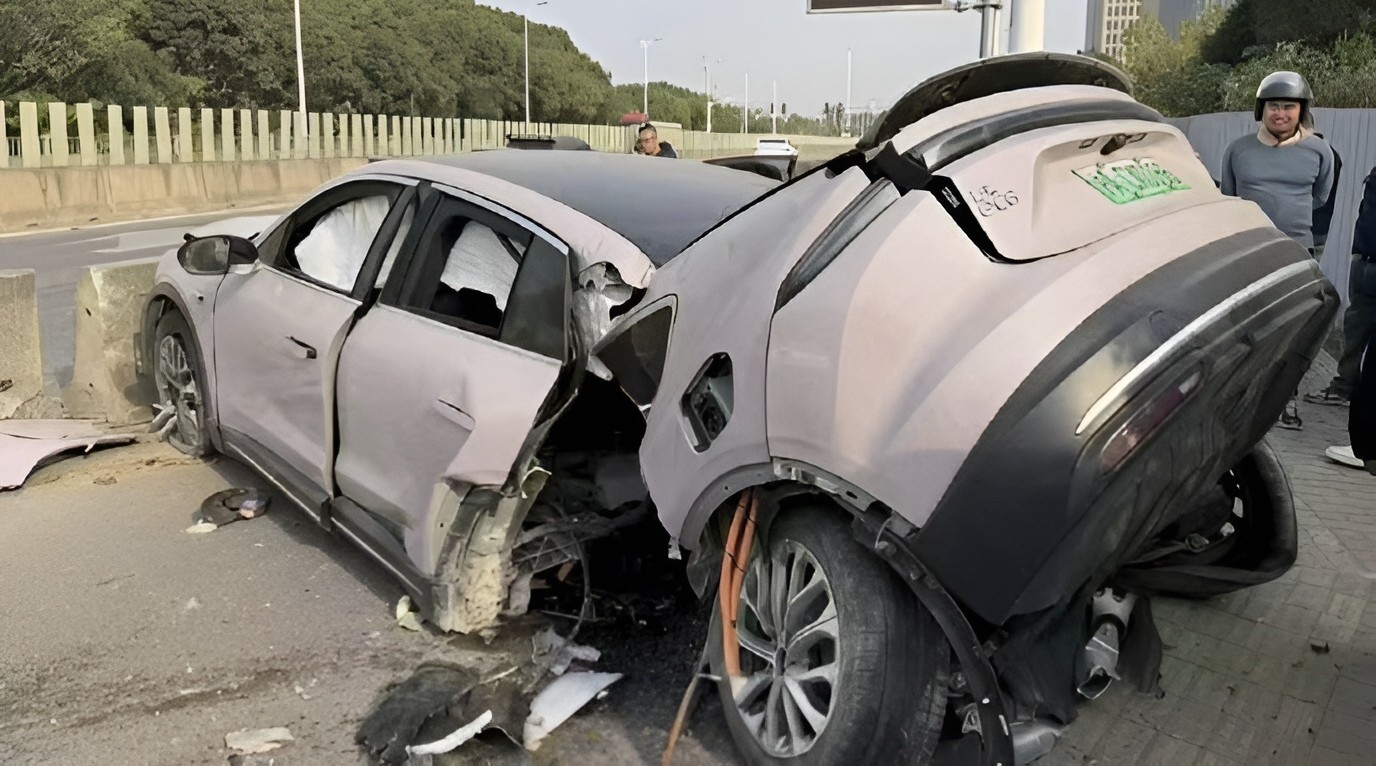
A recent high-speed crash involving a Nio EC6 electric vehicle in Shanghai highlighted the vehicle’s structural integrity and battery safety systems, with both occupants escaping unharmed despite the car’s rear section separating from the cabin. The incident, which occurred on December 1st, involved a collision with a concrete roadside barrier at high speed.
Зміст
Crash Details and Response
The vehicle’s safety system immediately reported the crash, prompting a rapid response from Nio staff who transported the occupants to a hospital for evaluation. Crucially, neither individual sustained life-threatening injuries. According to Nio, the EC6 was not utilizing its driver-assist features at the time of impact. The vehicle’s automatic door unlock and handle deployment facilitated a quick and unaided exit for the occupants.
Structural Failure and Battery Performance
The severity of the crash was unusual; the rear of the vehicle experienced a “cutting-type” structural failure where the impact concentrated on a narrow, 12-centimeter-wide concrete barrier edge. This localized pressure led to failure at the C-pillar and rear floor while, notably, the passenger compartment remained remarkably intact. On-site photos show one occupant sitting on the door-frame after the collision, illustrating the cabin’s continued structural stability.
The battery pack did not ignite or show any signs of thermal runaway, confirming the effectiveness of Nio’s battery protection systems. This is significant because lithium-ion battery fires in EVs remain a major safety concern in crash scenarios.
Vehicle Specifications and Safety Design
The Nio EC6 is a mid-size electric coupe-SUV manufactured since 2020. The latest model boasts a dual-motor all-wheel-drive system with 360 kW of power and a 630-kilometer CLTC-rated range using a 100 kWh battery. The vehicle’s steel-aluminum mixed body structure and high-strength safety cell were designed to protect occupants in extreme conditions.
Implications of the Crash
While this incident is extreme, it provides valuable real-world data confirming the EC6’s safety architecture performed under high-stress conditions.
The crash underscores the importance of both vehicle structural design and rapid emergency response in mitigating harm during severe collisions. The fact that the passenger cell remained intact while the rear suffered catastrophic damage demonstrates the effectiveness of modern crash safety engineering.
This event does not guarantee similar outcomes in all crash scenarios, but it does reinforce that advanced safety features and robust construction can significantly improve occupant survival rates even in extreme, localized barrier impacts.