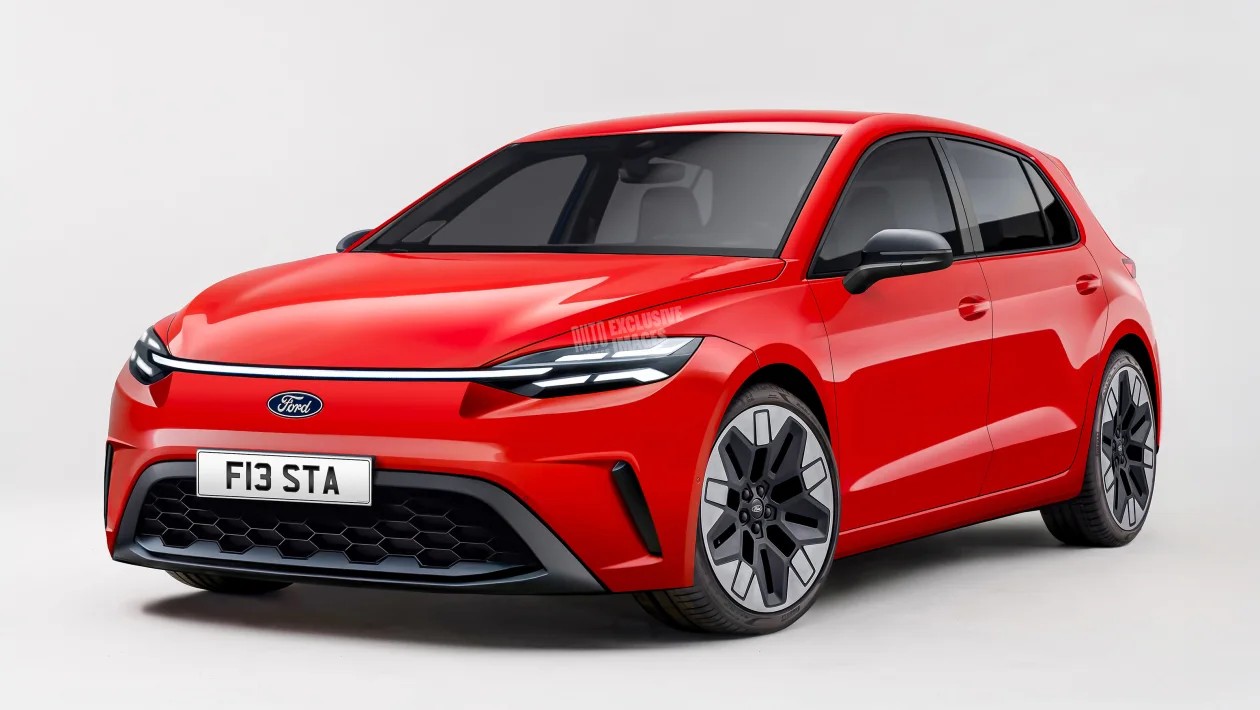
Ford and Renault have announced a significant partnership to jointly develop electric vehicles, with the first fruits of this collaboration slated to arrive in showrooms by early 2028. The most notable outcome is the confirmed revival of the Ford Fiesta, reimagined as an EV built on Renault’s cutting-edge Ampere platform – the same architecture underpinning models like the Renault 5 E-Tech and Alpine A290.
Strategic Shift Towards Shared EV Development
This alliance marks a pivotal move for both automakers, allowing Ford to leverage Renault’s established EV infrastructure, including battery and motor technology. For Ford, this addresses a critical need for scale in the competitive European small-car market, where it has struggled to maintain a strong presence. The partnership isn’t merely about sharing technology; it’s about streamlining production by utilizing Renault’s “ElectriCity” complex in Northern France for assembly.
The two new Ford EVs will feature unique exterior designs and chassis tuning to retain Ford’s signature driving experience, despite being built on Renault’s underpinnings. Jim Baumbick, Ford of Europe president, emphasized the commitment to differentiation: “Ford will lead on the development of the design and things like the ride, steering, handling and braking to inject the uniquely Ford DNA.”
Performance Potential: The Return of the Fiesta ST?
The Renault Ampere platform offers a compelling base for a high-performance variant. The Renault 5, for instance, delivers up to 252 miles of range with its larger 52kWh battery and a 148bhp motor. This opens the door for a potential Fiesta ST model, possibly adopting the upgraded e-motor from the Alpine A290, which boasts up to 217bhp. Ford’s strategic focus on enthusiast vehicles – exemplified by the Mustang GTD and Ranger Raptor – suggests a revived ST badge is highly probable.
Beyond Small Cars: Potential for LCV Collaboration
While the immediate focus is on B-segment small cars, the partnership may extend to light commercial vehicles. Both companies have signed a letter of intent to explore collaborations in this area, leveraging Ford’s dominance in the LCV sector. However, Ford’s larger electric SUVs, like the Explorer and Capri, will continue to be built on Volkswagen’s MEB platform, as part of a separate agreement.
The move is designed to ensure Ford and Renault remain competitive in Europe’s fast-evolving automotive market. Both automakers recognize the need for scale and efficiency in the electric transition, making this alliance a critical step towards securing their future.
This strategic partnership is about combining Renault’s industrial scale and EV assets with Ford’s iconic design and driving dynamics, creating vehicles that are fun, capable, and distinctly Ford in spirit.
The new Fiesta EV and its companion model are scheduled for release in 2028, mirroring the timeline of Renault’s upcoming Twingo EV. This collaboration underscores the growing trend of automakers pooling resources to accelerate the transition to electric mobility.