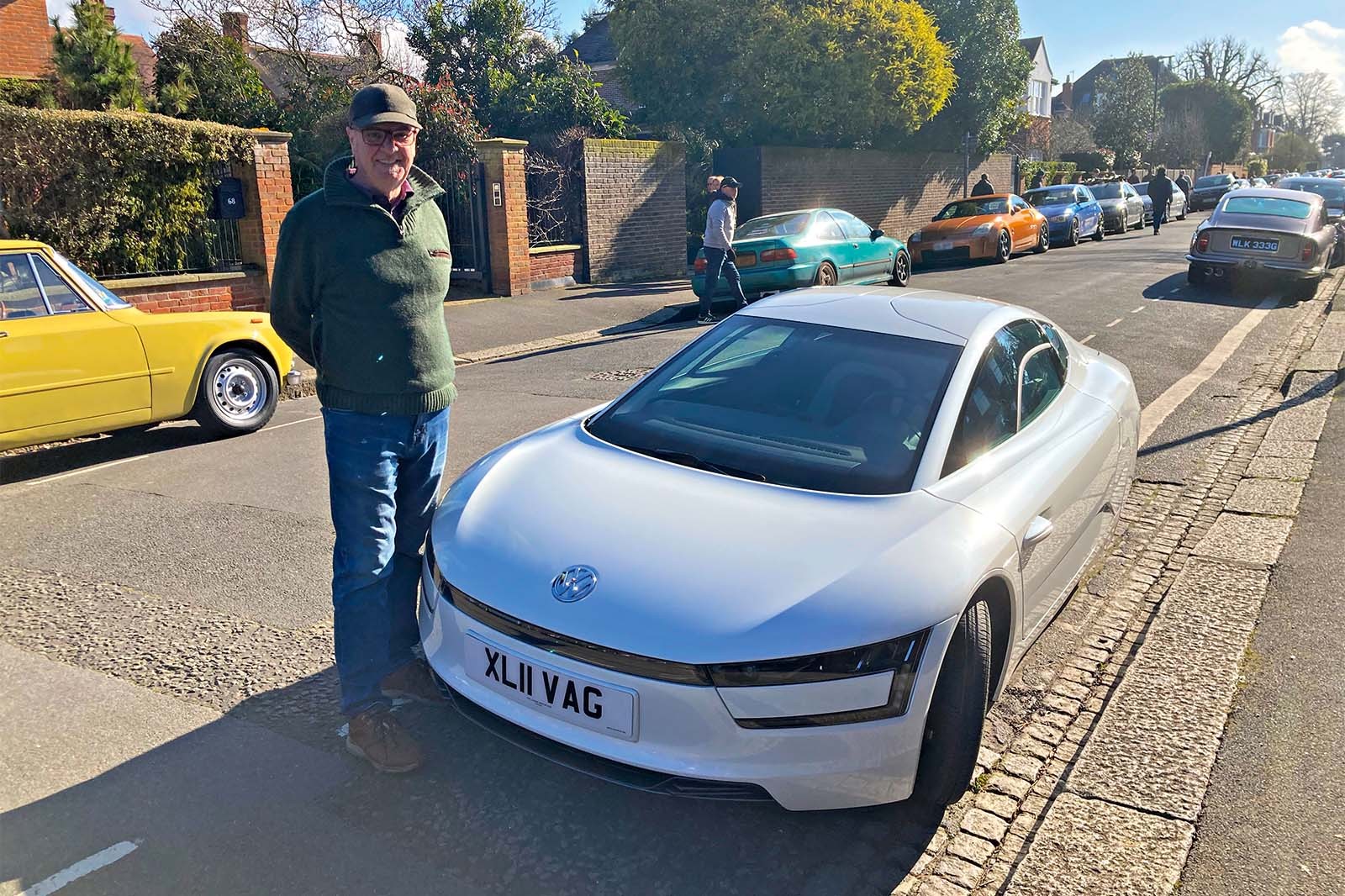
The Volkswagen XL1 isn’t just a car; it’s a rolling experiment in extreme efficiency. Parked on a quiet street, its butterfly doors open to reveal a two-seat cockpit designed for one purpose: to redefine fuel economy. Owner David Power’s vehicle turns heads wherever it goes, and for good reason. This isn’t your average commuter car.
Engineering a Hyper-Efficient Machine
The XL1’s design is radical. Built around a carbon fiber monocoque, it weighs just 795 kg (1,753 lbs). Its drag coefficient of 0.186 is 2.5 times lower than a standard VW Golf, slicing through air with minimal resistance. The powertrain is equally unusual: an 800cc two-cylinder diesel engine paired with an electric motor, producing a combined 72 horsepower.
This combination allowed VW to claim 313 miles per gallon in diesel-electric mode. In pure diesel mode, the XL1 still achieves 140 mpg while emitting only 21 grams of CO₂ per kilometer. The car was born from a decade-long development project driven by Ferdinand Piëch’s vision for a vehicle capable of traveling 100 kilometers on a single liter of fuel.
The Irony of Timing
The XL1’s launch coincided with the Dieselgate scandal, where Volkswagen was caught cheating on emissions tests. As David Power points out, “VW designing a diesel that could do 300 mpg and, on the other hand, cheating in official emissions tests… didn’t look good.” The timing undermined the XL1’s purpose as a showcase for clean diesel technology.
How It Works
The XL1 isn’t a traditional range-extender. The diesel engine and electric motor can work together or independently. In EV mode, it runs solely on battery power. When accelerating, both systems combine for brisk performance. The 313 mpg figure is achieved under specific drive-cycle conditions maximizing electric usage while minimizing diesel consumption. In real-world scenarios, Power reports seeing around 150 mpg on longer journeys.
Notably, the XL1 omits power steering, further reducing weight and complexity. The suspension is tuned for comfort and control despite the car’s uncompromising focus on efficiency.
“It’s a proper VW product. The body is stiff but the car rides well; the suspension has good travel and control.” – David Power
The XL1 wasn’t built for mass production, and its rarity makes it a collector’s item. But it remains a striking example of what’s possible when engineering prioritizes extreme efficiency over all else.
The Volkswagen XL1 stands as a reminder that even in the era of electric vehicles, there was a brief but fascinating moment where diesel technology pushed the boundaries of fuel economy further than many thought possible.