Automakers have long battled noise, vibration, and harshness (NVH) in vehicle design. Porsche, however, is taking a revolutionary step: using computer simulations and a unique road simulation test bench to detect and eliminate unwanted vibrations before they ever reach the production line. This isn’t just about comfort; it’s about engineering precision and a high-quality driving experience.
The Challenge of NVH
For decades, engineers have relied on everything from sound deadening to rigorous road testing to tame NVH. The problem is complex: vibrations don’t always originate where they’re felt. A harmonic disturbance in the drivetrain, for example, might cause a body panel to resonate. Early methods were often crude, involving physical inspection and guesswork.
The modern approach relies on computer modeling, but even the most advanced simulations require real-world validation. That’s where Porsche’s new FaSiP test bench comes in.
Introducing FaSiP: The Road Simulation Revolution
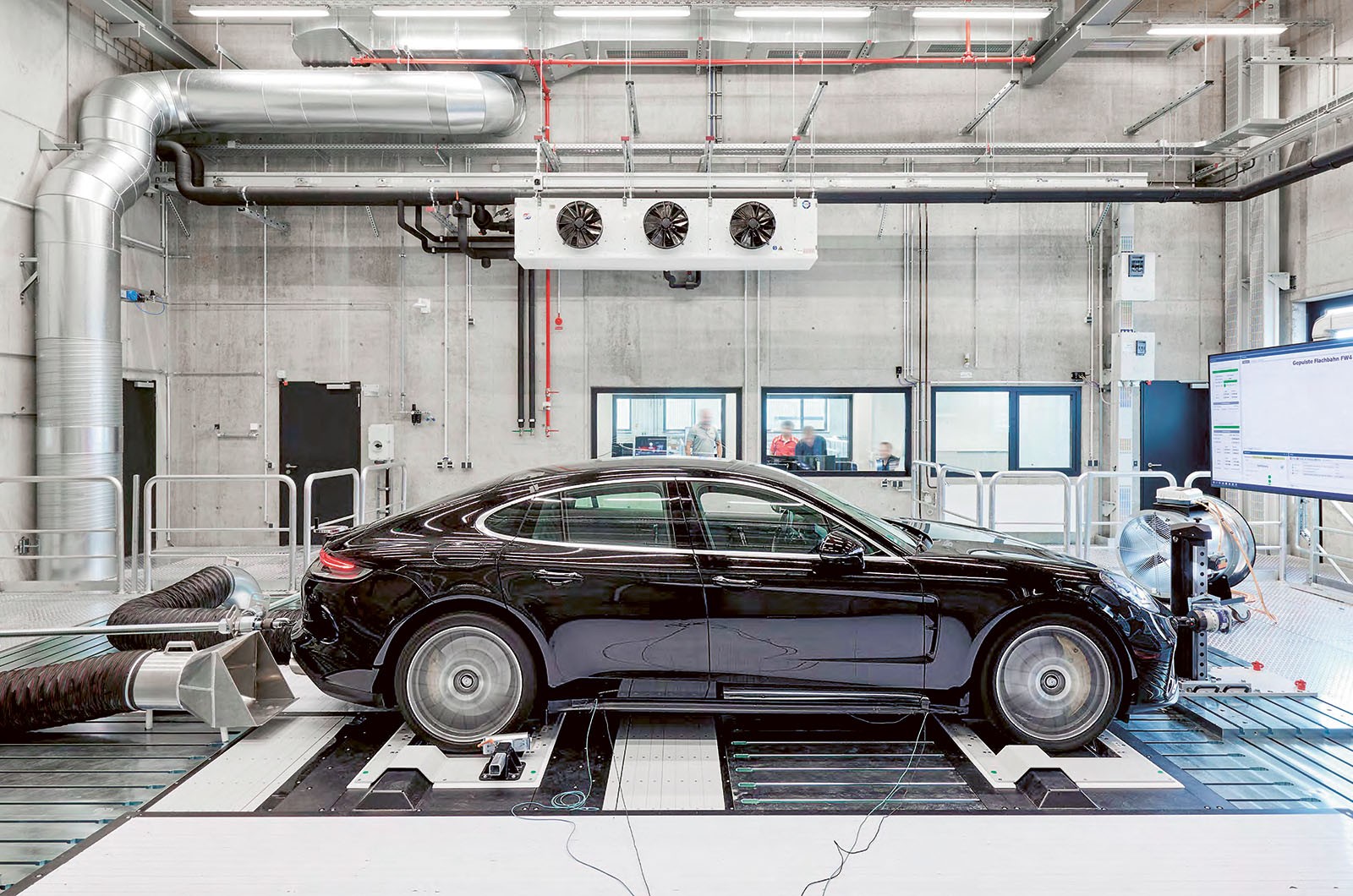
Porsche’s FaSiP (Facility for Simulation in Powertrain) is designed to recreate road conditions in a controlled environment. Cars are mounted on flexible supports, with each wheel running on a thin steel belt. This setup allows engineers to induce vibrations mimicking real-world disturbances: potholes, uneven surfaces, even the impact of hitting a manhole cover.
The key difference from traditional testing is precision. FaSiP can isolate specific frequencies and forces, allowing engineers to pinpoint the source of vibrations with surgical accuracy. They can modify or eliminate certain excitations during tests, effectively dissecting the problem in real-time.
Why This Matters
The ability to simulate road conditions at high speeds (up to 155 mph) and across a broad frequency range (0-50Hz) is groundbreaking. Porsche claims FaSiP can reproduce any vibration the car has experienced anywhere in the world. This level of detail isn’t just about refinement; it’s about predicting and preventing issues before they escalate.
The automotive industry is moving towards hyper-precise engineering. FaSiP represents the future of this trend, where computer modeling and advanced testing converge to deliver a smoother, quieter ride. By eliminating vibrations at the source, Porsche is setting a new standard for vehicle refinement and quality.