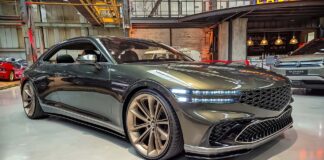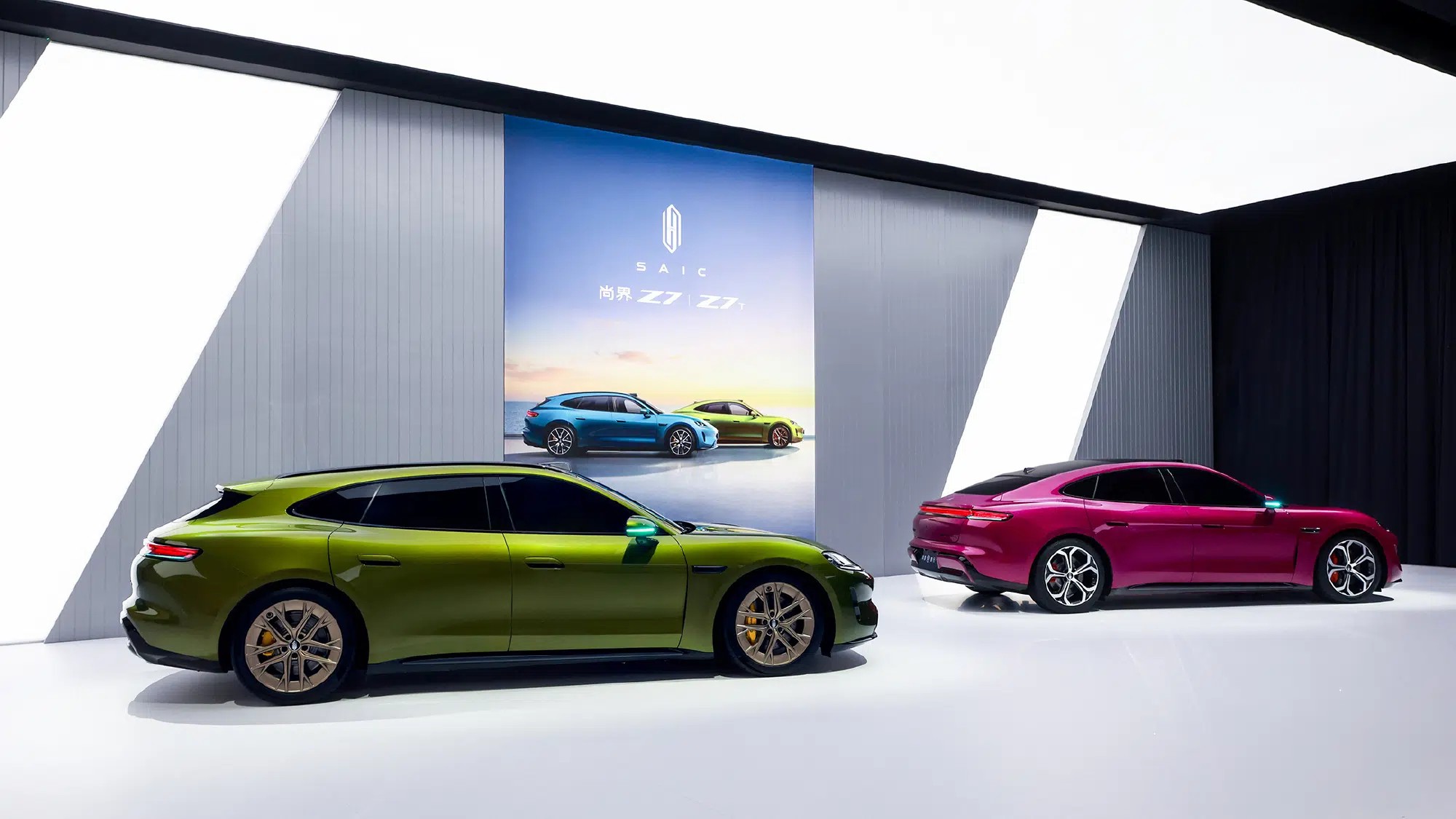
The joint venture between Huawei and state-owned automaker SAIC – known domestically as Shangjie, but marketed internationally as Saic – has begun presales for its new electric vehicles (EVs): the Z7 sedan-coupe and the Z7T shooting brake. These models, now available through Huawei’s HIMA network in China, offer a striking blend of performance, range, and technology.
Key Specs & Performance
The Saic Z7 and Z7T deliver up to 905 km (562 miles) of range under CLTC testing conditions, placing them among the leaders in EV endurance. Both cars feature a distinctive design clearly influenced by the Porsche Taycan, with sleek lines and aggressive styling.
- The base model delivers 354 horsepower (264 kW) from a single rear motor.
- The high-performance variant packs 582 horsepower (434 kW) with a dual-motor all-wheel drive system.
- Acceleration from 0 to 100 km/h (0 to 62 mph) takes just 3.44 seconds in the Z7 sedan.
The cars ride on staggered 20-inch wheels and boast an advanced suspension system. Inside, a minimalist design centers around a large floating touchscreen, thin LCD instrument panel, and a head-up display.
Advanced Tech: LiDAR & Autonomous Driving
A standout feature of the Z7 and Z7T is the Huawei ADS 4.1 assisted driving system, which includes an 896-line LiDAR sensor. This technology allows the vehicles to detect obstacles as small as 14 cm in height at distances up to 122 meters, even in low-light conditions.
The cars also feature premium amenities like soft-close doors, an automatically opening front trunk, wireless charging pads, and a “zero-gravity” passenger seat. Trunk space is generous, with the Z7T offering up to 1,694 liters (59.8 cubic feet) with the rear seats folded.
Pricing & Market Position
The Saic Z7 sedan starts at 228,800 yuan (approximately $33,225 USD), while the Z7T shooting brake is priced slightly higher at 239,800 yuan ($34,820 USD). Early adopters can receive purchase benefits worth up to 11,000 yuan ($1,600 USD).
The launch of the Z7 and Z7T signifies a growing trend in China: the integration of tech giants like Huawei into the automotive industry. This move challenges traditional automakers and accelerates the development of advanced EV technology.
The Saic Z7 and Z7T represent a significant step towards China’s ambitions in the electric vehicle market. With their combination of performance, range, and cutting-edge autonomous driving features, these cars are poised to become a competitive force in the rapidly evolving automotive landscape.