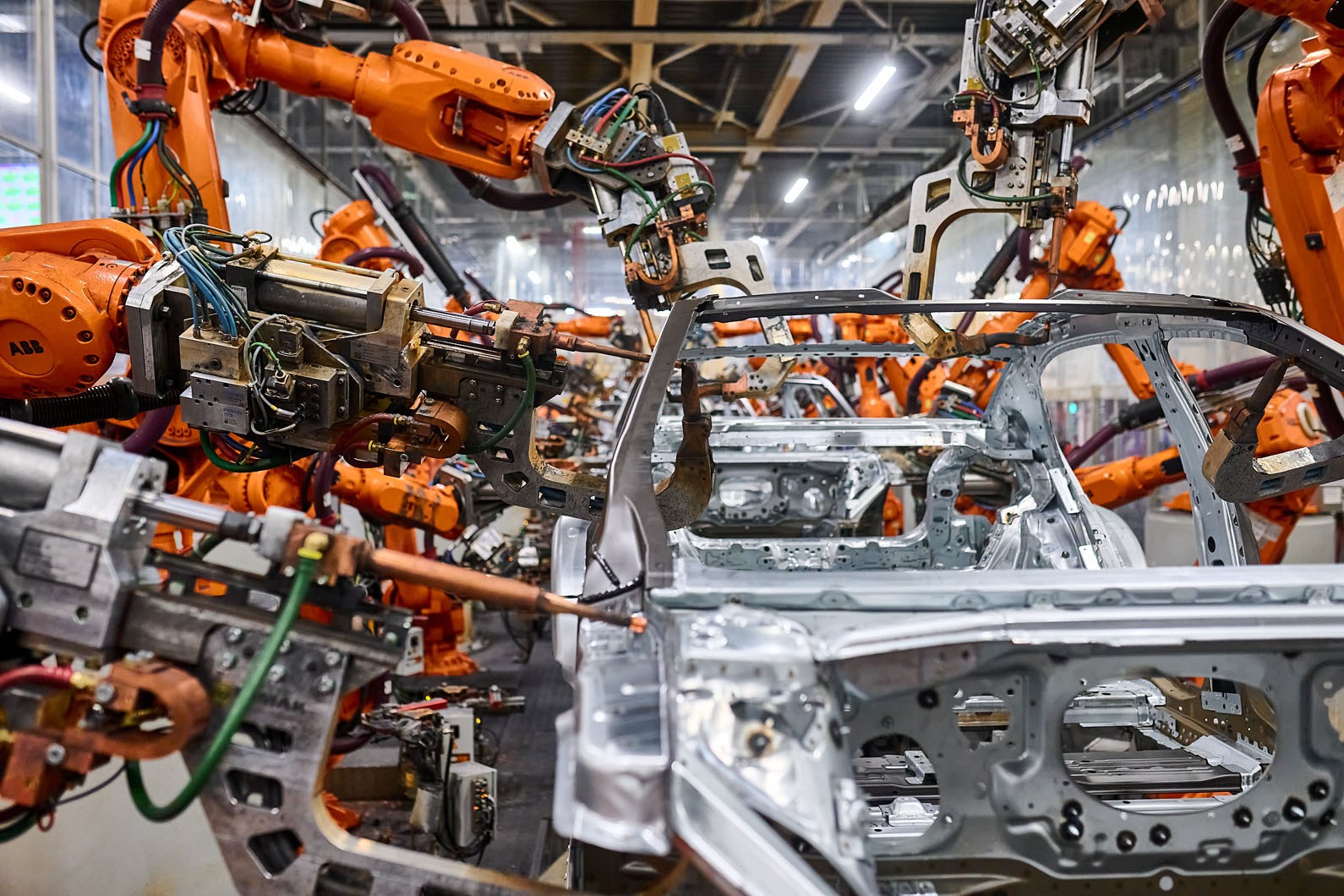
BMW has completed a massive €650 million modernization of its Munich plant, integrating artificial intelligence and a fleet of 2,000 robots to prepare for its next-generation “Neue Klasse” vehicles. The overhaul fundamentally alters production lines, logistics, and quality control, marking one of the most significant industrial transformations in the automotive sector.
Зміст
New Assembly Building and Tech Refits
The centerpiece of the upgrade is a new three-story i3 assembly building. Alongside this, BMW has completely refurbished its body, paint, and press shops with cutting-edge technology designed to simplify production. This isn’t just an incremental upgrade; it’s a wholesale shift to maximize efficiency and automation.
The “AI Brain”: Centralized Control
The most critical element of the transformation is the plant’s new AI-powered operational system. Incoming CEO Milan Nedeljković calls it “unique in our industry.” This AI manages all aspects of production—from assembly lines and quality checks to supply chain logistics.
Robot Logistics Fleet
A fleet of roughly 2,000 electric autonomous robots handles the “last mile” of material transport, moving stock from delivery trucks to production lines. BMW states these robots form the “backbone” of the new factory, projected to complete over 17,000 operations daily by 2027. This represents a significant reduction in manual labor and a boost in operational speed.
Digital Twins for Real-Time Optimization
Beyond physical robots, the AI also uses digital twins to simulate thousands of future production scenarios in real-time. This allows BMW to test and refine processes before they are implemented on the factory floor, further improving efficiency. The technology is designed to minimize errors and maximize output.
The significance of this move extends beyond BMW. It signals a broader industry trend towards extreme automation and AI integration, raising questions about the future of automotive manufacturing jobs and the potential for similar transformations across other sectors. The long-term impacts on workforce skills and labor markets will be a key issue to watch.
The Munich plant now stands as a model for the future of automotive production: highly automated, data-driven, and optimized by artificial intelligence.