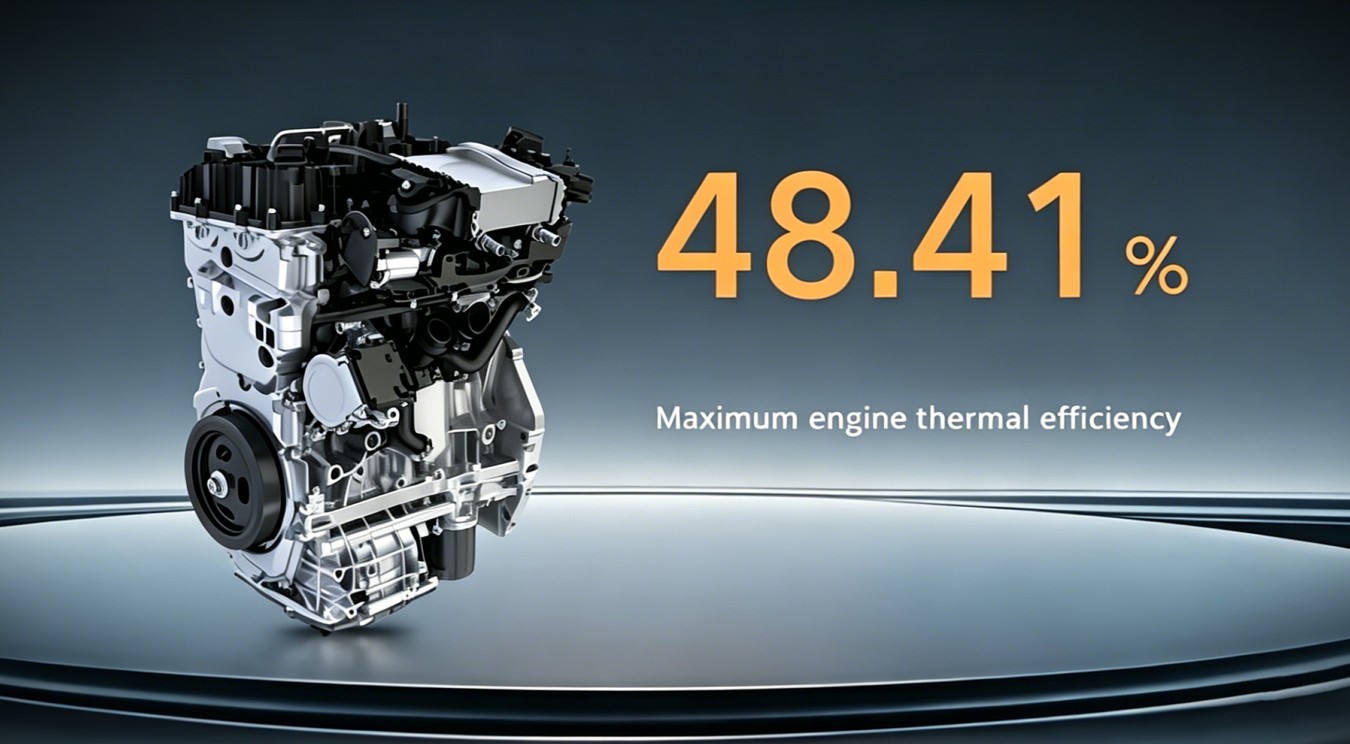
Geely has officially launched its next-generation i-HEV “Intelligent Energy” hybrid system, signaling a strategic push to dominate the high-volume passenger vehicle market. By combining high thermal efficiency with advanced AI energy management, the new system aims to bridge the gap between traditional internal combustion engines and fully electric vehicles.
Зміст
Breaking Efficiency Records
The core of the i-HEV system is a dedicated hybrid engine boasting a 48.4% thermal efficiency rate—one of the highest figures currently seen in mass-produced vehicles. This hardware is paired with an 11-in-1 electric drive unit capable of delivering 230 kW of power.
Key performance highlights include:
– Rapid Acceleration: The system can move from 0 to 30 km/h in just 1.84 seconds, focusing on responsiveness in urban driving.
– Guinness-Certified Efficiency: Geely has secured third-party verification for a combined fuel consumption figure of 2.22 L/100 km.
– AI Optimization: The system uses artificial intelligence to manage energy flow, improving overall efficiency by more than 10% compared to previous iterations.
Strategic Shift: The Hybrid Resurgence
Geely’s move reflects a broader trend across the Chinese automotive industry. While the global shift has leaned heavily toward Battery Electric Vehicles (BEVs), many manufacturers—including Geely, Chery, and Changan—are doubling down on Hybrid Electric Vehicles (HEVs).
This strategy serves several critical purposes:
1. Cost Control: HEVs typically use much smaller batteries (approx. 1–2 kWh) than plug-in hybrids or BEVs, significantly reducing exposure to volatile raw-material costs.
2. Consumer Demand: As seen with Toyota, which reported that hybrids accounted for 42% of its 2025 sales, there is a massive global appetite for vehicles that offer electrification without “range anxiety.”
3. Regulatory Landscape: As Chinese policy shifts toward “technology-neutral” approaches and reduces specific incentives for plug-in hybrids, highly efficient conventional hybrids are becoming more competitive.
Rollout and Model Integration
The i-HEV technology will not be limited to niche models; Geely plans to integrate it into its most important high-volume nameplates. The rollout is scheduled to scale up through 2026.
The system will support various engine configurations, including 1.5L, 1.5TD, and 2.0TD variants. Initial deployments will focus on:
– Geely Preface (Xingrui): Achieving a WLTC fuel consumption of 3.98 L/100 km.
– Geely Monjaro (Xingyue L): Recording 4.75 L/100 km.
– Future expansion: Plans include the Emgrand and Boyue models.
These new hybrid variants will largely maintain their current designs but will feature upgraded interiors, including the Flyme Auto infotainment system and seamless smartphone integration via Huawei HiCar.
Beyond Electrification: The Methanol Alternative
While perfecting hybrid technology, Geely remains a pioneer in alternative fuel research. Chairman Li Shufu has frequently advocated for methanol-powered vehicles, noting that methanol possesses an energy density more than ten times that of lithium-ion batteries. This approach addresses the weight and energy consumption challenges inherent in heavy-duty battery-electric transport, positioning Geely to lead in multiple energy pathways simultaneously.
Geely’s i-HEV launch represents a calculated balance between high-performance electric driving and the economic pragmatism of hybrid technology, ensuring the brand remains competitive as the market matures.
Conclusion
By deploying the i-HEV system across its core lineup, Geely is positioning itself to capture the massive middle ground of the automotive market: consumers seeking high efficiency and low operating costs without the infrastructure hurdles of full electrification.