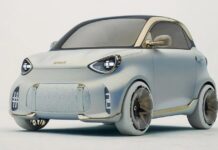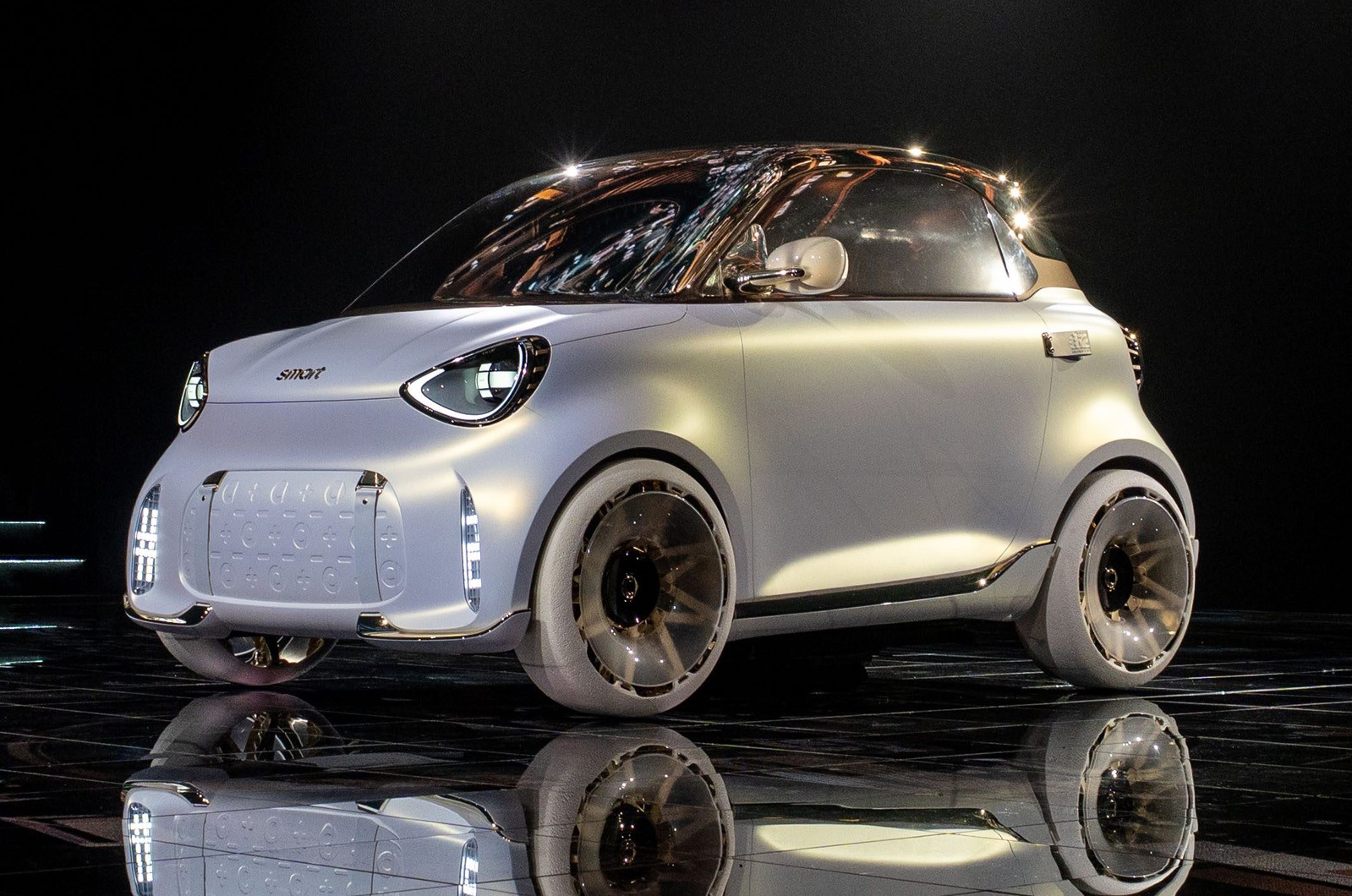
Smart is returning to its origins. After a period of expanding into larger SUV models, the brand has unveiled the Concept #2, a fourth-generation reimagining of the legendary Fortwo. Designed as a premium, ultra-compact electric vehicle (EV), the #2 aims to reclaim its title as the smallest electric car on the market when it hits UK dealerships next year.
Зміст
A Return to Compact Roots
For years, the Smart Fortwo was synonymous with urban agility. While recent Smart models have grown in size, the #2 signals a strategic pivot back to “uncompromised urban capability.”
The concept maintains the signature “wheels-at-the-corners” stance that made the original Fortwo a city staple. Despite its premium ambitions, it remains incredibly small:
– Length: Just 2,792mm (only about 100mm longer than its predecessor).
– Agility: A tight turning circle of 6.95m.
– Market Position: It is significantly shorter than the Fiat 500e, and unlike micro-cars like the Citroën Ami, it remains a full-sized passenger vehicle rather than a quadricycle.
Built on a Dedicated EV Foundation
One of the most significant technical shifts is the move away from converted internal combustion engine (ICE) platforms. The previous electric Fortwo was adapted from a petrol car, which often limits space and efficiency.
The new #2 is built on Geely’s bespoke ‘Electric Compact Architecture.’ This platform is a result of the joint venture between Geely and Mercedes-Benz, with the latter leading the design direction. By using a dedicated EV architecture, Smart can “maximise interior space” within a tiny footprint—a common challenge for small cars.
Performance and Charging Capabilities
While full technical specifications are being reserved for the Paris Motor Show in October, Smart has shared several key performance metrics:
– Range: An estimated 186 miles on a single charge.
– Rapid Charging: The ability to charge from 10% to 80% in under 20 minutes.
– V2L Technology: The car will feature vehicle-to-load (V2L) “reverse-charging” capabilities. This allows the car to act as a mobile power bank for external devices, a high-end feature rarely seen in vehicles of this size.
Premium Minimalism
The #2 aims to move the city car segment “beyond mere utility.” Moving away from the sparse, plastic-heavy interiors of the past, the new model focuses on a “plusher” and more luxurious aesthetic.
The design language follows a minimalist philosophy, characterized by:
– High-end materials: The use of leather and translucent surfacing.
– Sophisticated finishes: A focus on “reduced essence” design paired with premium accents like two-tone gold paintwork.
This move suggests Smart is targeting an urban professional demographic—drivers who need a car that is easy to park in dense cities but offers the luxury and tech expected of a premium brand.
Summary
The Smart #2 Concept marks a strategic return to the compact city car segment, leveraging a dedicated electric architecture to provide premium features, rapid charging, and impressive urban agility. It positions Smart to compete not just as a utility brand, but as a provider of high-end, compact electric mobility.