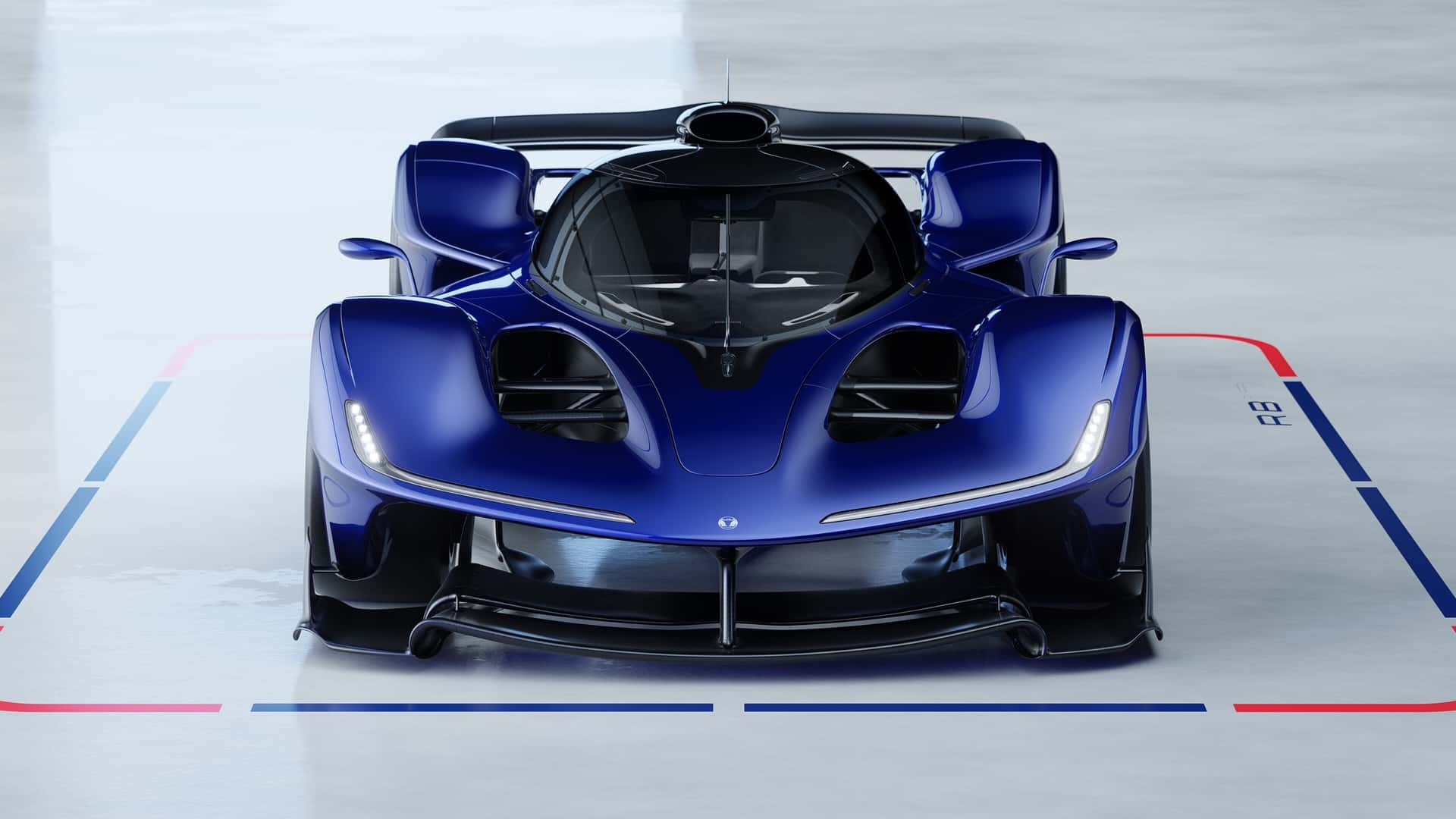
Red Bull is moving from concept to reality with its highly anticipated RB17 hypercar. The company has officially commenced the final assembly of the first production unit, marking a significant milestone in a project that began nearly two years ago. Following this assembly phase, the vehicle will undergo circuit testing and development sessions within weeks, paving the way for customer deliveries scheduled to begin in the spring of next year.
Зміст
From Goodwood to the Garage
The RB17 was originally unveiled to the public at the 2024 Goodwood Festival of Speed, where it captivated enthusiasts with its radical aerodynamic design and raw performance metrics. Designed by legendary aerodynamicist Adrian Newey, the car represents a unique intersection of Formula 1 engineering philosophy and road-legal (though track-focused) hypercar execution.
Rob Bray, the program chief for the RB17, confirmed to Autocar that the final assembly phase is underway. This step is critical, as it transitions the vehicle from a prototype stage to a functional machine ready for rigorous real-world validation. The upcoming testing period will allow Red Bull to fine-tune the car’s systems before handing the keys to its owners.
Engineering a 1,200-HP Beast
At the heart of the RB17 lies a powertrain that balances traditional mechanical engineering with modern hybrid efficiency. The setup features a Cosworth-developed, naturally aspirated 4.5-liter V12 engine capable of revving to an impressive 15,000 rpm. This engine alone produces 1,000 horsepower, a testament to the enduring appeal of high-revving internal combustion engines in the hypercar segment.
To boost performance and efficiency, the V12 is paired with a 200-horsepower electric motor integrated into the Xtrac gearbox. This hybrid system brings the total output to 1,200 horsepower. Despite this immense power, Red Bull has managed to keep the vehicle’s weight remarkably low, with the car expected to weigh just under 2,000 pounds (approximately 907 kg). This low mass contributes to its ability to reach speeds of up to 220 mph.
Aerodynamics and Evolution
The RB17 is not just about straight-line speed; it is engineered for extreme track performance. The car generates up to 3,747 pounds of downforce, a figure so substantial that Red Bull had to implement a system to reduce downforce at speeds above 93 mph. This measure was necessary to prevent excessive wear and tear on the tires, ensuring durability during high-speed runs.
Since its initial reveal, the RB17’s design has evolved to enhance performance. One notable change is the addition of a central spine over the engine cover. This structural modification is not merely aesthetic; it plays a crucial role in directing airflow to increase downforce on the rear wing, demonstrating how every element of the car serves a functional purpose.
Why This Matters
The RB17 is significant not only for its performance but also for what it represents in the automotive landscape. It is one of the few new hypercars to feature a naturally aspirated V12, a powertrain configuration that is rapidly disappearing due to emissions regulations and the industry’s shift toward electrification. Furthermore, the involvement of Adrian Newey—one of the most successful figures in Formula 1 history—adds a layer of prestige and engineering credibility