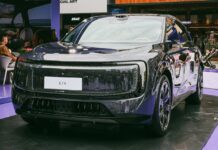
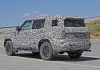
The Chinese automotive industry is rapidly shifting from budget-conscious engineering to premium luxury, and the Leapmotor D19 is the brand’s boldest statement yet. Positioned as the flagship above the popular B10 and C10 models, this full-size SUV aims to challenge established giants like the BMW X7, Mercedes-Benz GLS, and the electric-focused Kia EV9.
During a brief first drive in China, the D19 revealed itself to be more than just a large vehicle; it is a sophisticated blend of high-end comfort, advanced technology, and flexible powertrain options. While an Australian launch is not yet confirmed, the D19’s specifications suggest it could arrive by 2027, potentially disrupting the local large SUV market with aggressive pricing and premium features.
Зміст
A New Tier of Size and Presence
The D19 is an imposing vehicle, designed to compete in the upper-large SUV segment. Its dimensions are substantial:
* Length: 5,252mm
* Width: 1,995mm
* Height: 1,780mm
* Wheelbase: 3,110mm
To put this in perspective, the D19 is longer than most large SUVs currently sold in Australia. It sits physically closer in size to the Cadillac Vistiq and Mercedes-Benz GLS than to the slightly more compact Kia EV9 or Hyundai Ioniq 9. This extra length is not just for show; it provides genuine three-row space, catering to families or executives who require serious rear-seat accommodation.
Interior: The “Zero-Gravity” Experience
If the exterior draws attention, the interior secures loyalty. The cabin is the D19’s strongest selling point, offering a level of comfort that rivals vehicles costing twice as much.
The Six-Seat Advantage
The six-seat configuration is the standout option for buyers prioritizing comfort over maximum capacity. The second row features captain’s chairs equipped with heating, ventilation, and massage functions. These seats utilize “zero-gravity” technology, designed to distribute body weight evenly and reduce pressure on the spine. During testing, the comfort was so profound that occupants reported falling asleep while using the massage function.
Technology and Design
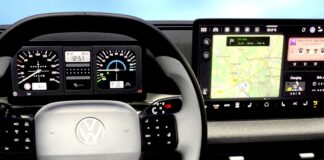
The interior is dominated by high-resolution screens, typical of leading Chinese manufacturers:
* 15.6-inch central touchscreen
* 10.2-inch digital instrument cluster
* 9.0-inch rear passenger touchscreens
All displays are powered by Qualcomm Snapdragon 8795 chips, the same processors found in the latest flagship smartphones. This ensures menu responsiveness and high-resolution graphics, avoiding the lag often found in older automotive systems. The available “leather” color options, including rich browns and bright accents, add a bespoke feel, though long-term durability against family use remains to be seen.
Powertrain: EV or Range-Extender?
Leapmotor offers the D19 with two distinct powertrain architectures, giving buyers flexibility based on their charging infrastructure and driving habits.
1. Extended-Range Electric Vehicle (EREV/REEV)
- Engine: 1.5-litre turbocharged petrol engine.
- Role: The engine acts solely as a generator to recharge the battery; it does not drive the wheels.
- Drive: Dual-motor all-wheel drive.
- Battery: Lithium Iron Phosphate (LFP).
- Why it matters: This option eliminates range anxiety, offering electric-only driving for daily commutes with petrol backup for long trips. It is likely the more practical choice for many Australian households.
2. Battery Electric Vehicle (BEV)
- Engine: None.
- Drive Options: Dual-motor or Tri-motor all-wheel drive (Performance trim).
- Battery: Larger LFP battery pack.
- Why it matters: The tri-motor version offers superior performance and includes “CrabSteer” technology, which allows the rear wheels to turn in sync with the front, significantly improving maneuverability in tight spaces.
Driving Impressions: Agile for Its Size
Our test drive was conducted on a controlled proving ground in China, so these are initial impressions rather than a definitive verdict. We tested the entry-level REEV 400 variant.
Performance and Acceleration
Despite weighing nearly three tonnes in higher specifications, the D19 feels surprisingly agile. The electric powertrain delivers instantaneous torque, resulting in smooth, hesitation-free acceleration. However, real-world performance did not match official claims. While the manufacturer claims a 0-100km/h time of 6.0 seconds (3.9 seconds for the top-spec BEV), our test with four adults onboard resulted in approximately 8.5 seconds. This discrepancy may be due to battery conditioning, load, or testing conditions, but it highlights the need for independent verification.
Ride and Handling
The D19 features air suspension and Continuous Damping Control (CDC), aimed at providing a luxurious, isolated ride. On the smooth proving ground, the vehicle handled with ease. The steering offers minimal feedback, a common trait in luxury SUVs prioritizing comfort over sportiness.
A key highlight is the turning circle. The standard D19 has an 11.4-meter turning circle, while the tri-motor version with CrabSteer reduces this to 10.8 meters. For context, the shorter Kia EV9 has a 12.4-meter turning circle. This makes the D19 remarkably easy to maneuver in urban environments, despite its massive footprint.
Pricing and Availability in Australia
Australian pricing has not been announced, but we can estimate based on Chinese market data and typical import markups.
- China Base Price: ¥219,800 (~A$45,000) for the REEV.
- China Top Price: ¥269,800 (~A$55,000) for the tri-motor BEV Performance.
Adding an estimated A$10,000–15,000 for localization, shipping, and taxes, the D19 could launch in Australia between A$55,000 and A$70,000. This would position it significantly below competitors like the Kia EV9 and Hyundai Ioniq 9, which often start above A$100,000 when fully loaded.
Warranty and Safety
- Warranty: Likely a six-year/150,000km vehicle warranty and an eight-year/160,000km battery warranty, consistent with other Leapmotor models in Australia.
- Safety: No ANCAP rating yet. The vehicle is designed to meet Euro NCAP standards, suggesting a potential five-star rating, but this must be confirmed upon local launch.
Why This Matters for the Australian Market
The Leapmotor D19 represents a strategic shift in how Chinese automakers are entering Western markets. Rather than competing solely on price, they are now competing on value and luxury.
- Disrupting the Premium Segment: By offering features like air suspension, tri-motor drive, and high-end interiors at a mid-size SUV price point, Leapmotor forces established brands to justify their premiums.
- Solving Range Anxiety: The availability of a Range-Extender (EREV) version addresses one of the biggest barriers to EV adoption in Australia: the fear of running out of charge on long trips.
- Family Practicality: With genuine three-row space and a six-seat luxury option, it directly targets families who need space but are priced out of European luxury SUVs.
Conclusion
The Leapmotor D19 is a promising flagship that combines the size of a Mercedes-Benz GLS with the price point of a mid-range SUV. Its interior comfort, advanced technology, and flexible powertrain options make it a compelling option for buyers seeking luxury without the premium price tag. While its performance claims need independent verification and its safety rating remains pending, the D19 has the potential to be a serious contender in Australia’s large SUV market when it arrives in 2027.
Key Takeaway: The D19 isn’t just a bigger Leapmotor; it’s a direct challenge to the luxury SUV segment, offering premium features at a disruptive price point. Watch this space for local launch details.