Lightweight. Sharp. Balanced. These words usually cost a fortune.
But not for the Toyota MR2. Its compact frame and mid-engine layout gave it a soul most affordable cars lacked. It proved you didn’t need a trust fund to drive a proper exotic. Just a willingness to learn how the back end moves.
Зміст
Before This, Exotic Was a Niche
Mid-engine cars were scary. Or expensive. Often both.
Place an engine behind the driver? Great for weight distribution. Great for cornering. Bad for wallets. The packaging was a nightmare. Cabin space shrank. Cooling became a puzzle. Mechanics hated crawling into tight spaces.
So the big brands kept them distant. Ferrari 348s. Lotus Esprits. Tempestuous Italians. As Hagerty pointed out, driving them in the 80s felt like handling a volatile mood swing. High servicing costs and fragile reliability made them specialist toys, not daily drivers.
Then there was the Honda NSX.
The first Japanese supercar with Italian soul. Brilliant engineering. Reliable? Sure. Affordable? Hardly. Starting at $60,00 in 1991? Forget it. Ferraris went even deeper into the red. Six figures just for looking at one.
Toyota decided to break the pattern.
They took the exotic layout. Stripped out the ego. Built something you could actually pay for. The Turbo started around $20,00 in the 90s. A fraction of the cost. Twice the fun for regular folks.
The MR2 Arrived
Debuting in 1984. MR2 meant Midship Runabout Two-Seater. Simple name. Complex effect.
While everyone else pushed engines forward, Toyota shoved theirs back. Lightweight. Cheap. Reliable. That’s a weird mix. People trusted Camrys for their durability. Why not a sports car? Suddenly, owning a mid-engine car didn’t mean praying to the service manager. It just meant buying insurance.
It didn’t outsell the Mazda Miata. Good. The MR2 didn’t want to be for everyone. It wanted to be your problem to solve.
Toyota added T-tops. Superchargers. Visual tweaks. But the real game changer was the second generation.
Enter The SW20
- Design by Kunihiro Uchida. The edges softened. The curves sharpened.
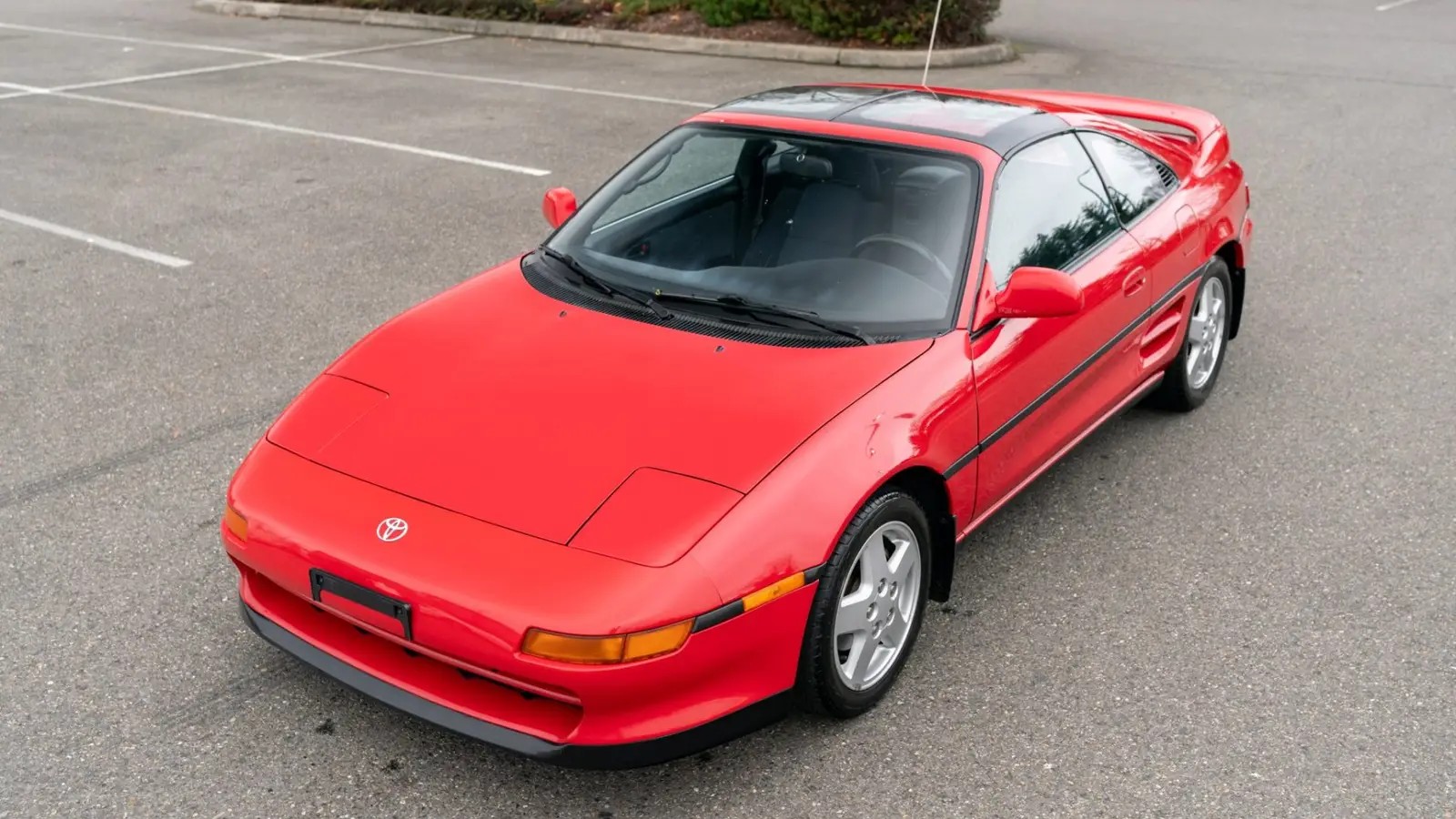
The SW20 looked ambitious. Wider. Longer. More aggressive. Critics immediately spotted the Ferrari 348 influence. No wonder. The silhouette screamed Italian heritage with a Japanese price tag.
Under the hood, the seriousness grew.
The non-turbo had a 2.2-liter four-cylinder. 130 horsepower. Decent. But the Turbo? That was the headline. A 2.0-liter three-valve engine borrowed from the Celica GT-Four rally weapon. Intercooled. Turbocharged.
Hagerty noted the specs well. 200 horsepower at six thousand rpm. 200 lb-ft at just over three thousand. 0-60 mph in six seconds? That wasn’t quick for a hypercar. But for a cheap sports car in the 90? It felt instant.
“Power hard out of a fast bent… with weight squarely planted.” — Car and Driver on the SW20 Turbo.
It felt alive. Analog. Direct.
Why It Bit Back
That’s the catch.
Mid-engine physics punish mistakes. You lift off the throttle? The rear end snaps around. Hard. Unpredictable. New drivers got terrified. The SW20 wasn’t forgiving. It demanded respect.
Practical life suffered too. No trunk. Poor visibility. Mechanics swearing over coolant hoses. T-top leaks turning windshields into saunas.
Toyota eventually fixed some gripes. Better brakes in ’93. Wider tires. Limited-slip diffs. But the personality remained intact. Rough. Raw. Honest.
You don’t miss those quirks? Fine. But modern cars don’t have quirks. They have safety nets. The MR2 wanted you to focus. Really focus.
Still Worth It?
Try finding a clean one. Good luck.
Most got wrecked. Modified poorly. Driven too fast by guys who thought turbo lag was a suggestion. The ones left are rare. Hagerty values high-condition Turbos over $50k. Bring a Trailer shows reality though. $26k for a decent ’91. $71k for a low-mileage survivor. Prices vary wildly depending on history.
Who’s buying? Younger people.
Millennials. Gen Z. They crave the analog experience. Less screen. More metal. They remember—or learn about—a time when driving was a physical act. Not a video game session.
The Supra and NSX are out of reach for many now. The RX-7 joins them. The MR2 remains the entry-level exotic. Affordable. Rare enough. Cool enough.
The End Of An Era
Why aren’t they building them?
Regulations. Safety bars. Crash tests. Emissions standards. All expensive.
Lightweight, cheap, mid-engine fun doesn’t sell units. SUVs do. Cross-overs do. Automakers follow the money. A car like the MR2 needs niche appeal to survive. Niche margins don’t fund R&D today.
Development costs skyrocket. Exchange rates shift. Interest in small sports cars dips. The perfect storm killed the affordable mid-engine car.
Maybe we’ll never see it again.
Maybe that’s okay. The MR2 existed for a moment when cars had personality over prestige. When engineering mattered more than marketing. It offered the thrill of exotic machines without the financial suicide.
And honestly?
That kind of accessible speed feels pretty rare these days. 🏁