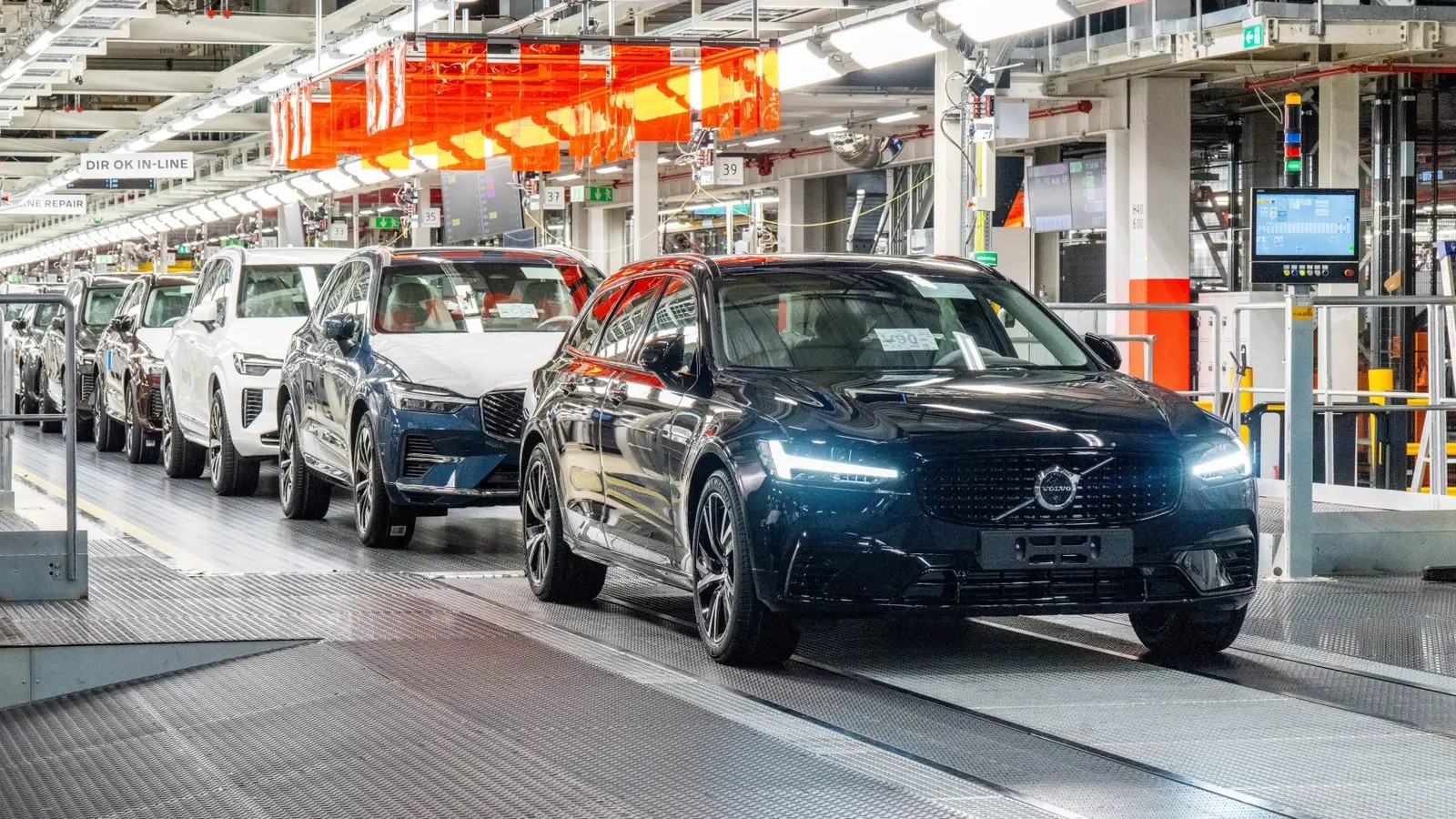
Goodbye felt long. The V60 is done in 2026. The V90 is fading too. For years Volvo leaned hard into SUVs, leaving buyers who liked their cars on the ground searching through classifieds for old V70s rather than accepting an XC60. Those customers never left, they just stopped buying new Volvo cars. Now there is a reason to look closer at what’s coming next.
The SPA3 Promise
Insiders say Volvo is building two new EVs on a fresh SPA3 platform. One will likely be a sedan. The other? A wagon.
Expect an 800-voltage architecture. This matches the speed found in a Porsche Taycan or Hyundai IONIQ 6, meaning you won’t be watching paint dry at the charger. Most current EVs sit on slower 400V systems. The upgrade is practical. Wagon drivers often tow boats, campers, or kids for long hauls. Quick charging matters for that life.
Names like ES60 for the sedan and EV60 for the wagon are circulating. Nothing is set in stone yet. Volvo has played fast and loose with badge naming lately anyway. If the plan holds, it is the strongest sign that Volvo finally hears the echo from its loyal fanbase. The wagon isn’t dead. The demand was just waiting.
The wagon is not dead, and the request for it never went away.
Why It Actually Counts
Volvo wasn’t weird to chase SUVs. Every brand did it. Sales went there, so engineering followed. But the wagon crowd? They are different. The V70 T5 and V70R built a cult following because they offered cargo space and flat pedal power without the floating feeling of a crossover.
The V90 Cross Country kept that spirit alive until its retirement after 2025. Ending it closed the chapter hard.
An electric replacement isn’t just a box to move product. It is an apology wrapped in voltage. It acknowledges the segment the company abandoned. For those who waited through generations of crossovers, a dedicated wagon on a new platform feels significant. Not a footnote.
Can They Pull Off 2028?
Arriving in the U.S. by 2028 gives Volvo two years to finish the car, get it certified, and sort out service networks. That sounds tight. It usually is.
But look at the sales from Q2 2026 overall deliveries dropped 5.6 percent yet EV numbers climbed 14 percent. The shift is real, even if volume wavers slightly. The electric push is gaining weight while general sales soften. That mismatch proves why the lineup needs body styles that actually excite drivers, not just fill a garage.
The sedan might launch too, suggesting a full frontal attack on low-profile cars. It implies strategy. Not a one-off stunt.
Whether the EV60 wears that name or not, the path is visible. It wasn’t clear before. It is now.
Fans have been sitting in the waiting room for years. If this platform arrives on time, the silence might finally be worth the noise.