It’s not a sedan. It’s not an SUV. Not really. It’s something else entirely.
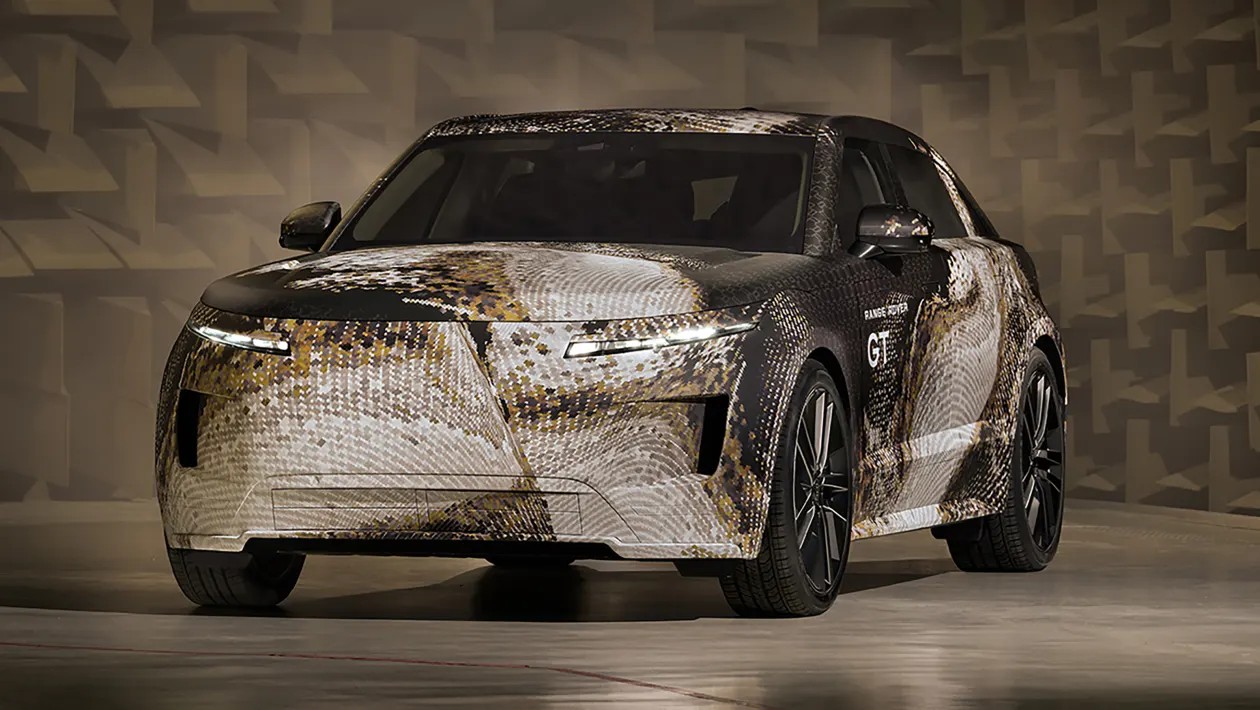
Welcome to the Range Rover GT. This low-slung, four-door electric coupe is the British brand’s boldest move into uncharted territory. It arrives in 2027, slotted as the fifth model in the lineage. It sits above the Velar. It is long, spacious, and sleek. But mostly, it is loud.
Loud in its ambition.
The name “GT” isn’t just marketing fluff. It signals a Grand Tourer built for speed, style, and solitude. This vehicle targets the same buyers who eye the BMW iX3 or the Volvo EX90 (note: the source mentions EX60, but context implies the upcoming EX90/XC60 successor; sticking to source text: EX60). It’s a rival in the high-stakes electric luxury space.
JLR spent years testing prototypes. They finally showed us what’s behind the mask. The result is a design that feels less like a car and more like a statement carved from air and metal.
Зміст
Why the Range Rover GT Looks Different
Look at the silhouette. It’s a fastback. A dramatic departure from the upright SUV box. The windshield angles sharply. The roofline dips, just past the rear wheel cap, before sweeping down into a rounded tail.
This isn’t the Velar. It’s lower. Lower than any Range Rover in history.
How does it handle? The battery pack weighs 736kg. It sits between the wheels. This drops the center of gravity, pinning the car to the asphalt.
Aerodynamics are key. The tapered rear end isn’t just for style—it’s for range. Every inch of sheet metal serves a purpose. The glasshouse is narrow and trapezoidal. The metal is deep and sculpted. The contrast creates that iconic coupe-SUV look. Big wheels. Horizontal lights. It all feels familiar, yet new.
The Cabin: Less Is More, Until It Isn’t
I sat in a camouflaged prototype yesterday. The cockpit is the flagship of three interior options. Duotone. Dark and light grey shades. Straight lines dominate. It looks like a drafting table exploded.
Lee Perry, the interior design manager, calls the full-width air vent a “piano lid” aesthetic. The dash top is upholstered in fabric. Yes, fabric. It’s porous. It lets sound from a hidden central speaker pour out.
Buttons? You’ll miss them. Chief interior designer Alex Watkin says buttons are only kept where they “enhance tactility and safety.” Most are gone. In their place: a 13-inch OLED central screen. 17mm thick. Swollen iPad energy.
It’s not the Tesla arm race. It’s more refined. The digital instrument binnacle and Head-Up Display share the load. Information prioritizes itself. No clutter.
The front seats mimic the Jaguar Type 00 concept. A bridge console separates driver and passenger. Its translucent cover glows. Smartphones charge wirelessly underneath. Vertical chrome strips end the dash with bookends of light.
Rear Space and Comfort
Is it cramped? Not even close.
The Range Rover GT offers eight inches of kneeroom in the rear. More than the BMW iX3. More than the Volvo EX60.
Headroom is surprisingly ample despite the massive panoramic roof. The biggest in Range Rover history. It features electrochromatic glass. A semi-circular indentation houses the telematics pod but tapers to spare headroom for the fifth seat.
Four-seat config? Available. A center armrest folds down. A screen controls heating, cooling, and climate for the back. Twin chargers in the bridge. Twin cup holders slide out near your legs.
All seats fold flat. Practicality is hidden under the luxury veneer. The seats themselves use Ultrafabric. Feels like leather. Acts like fabric. Elastic seams. Hidden zippers. Resistant to temperature extremes.
“The GT’s blend of effortless performance… and all-terrain capability is pure Range rover,” says Martin Limpert.
Quietness is a feature, not a bug. Designer Perry claims you can talk to the rear passenger at 130 mph without turning your head. That’s not just good insulation. That’s silence.
The EMA Architecture: Built Electric First
Underneath, the Range Rover GT uses the Electric Modular Architecture (EMA). Originally meant for hybrids. Now pure EV.
Adrian Mardell, former CEO, shelved the hybrid concept when EV sales spiked. Then reality hit. Adoption slowed. JLR put the hybrid back on the plan. But not for 2027. The launch model will be pure electric. Hybrids might come in 2028.
The battery tech trickles down from the Range Rover Electric (arriving late 2026). And the Sport Electric.
Tata’s gigafactory in Bridgwater will supply the prismatic cells. They pack tightly. Rectangular modules. Scalable power packs. Cell-to-pack design. Saves weight. Saves money. No framework needed.
It’s not cell-to-body like some Teslas. The floor isn’t the battery. But it’s close enough.
Up to 120kWh capacity. Single layer tray. Power electronics tucked transversely under the rear seats. Where a fuel tank used to be.
Range and Charging: Hitting 500 Miles
A battery over 100kWh aims for 500 miles of range. Matches the BMW. Matches the Volvo.
Aerodynamics help. Single-pedal driving maximizes regeneration. The 800-volt system allows ultra-rapid charging. 350kW peak.
10 to 80% in roughly 20 minutes. Not bad. Not terrible. Just efficient.
In-House Motors
JLR didn’t outsource the brains of the operation. 18 months of supplier scouting yielded nothing suitable. Electric motors need low-speed torque for off-roading. And high efficiency for the highway.
They built their own. Electric Drive Units (EDUs). Permanently excited synchronous motors. Silicon carbide inverters. Heat-resistant. Efficient. They convert DC to AC. Then reverse it to harvest braking energy.
One EDU per axle. Combined output? 542bhp. 850Nm. In the big Range Rover. The GT will likely see lower outputs in base models. But high-end trims? Expect numbers to match.
Manufactured in Wolverhampton. Close by. We saw the prototype spinning.
Terrain Response Goes Electric
All-wheel drive is standard. Because it’s a Range Rover.
The launch model matches the big Range Rover Electric’s capabilities. Terrain Response system optimizes the drivetrain. Sand. Grass. Gravel. Snow. Rock crawling.
Wading depth? 900mm. Same as the combustion versions.
Electric motors offer precise control. Instant high revs. Individual wheel braking to manage slip. Integrated Traction Management detects slip 100x faster than mechanical systems. Off the power. On the power. Faster than a combustion engine could ever dream of being.
Made in Britain
Halewood. Merseyside. The upgraded plant.
£250 million invested. New electric body assembly building. Revised production lines for the 4.8m body. Paint shop capacity increased for contrasting roof colors.
Robots fit doors and glass. Precision gaps. Battery installation managed closely. Weight distribution is critical. Misalignment isn’t an option.
Production starts first half of 2027? We’ll see. Delays are common in the EV world. But Halewood is ready.
The Price of Entry
The current petrol/diesel/phev Velar starts around £57,000? A bargain these days.
The electric version? Unconfirmed. But with step-change tech. Luxury positioning. Electric drivetrains. Expect over £70,000 easily.
Maybe more. Maybe much more.
The Range Rover GT isn’t just a car. It’s a declaration. An electric grand tourer. Quiet. Fast. Capable. Unapologetically expensive.
Will it rival the BMW iX3 and Volvo EX90? It will try. With less trunk space than a sedan? Probably. But who cares about trunks when you can have a roof that vanishes?
The question isn’t if it’s good. It’s if you can live without it. Or if you can afford it.
Two different problems. Both real. Both waiting for 2027 to answer.