


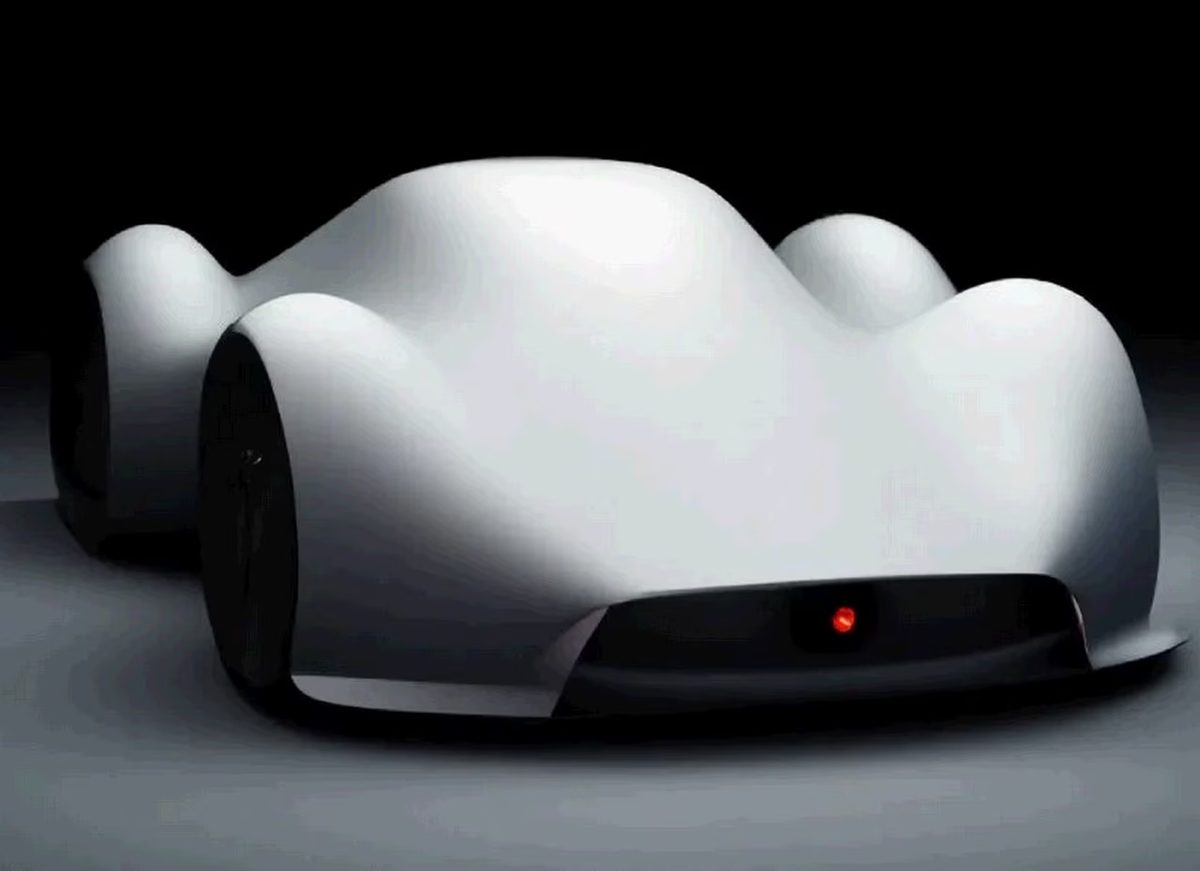
Nobody really knows what an Apple Car looks like. Rumors swirl. Sketches appear. Most are guesses. John Mauriello had a different approach. He’s an industrial designer. He teaches at the California College of the Arts. Instead of drawing it himself, he asked an artificial intelligence to do the heavy lifting.
How DALL-E 2 Designed the Hypothetical Apple Car
Mauriello used DALL-E 2. It’s an AI model that generates realistic images from text prompts. He didn’t just ask for “a car.” That would have been lazy. He gave specific constraints. He wanted a sports car design. But the aesthetic needed to match Apple’s signature minimalism. Specifically, he pointed the AI toward the MacBook and the Magic Mouse.
Think about that. A car shaped like a laptop and a mouse. Smooth surfaces. Unibody construction. No visual clutter.
He refined the prompt by asking DALL-E 2 to draw inspiration from the work of Jony Ive.
That’s the key. Jony Ive was the former head of design at Apple. He shaped the iPhone. He defined the look of modern Apple products. By invoking Ive’s name, Mauriello wasn’t just asking for sleek lines. He was asking for a specific philosophy. Form follows function. Strip away the unnecessary.
The result isn’t a blueprint. It’s a visualization. A digital rendering of what happens when you feed Apple’s design DNA into a neural network. It suggests a vehicle that feels less like a machine built on an assembly line and more like a consumer electronics product scaled up to human size.
Does it drive? No. It’s pixels. But it captures the vibe. The clean edges. The lack of traditional grilles or aggressive vents. It looks like something you’d unbox. Not something you’d maintain.
Mauriello’s method bypasses the usual automotive design tropes. No curvy muscle car lines. No angular SUV shoulders. Just pure, distilled geometry. It answers the question of what an Apple car might look like if Apple actually cared more about interior simplicity than aerodynamic coefficients.
The render stands as a testament to how AI can interpret brand identity. It’s not just copying shapes. It’s synthesizing a style.

The MacBook on Wheels Delusion
DALL-E 2 didn’t break any rules. It followed them. Too well.
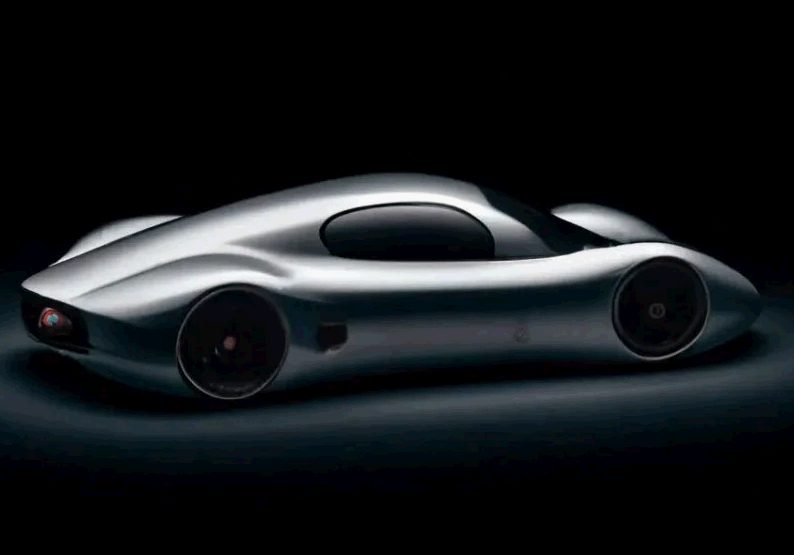
The result? A car that looks like a MacBook Pro that gained wheels and forgot how to steer.
The AI nailed the “clean style” request. Apple fans crave that minimalist aesthetic, and the bot delivered. The lines are simple. Rounded. Aggressively smooth. It’s wearing a coat of metallic gray that screams unibody aluminum chassis. You’ve seen this paint job. You’ve touched it. It’s the color of boredom if you’re a petrolhead, but it’s the color of premium if you work in tech.
Conservative? Absolutely.
You’d expect an AI to hallucinate something wild. To spit out a hovercraft or a teardrop pod made of glass. Instead, we got déjà vu. The car is futuristic, sure, but it feels like a render from a 2015 concept sketch. Safe. Palatable.
Why so restrained? Blame John Mauriello.
The prompts he fed into the system were strict. The AI isn’t improvising. It’s complying. This proves a nagging suspicion about current generative models. Their “imagination” is actually just pattern matching on a massive scale. If you ask for Apple design, it gives you Apple design. Not evolution. Just iteration.
The margin for error here is zero. The margin for creativity? Even smaller.
So we have a car that looks like a laptop. It’s seductive in a sterile way. Futuristic without being brave. It respects the brand guidelines so deeply it forgets it’s supposed to be a vehicle.
Does that matter? Maybe. Maybe the point was just to see if the bot could mimic a style. It could. It did. And it looked exactly like what you told it to make.
Boring.

The Ghost of Apple Car Past
Six years. That’s how long the rumor mill has churned. The story was always the same. Apple wasn’t just making another EV. They were building a robotaxi. No steering wheel. No pedals. Just a passenger pod dropped into a shared mobility network.
It sounded slick. It sounded inevitable.
The tech giant supposedly wanted to skip the private ownership model entirely. Why sell a car when you can sell a subscription to transportation? The vision was a fleet of autonomous vehicles, circulating, picking up riders, dropping them off. A logistics problem wrapped in a consumer electronics brand.
But the hardware never materialized. The software stalled. The regulatory hurdles for Level 4 autonomy turned out to be higher than anyone in Cupertino anticipated.
“The market changed before the product could adapt.”
That’s the blunt reality. The initial pitch relied on technology that didn’t exist in a consumer-ready form. Self-driving tech promised for 2020 is still struggling to map complex urban environments without human intervention.
Apple pivoted. Reports suggest the project was scaled back, then effectively shelved. The focus shifted away from the “Apple Car” as a standalone vehicle. Instead, the company seems to be doubling down on software and AI integration.
The dream of a wheel-less, pedal-less iPhone on wheels remains exactly that. A dream.
For now, the only thing Apple is shipping is code. The hardware team? They’re likely looking at other problems to solve. The autonomous transport future is still waiting for someone else to build it. 🚗💨


