You’re juggling errands. Dry cleaning is in the backseat. You need to hit the post office before the doors slam shut. Your mind is already on the grocery list for dinner, not the road. Then, brake lights flare up. You don’t react in time. Impact.
This scenario plays out daily because human attention is fragile. We are distracted by phones, infotainment screens, and increasingly complex traffic patterns. Driver error remains the primary catalyst for collisions. But relying on human vigilance in a chaotic environment is becoming obsolete. Automakers are building systems that do the watching for you. These aren’t just futuristic concepts. Features like automatic emergency braking and adaptive cruise control are already in production vehicles. Even older models may have basic collision avoidance tech buried in their wiring harnesses.
The shift is undeniable. Cars are moving from passive transport to active safety partners. We are entering an era where the computer monitors the road so you don’t have to. This article breaks down the hardware and software enabling autonomous vehicle safety systems. We will examine how these technologies function, their current readiness for mass production, and the regulatory hurdles standing in their way.
Зміст
The Hardware Behind the Vision
How does a car know to stop before it smashes into the one in front? It starts with perception. The vehicle needs a 360-degree view of its environment, constantly updating its position relative to other objects.
Most modern autonomous vehicle safety systems rely on a sensor fusion approach. No single sensor is perfect. Each has blind spots and environmental limitations. By combining data, the car creates a reliable picture of reality.
- LiDAR (Light Detection and Ranging) : Uses laser pulses to map the environment in high-resolution 3D. It detects objects with precision, even in low light. However, heavy rain or fog can scatter the lasers, reducing effectiveness.
- Radar (Radio Detection and Ranging) : Sends radio waves to measure distance and speed of objects. It works well in bad weather and is excellent for adaptive cruise control. It struggles with identifying the shape or type of an object, though.
- Cameras : Provide visual data. They identify lane markings, traffic signs, and colors (red vs. green lights). They are computationally heavy and can be blinded by direct sunlight or glare.
- Ultrasonic Sensors : Short-range sensors used mostly for parking and low-speed maneuvers. They detect obstacles immediately around the car.
The central computer processes this stream of data. It filters out noise. It predicts trajectories. If it calculates a collision course, it intervenes. This is where the technology moves from observation to action.
From Warning to Intervention
Early systems just beeped. They warned you. If you ignored the beep, you were on your own. Modern autonomous vehicle safety systems take over. This is active intervention.
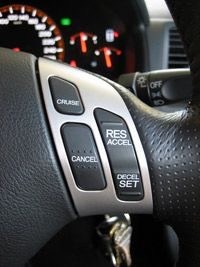
Automatic Emergency Braking (AEB) is the most common application. When the system detects an imminent rear-end collision, it first alerts the driver. If no response is detected, it pre-charges the brakes. If a collision is still unavoidable, it applies full braking force. This doesn’t always prevent the crash. It often reduces the speed of impact, mitigating damage and injury.
Adaptive Cruise Control (ACC) goes further. It maintains

The Unseen Steps to Autonomy
You can’t just jump head-first into driverless cars. That’s a recipe for disaster. Remember Stephen King’s Christine? A sentient, murderous Plymouth Fury? Let’s be grateful that specific nightmare didn’t make it to the showroom floor before engineers could work out the quirks.
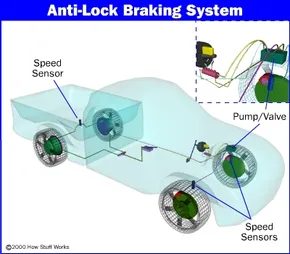
The real first step wasn’t a robot with a steering wheel. It was the 1980s. Specifically, anti-lock brakes. You know the light. It flashes on your dashboard like a warning from a distant god. Technically, ABS still requires you to stomp the pedal. But it does the heavy lifting you used to do by hand.
Without ABS, hard braking locks the wheels. The car skids. You lose control. In the old days, you had to pump the brakes manually to regain traction. It’s a skill most drivers never mastered. ABS does the pumping for you. Faster. Better. Far better than your panic-stricken foot ever could. Speed sensors in the wheels tell the system exactly when a lock-up is imminent.
About ten years later, manufacturers took those same wheel sensors and built something smarter: traction and stability control. This isn’t just an upgrade. It’s a different beast. These systems detect when a skid or rollover is starting. Then they use ABS and engine management to keep the car on the road. Upside down is bad. Right-side up is good.
Unlike a human, these systems can apply brakes to individual wheels. They can adjust power delivery wheel-by-wheel. A human foot mashing a pedal applies pressure to all four wheels at once. Often badly. The system doesn’t panic. It calculates.
By 1995, your car was already a better driver than you.
The DARPA Urban Challenge
Some of this future tech is closer than you think. The DARPA Urban Challenge pits teams against each other. They must create cars that negotiate traffic autonomously. It’s not just about reducing congestion or accidents. The goal is deeper.
The Defense Advanced Research Projects Agency wants driverless vehicles for combat. Keeping soldiers far from the front lines. Less risk. More survival. The same sensors that keep you from spinning out on a wet highway are being scaled up for war zones.
The future is now.

We traded the malevolent intent of Christine for the cold, calculated safety of the 1980s and 90s. Now, in the 21st century, where science fiction has bled into daily commutes, pre-crash safety isn’t reserved for the quarter-million-dollar luxury segment. You don’t need Corinthian leather to get these systems. They are in the mundane family haulers, the ones padded to hide juice-box spills. The specific implementations vary by manufacturer, but the core philosophy is identical: anticipate the impact and brace the vehicle before you even realize you’re about to hit something.
Consider the classic scenario: rounding a blind corner to find a garbage truck dead in your lane. In a vehicle equipped with a robust pre-safe braking system, the alarm triggers instantly. You might freeze, or worse, type the alphabet of curses without moving your foot. Meanwhile, the car is already acting. It primes the brakes. It reduces engine torque to bleed off speed. If you manage to stomp the pedal, you get full hydraulic pressure immediately, not that squishy travel you’re used to. Some advanced iterations can bring the car to a complete halt autonomously, provided you’re below a certain speed threshold. If the collision is inevitable, the system tightens the seatbelts and pre-tensions the airbags. All of this happens in a fraction of the time it takes your brain to register danger and move your leg. It’s only a matter of time before the car develops a personality and judges your reflexes.
How Pre-Safe Systems Anticipate Crashes
The technology moves faster than the driver. While you are still processing the visual input of the truck, the sensors have already mapped the trajectory, calculated the closing speed, and prepared the restraint systems. This isn’t magic; it’s sensor fusion. Radar, lidar, and cameras feed data to an onboard computer that operates on a timescale irrelevant to human reaction speeds. The goal isn’t just to survive the crash, but to mitigate the forces involved. By pre-tensioning seatbelts, the system ensures the occupant is locked in position, preventing the “submarining” effect where you slide under the belt during impact. By reducing engine power, the system lowers the delta-v, the change in velocity, which directly correlates with injury severity. It’s a passive safety net that becomes active the millisecond danger is detected.
The Evolution of Automatic Parking Assist
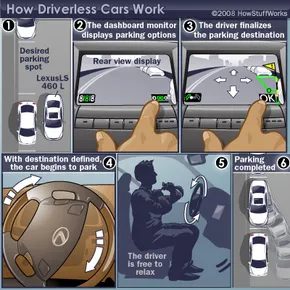
Then there is the humiliation of parallel parking. It’s a skill most drivers have never mastered, yet it remains a rite of passage. Manufacturers have responded with automatic parking systems available across SUVs, compacts, and hybrids. These systems use ultrasonic sensors and cameras to scan for a viable space. The process is semi-autonomous. The driver must identify the spot, position the vehicle alongside it, and initiate the sequence via the infotainment screen. Once engaged, the car handles the steering. You still monitor the brakes and accelerator, ready to intervene if a pedestrian wanders into the path or if the sensors misinterpret a curb. It’s a significant step toward full autonomy, mimicking a cautious driver’s behavior by reading the environment and reacting accordingly.
Smartphone-Controlled Self-Parking with the Audi RS7
Audi took this concept further with the RS7 Sportback. Demonstrated at the 2013 International Consumer Electronics Show, this system allows the car to park itself without the driver inside. The process begins with the driver pulling up to an empty space. Using a smartphone app, the driver commands the vehicle to locate and enter the spot. The car then steers itself into the space while the driver stands on the curb. To retrieve the vehicle, another command via the app brings the RS7 to the driver’s location. This level of automation removes the driver from the equation entirely during the parking maneuver, highlighting the maturity of the underlying sensor suite and control algorithms. It’s not self-driving in the truest sense—navigation and high-level decision-making still require human oversight—but it eliminates the most stressful part of urban driving.
Cars of Tomorrow. Still not Flying.

The Hardware Behind the Hype
Look, we’re not getting flying cars. The future on wheels looks less like The Jetsons and more like a Batman prop house exploded on a sedan roof. But that doesn’t mean the tech isn’t real. Google has been running its Chauffeur system since 2009. The numbers are stark: the fleet has clocked over 804,672 kilometers—roughly half a million miles—without a single crash. Compare that to the human average of one accident per half-million miles. Either the robots are due for a failure, or they’re just better at not dying.
The magic happens through lidar, which stands for light detection and ranging. It has nothing to do with ligers, despite what a confused intern might tell you. Think of it as radar’s hyper-accurate cousin. The system fires 64 rotating laser beams, taking over a million measurements every second. This creates a 3D point cloud accurate down to the centimeter. Preloaded maps handle the static world—traffic lights, poles, curbs—while the lidar fills in the chaos: pedestrians, bikes, errant squirrels. It’s supported by standard radar, cameras, and GPS.
Why You Still Need Hands on the Wheel
Don’t put on your eye mask just yet. The Chauffeur system is smart, but it’s not omniscient. You still need to step in for specific maneuvers. Pulling out of a tight garage? That’s on you. Navigating a complex highway interchange where lane markings are ambiguous or missing? You’re driving. The software can’t quite parse the nuance of “left-lane exit” when the signs are messy or non-existent.
Who Buys a Robot Car?
The Prius is currently the testbed du jour, largely because it’s common and cheap to modify. But the Chauffeur hardware isn’t married to Toyota’s hybrid. It can be bolted onto almost any vehicle that has the budget for the sensors and the computing power to run the software.
Here’s the catch: the price tag. Right now, the setup sits in the $75,000 ballpark. That’s not exactly impulse buy territory. Google aims to drive costs down significantly, targeting a release date around 2018 with a price point that regular folks might actually afford. Until then, the dream remains a high-end prototype.
Are Driverless Cars Legal and Safe?
The pop culture appetite for self-driving vehicles has been building for decades. From the Knight Rider KITT to the Batmobile, we’ve been sold on the idea of cars that think. The technology is catching up to the fiction, but the legal framework is lagging behind the firmware.
Regulatory hurdles are the next big boss battle. While California allows testing, widespread adoption requires state-by-state legislation. Insurance models, liability in the event of a crash, and cybersecurity protocols are all unresolved questions. Can you sue the algorithm? Who is at fault if a sensor fails? These aren’t just tech issues; they’re legal nightmares waiting to be untangled.
Safety concerns extend beyond crash data. How does the car handle edge cases? What happens when it encounters a construction zone with no clear signage? Or a police officer using hand signals instead of traffic lights? The system needs to interpret intent, not just objects.
Public trust is another factor. People are comfortable with cars that can drive themselves if they know they can take over when things go wrong. Full autonomy requires a leap of faith that many drivers aren’t ready to make.
The technology is advancing, but the road ahead is paved with regulations, ethical dilemmas, and human psychology. The cars might be ready to drive, but society might not be ready to let them.
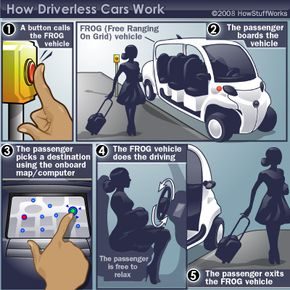
Right now, you can’t buy a semiautonomous car to drive home on your own. Not really. You can only test them. Four jurisdictions have carved out this narrow legal space: California, Nevada, Florida, and the District of Columbia. Nevada went so far as to issue license plates with an infinity symbol for these test vehicles. It’s a visual cue that the rules are still fluid.
The National Highway Traffic Safety Administration (NHTSA) has floated some suggested guidelines. Let’s be clear: they are non-legally binding. They are suggestions, not statutes. This leaves a vacuum that state laws are struggling to fill.
Why Old Laws Don’t Fit New Tech
We aren’t just drafting new laws. We have to rewrite the old ones. The current legal framework assumes a very specific biological setup: a human being with hands on a wheel and feet on pedals. This isn’t a aesthetic choice; it’s a functional requirement in many places.
Take New York. State law explicitly mandates that you must keep a hand on the steering wheel while the vehicle is in motion. A semiautonomous car like those from Chauffeur doesn’t have hands. Neither do its competitors. The law doesn’t account for a machine that doesn’t need to hold on to stay upright.
It’s not just domestic confusion. We are operating under the Geneva Convention on Road Traffic, ratified by the U.S. Congress in 1950. This is an era of tailfins and chrome, not lidar arrays and rotating sensors. The drafters of that treaty imagined flying cars. They got that part wrong. They didn’t imagine a car that drives itself. But they did insist on one thing: the driver must have control.
The convention assumes the driver is a person. Not K.I.T.T. Not a algorithm. The European Union enforces this strictly. A human must be in control at all times. Robots are currently banned from the driver’s seat in EU territories.
Who Pays When the Sensor Misses?
Technology moves faster than legislation. As these systems get better, the liability questions get messier.
Imagine a scenario where the laser array on a self-driving car skips over a pedestrian. You are asleep. The car hits him. Who is responsible?
- You? The owner who was supposed to be awake.
- Google? The software architect.
- The lidar manufacturer? The hardware builder.
- The pedestrian? He was walking into traffic.
The logic often presented is that the pedestrian should have been staring at the car, awestruck by its futuristic capabilities, fully aware of its trajectory and location. Enough so that he wouldn’t end up underneath it.
Is that a fair legal standard? Probably not.
Who ends up liable when the machine makes the call? Only time will tell. But history suggests the pedestrian won’t be found at fault simply because he wasn’t sufficiently impressed by your autonomous vehicle.
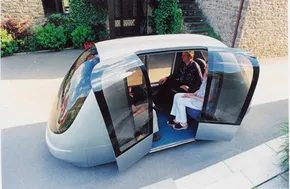

Google isn’t holding all the cards when it comes to self-driving vehicles. The automotive industry is buzzing with alternatives, each pitching a different timeline for when your car might start doing the heavy lifting. We’re looking at a landscape where several major players are racing to bring semi-autonomous cars to the road in the coming decade.
It’s not just one tech giant anymore. It’s a brawl between legacy luxury brands and tech-forward manufacturers. Here is who is actually building these machines, not just talking about them.
The Early Adopters and Their Limits
BMW was early to the party. The 2014 X5 featured a Traffic Jam Assist system. It wasn’t full autonomy. It could handle low-speed highway crawling up to 25 mph (40.2 km/h). But don’t mistake that for freedom. The driver still had to keep a guiding hand on the wheel. It was a crutch, not a replacement.
Then there’s Tesla. The promise was bold: a vehicle operating on autopilot 90 percent of the time. They aimed for a rollout by 2016. The catch? Legal approval. If the laws didn’t change, the tech didn’t matter. It was a classic case of engineering outpacing legislation.
The Luxury Legacy Players
Mercedes-Benz made a splash at the 2013 Frankfurt Auto Show. They unveiled an S500 Intelligent Drive prototype. The claim was specific: a consumer-ready version would hit the market by 2020. It wasn’t just a concept. It was a roadmap.
Audi took a different approach at the 2013 International Consumer Electronics Show. They showed off an A6 Avant equipped with a Mobileye system. This rig could drive itself at speeds up to 37 mph (59.6 km/h). Audi projected a 2020 showroom arrival for this capability, focusing on highway assistance rather than city navigation.
Nissan bet on electric. They stripped an all-electric LEAF and stuffed it with lasers and sensors. Carlos Ghosn, then the head of Nissan, made a specific prediction. He claimed this EV would be the first semi-autonomous car to actually hit the market. His target date? 2020.
The Cautionary Tale of Automatic Parking
Before we get too excited about steering wheels that turn themselves, remember the mid-2000s. You saw the commercials. A big black sedan slotted between two towers of champagne glasses without a human touch. That was the 2007 Lexus LS460. It featured the first production automatic parking system.
It looked like magic in the ad. It felt clumsy in reality. The system was deemed too cumbersome for daily use. Lexus discontinued the feature after the 2012 model year. It proved that just because you can automate a task, doesn’t mean consumers want to use it.
Where Do We Stand Now?
The timeline has shifted. The 2020 promises from Mercedes, Audi, and Nissan were optimistic. Some materialized in limited forms. Others faded. The race didn’t stop; it just got more complex. We moved from “if” to “how.” The technology exists. The infrastructure