
Every time you press the brake pedal, you are throwing money away. Physics doesn’t allow for energy to simply vanish. The kinetic energy propelling a vehicle forward has to go somewhere when you slow down. In a standard internal combustion engine car, that energy dissipates as heat. It cooks the rotors. It vanishes into the air. Useless.
Can you, the driver, stop this waste? Not really. Braking is inevitable. You cannot drive without slowing down. But automotive engineers have spent decades thinking about this problem. They built a system to recapture that kinetic energy. It converts motion into electricity. Then it sends that power back to the battery. This is regenerative braking.
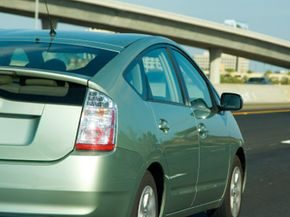
Today, you see these brakes mainly in hybrids like the Toyota Prius. You find them in full electric vehicles like the Tesla Model S. Keeping the battery charged matters in these cars. The technology isn’t new though. It started in trolley cars. Now it shows up in electric bicycles. Even Formula One race cars use it.
Зміст
The Mechanics of Energy Recovery
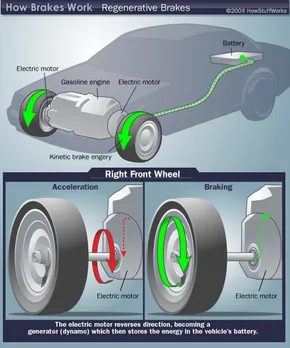
Traditional brakes rely on friction. Brake pads clamp against rotors. The wheels fight the road surface. Friction turns kinetic energy into heat. Regenerative brakes work differently. The electric motor does the heavy lifting. When you lift your foot off the accelerator or tap the brake, the motor reverses. It acts as a generator. It spins backwards. This slows the wheels. It also creates electricity. The power flows into the battery pack.
It isn’t perfect. The system works best at certain speeds. Stop-and-go traffic is ideal. High-speed highway braking still requires traditional friction brakes. These act as a backup. They kick in when regeneration can’t stop the car fast enough. Drivers need to know this. The pedal feel changes. It might sink lower than expected. That deep travel can cause panic. It feels wrong. It’s just different.
Why Efficiency Matters
Regenerative braking systems capture energy that would otherwise be lost. This improves overall efficiency. Hybrid and electric vehicles rely on this efficiency. It extends range. It reduces wear on brake pads. The friction brakes last longer. Maintenance costs drop. But the system isn’t magic. It has limits. Heavy braking still generates heat. The transition between regen and friction braking can feel jerky. Some drivers hate it. They want the consistent feel of traditional pads. Others love the single-pedal driving experience. One foot controls speed and stops.
The technology continues to evolve. New algorithms smooth out the transition. Better batteries store more of the recovered energy. As electric vehicles become more common, understanding how they stop is just as important as knowing how they go. The future of braking isn’t just about stopping. It’s about saving energy.

How Regenerative Braking Recovers Energy
Electric motors have a dual personality. Drive them forward, and they turn electricity into motion. Spin them backward, and they generate power. This reversible nature is the foundation of regenerative braking in hybrids and EVs. It turns the wheels into generators. Instead of wasting kinetic energy as heat, the system captures it.
The process relies on momentum. When you lift your foot off the accelerator, the car’s forward motion forces the motor to spin in reverse. The motor fights this motion. This resistance slows the vehicle. Simultaneously, it produces electricity. This current flows back into the battery pack. The energy saved can extend your range. It can also help accelerate the car again later.
The Electronics Behind the Stop
You can’t just reverse a motor and expect it to work. The electronics are complex. Specialized circuits decide exactly when to switch modes. They route the generated power to the batteries. In some designs, capacitors store this energy for quick bursts of power.
Most cars still have traditional friction brakes. The system must choose between regen and pads. The computer decides. It balances efficiency with safety. It determines which system is appropriate at any given moment.
Regenerative braking converts mechanical energy into electrical energy, feeding it back into the vehicle’s charging system.
Drivers often have control over this behavior. Many vehicles offer presets. You can choose how aggressively the regen engages. Some cars brake immediately when you lift off the pedal. Others coast more naturally. This lets you tailor the driving feel. You can decide if the car comes to a complete stop or rolls to a halt.
The Future of Brake-by-Wire
The industry is moving toward brake-by-wire systems. Traditional mechanical linkages are being replaced by electronic controls. Hybrids and electric cars will likely lead this adoption. The complexity requires different circuit designs from various engineers. But one component remains central to all of them.
The braking controller is the most critical part. It manages the entire process. It ensures the motor reverses at the right time. It directs power to the right place. It coordinates with traditional brakes. Without it, regenerative braking is just a theoretical concept.
Regenerative Braking Controllers

Brake controllers are electronic brain trusts. They dictate the timing of braking events and the rate at which pressure is applied. In towing scenarios, they synchronize the trailer’s brakes with the tow vehicle. Without them, you are guessing. With them, you have coordination.
Regenerative braking systems don’t operate in a vacuum. They work hand-in-glove with Anti-Lock Braking Systems (ABS). The controller for regen braking mirrors the ABS logic. It watches wheel speed. It monitors the delta between wheels. If one wheel slows faster than another, the system reacts.
But in hybrid and electric vehicles, the job goes deeper. The controller calculates available torque. Torque is rotational force. It measures how much mechanical energy can be converted into electricity. This electricity feeds back into the battery pack or supercapacitors.
The controller manages the charge. It ensures the batteries receive an optimal amount of power. It also prevents overload. No battery likes being fed more current than it can safely absorb. The controller acts as a gatekeeper.
The brake controller determines if the motor can handle the stopping force. If not, friction brakes take over.
The most critical function? Decision-making. Is the electric motor capable of stopping the car right now? Sometimes it is. Often, it isn’t. Conditions change. Battery state-of-charge fluctuates. Temperature drops.
If the motor lacks the capacity, the controller hands off control. It switches to friction brakes. This avoids catastrophe. It ensures you stop when you need to, regardless of electronic limitations.
In hybrids and EVs, no other electronic component makes regenerative braking possible. The brake controller is the linchpin. It balances energy recovery with vehicle safety. It turns kinetic energy into stored power. And when that energy can’t be stored, it engages the pads and rotors to bring you to a halt.
Hybrid Regenerative Braking
This integration creates a seamless loop. The driver presses the pedal. The controller assesses the motor’s ability to regenerate. It adjusts the level of regen accordingly. The result is smoother deceleration. It feels natural. It isn’t magic. It’s just precise electronic management of two very different braking systems working as one.

The Hybrid’s Dirty Secret: Charging Anxiety
You think you’re saving the planet driving a hybrid. You’re not. Not really.
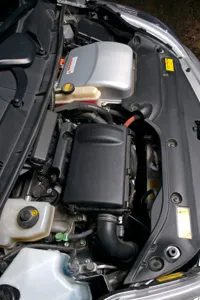
Hybrid electric vehicles (HEVs) are a compromise. They pair an internal combustion engine with an electric motor to give you the range of a gas tank and the efficiency of a battery. But here is the catch: the battery must stay charged. If it dies, the car becomes just another heavy metal box burning fossil fuels. And unlike plug-in hybrids or pure electric vehicles, standard hybrids offer almost no place to plug in. No charging station. No wall outlet. Just you, the gas pump, and the hope that your driving style is efficient enough.
This creates a paradox. Engineers spend millions on aerodynamic shaping and lightweight materials to squeeze out MPG. They rely on regenerative braking to capture energy otherwise lost as heat. But in a traditional hybrid, that captured electricity only helps the electric motor. The gas engine gets nothing. It doesn’t benefit. It just sits there, waiting to take over when the battery dips too low.
Long trips are where the illusion breaks down. You can’t recharge on the highway. You’re forced to run the engine. The “hybrid” advantage evaporates. You’re just driving a gas car with a heavy, unnecessary battery pack attached to the chassis.
So how do we fix a system that can’t plug in? How do we make the braking power useful for the main engine?
Enter the hydraulic alternative.
Hydraulic Regenerative Braking
Traditional regenerative braking sends electricity to the battery. Hydraulic systems take a different path. They store energy as pressurized fluid rather than electrons.
Why does this matter?
Because hydraulic brakes can feed energy back into the hydraulic brake system itself. This isn’t just about saving electricity for the motor. It’s about maintaining system pressure. It reduces the workload on the engine when it needs to pump fluids. It creates a closed loop that doesn’t rely on the battery’s state of charge in the same rigid way.
It’s a mechanical solution to an electrical problem.
Most hybrids use electric motors because the technology is mature. Batteries are cheap (relatively). Motors are efficient. But they are heavy. They degrade. They need cooling systems. A hydraulic accumulator is simpler. Fewer moving parts. Less thermal management drama.
But it’s not mainstream. Why?
Because the automotive industry is electric-obsessed. Every new car is pitched as a step toward full electrification. Hydraulic systems look like a step backward. A relic. They don’t fit the narrative of the “digital” car. They don’t have screens. They don’t have OTA updates.
Yet, for a vehicle that can never plug in, they might be the only logical choice.
Imagine a hybrid that doesn’t fear the battery running low. Imagine a system where every stop adds pressure, not just charge. Where the braking force helps the engine breathe, too.
It’s not about replacing the battery. It’s about redundancy. It’s about not putting all your efficiency eggs in the electrochemical basket.
The industry is busy building bigger batteries for cars you can plug in. They’re ignoring the millions of drivers who can’t. Or won’t. Or live in apartments with no outlets. For them, the hydraulic hybrid isn’t a relic. It’s a lifeline.
Does the market care?

Ford and Eaton are betting on fluid dynamics over electricity. They’ve developed Hydraulic Power Assist (HPA), a regenerative braking system that swaps high-voltage cables for high-pressure lines. It’s a different beast entirely.
Here is how the physics work. When you lift your foot off the accelerator and press the brake pedal, the car’s momentum doesn’t just vanish into heat. Instead, it powers a reversible pump. This pump shoves hydraulic fluid from a low-pressure accumulator into a high-pressure one. The storage tank uses nitrogen gas to create back-pressure. As fluid enters, the gas compresses. The car slows down. The energy is trapped in that compressed gas.
Keep it there.
The fluid sits under pressure until you hit the gas again. Then the pump reverses. It forces the fluid out, using that stored hydraulic energy to spin the wheels. You’re taking the kinetic energy you lost during braking and turning it back into mechanical motion to get up to speed.
The numbers are compelling. Ford and Eaton predict this system can store 80 percent of the momentum lost during deceleration. That’s higher than what most current electronic regenerative braking systems achieve. It’s efficient. Brutally so.
But efficiency isn’t everything. Not yet.
The Noise and Leak Problem
HPA systems exist mostly as proofs of concept and demo projects right now. They aren’t ready for your daily commuter car. The hardware is loud. It’s prone to leaks. Hydraulic systems in motion are messy affairs compared to the clean silence of electric motors.
So where do they make sense?
They are best suited for city driving with constant stop-and-go traffic. But more importantly, they are designed for heavy haulers. Trucks weighing 10,000 pounds (4,536 kilograms) or more. For these massive machines, hydraulic regenerative brakes offer a more optimal solution than electronically controlled systems. The sheer mass requires robust energy capture, and hydraulics handle that load differently than batteries.
Retrofits and Real-World Tests
Smaller cars? Not so much. The accumulators required for this system take up a lot of room. Space is a premium in compact vehicles.
Hybrid-Drive Systems, LLC, based in Michigan, tried anyway. They retrofitted a 1968 Volkswagen Beetle with a hydraulic regenerative braking setup. It works, but it’s a tight squeeze. Future production plans are ignoring the Beetle. They’re looking at vans. Larger vehicles. Higher weight classes.
The environmental angle is driving some of this adoption. The U.S. Environmental Protection Agency (EPA) has partnered with Eaton to install these hydraulic systems on UPS delivery trucks. Stop-and-go routes. Heavy loads. Perfect conditions for reclaiming that wasted momentum.
It’s a niche technology for now. Noisy. Leaky. Bulky. But for the right application, it might be the only way to get that 80 percent gain back.
Regenerative Braking Efficiency

Most conventional vehicles are shockingly inefficient. Only about 20 percent of the energy in fuel actually moves the car. The other 80 percent vanishes as heat, lost to friction in the engine, transmission, and brakes. It is a massive waste.
Regenerative braking changes the math. It can capture up to half of that wasted energy and feed it back into the system. This simple shift cuts fuel consumption by 10 to 25 percent. If you look at hydraulic regenerative braking systems, the gains are even steeper. These setups can potentially reduce fuel use by 25 to 45 percent. That is not marginal. That is a fundamental shift in how we burn fuel.
We are standing on the edge of a post-fossil-fuel era. Reserves that have powered our cars and industries for a century are dwindling. Fear over carbon emissions is peaking. In this context, every percentage point of efficiency matters.
The early 21st century might be the last time internal combustion engines dominate the roads. Automakers are already pivoting. They are betting on electric batteries. They are experimenting with hydrogen fuel. Some are even looking at compressed air. Regenerative braking is a small piece of this larger puzzle. But it is a critical one.
Extending Range for Electric and Hybrid Vehicles
These brakes let electric vehicles run longer without plugging in. They extend the driving range of fully electric cars. This technology helped create cars like the Tesla Roadster. That car runs entirely on battery power. It does not burn a drop of gasoline on the road.
Sure, the electricity might come from a coal plant. That is still a fossil fuel source. But when the car is moving, it emits nothing. That is progress.
Hybrids also benefit. With electric motors and regenerative brakes, these cars go much farther on a gallon of gas. Some achieve over 50 miles per gallon. Most drivers appreciate saving money at the pump. Less pain at the pump means more acceptance of new tech. It makes the transition smoother.

Regenerative Braking FAQs
What does regenerative braking actually do?
In hybrid or fully electric platforms, the system flips the script on traditional friction. Instead of letting kinetic energy dissipate as waste heat, it captures that momentum. The motor reverses its role, becoming a generator. This converts mechanical motion into electrical current, storing it as chemical energy in the high-voltage battery pack for later use.
How efficient is regenerative braking?
It isn’t magic. The efficiency depends entirely on the specific vehicle architecture and battery chemistry. While theoretical limits vary, the practical efficiency hovers around 70%. It’s a solid return on investment for the energy recovered, but not a perfect loop.
Can electric bikes recharge from pedaling?
Some can. Certain e-bike models feature pedal-assist sensors that trigger a regenerative effect while the rider pedals. However, this isn’t universal. It depends heavily on the specific model’s motor controller and wiring. Don’t assume every e-bike recharges just because you’re putting in the miles.
How do you maximize regenerative braking?
Stop treating the brake pedal like a primary control. Use it only when immediate stopping power is required. Instead, rely on the vehicle’s energy-recovery function during deceleration phases. The more often you lift off the accelerator to let the drivetrain slow the car, the more power gets sent back to the batteries. It’s about minimizing friction and maximizing flow.
Which motor or component handles regenerative braking?
Technically, it’s not just the motor itself. A single-stage bidirectional DC/AC converter is the critical hardware component. It manages the flow of electricity, allowing power to travel from the wheels back to the battery pack without shorting out the system.
Lots More Information
Related HowStuffWorks Articles
-
How Brakes Work
-
How Disc Brakes Work
-
How Drum Brakes Work
-
How Anti-Lock Brakes Work
-
How Air Brakes Work
-
How Power Brakes Work
-
How Brake Pads Work
-
How Brake Rotors Work
-
How Brake Calipers Work
-
How Brake Lines Work
Sources
-
BrakeByWire.com. (Jan. 13, 2009) http://www.brakebywire.com/
-
Cantwell, Katie. “Regeneration Overview.” Rockwell Automation Allen-Bradley. May 7, 2002. (Jan. 13, 2009) http://www.ab.com/drives/techpapers/RegenOverview01.pdf
-
Chen, Jason. “Panasonic Makes Electric Bike with Regenerative Braking.” Gizmodo. July 7, 2008. (Jan. 13, 2009) http://gizmodo.com/5022587/panasonic-makes-electric-bike-with-regenerative-braking
-
Continental Corporation. “ISAD and EHB Make Cars More Economical and More Environmentally Friendly.” March 17, 2002. (Jan. 13, 2009) http://www.conti-online.com/generator/www/com/en/continental/portal/themes/press_services/press_releases/products/automotive_systems/brakesystems/pr_2002_03_17_7_en.html
-
Gitlin, Jonathan M. “McLaren and Freescale partner up for regenerative braking.” Ars Technica. Nov. 5, 2008. (Jan. 13, 2009) http://arstechnica.com/news.ars/post/20081113-mclaren-and-freescale-partner-up-for-regenerative-braking.html
-
HybridCars.com. “Hydraulic Hybrids.” April 3, 2006. (Jan. 13, 2009)http://www.hybridcars.com/related-technologies/hydraulic-hybrids.html
-
Torrens, Richard. “Regen Braking.” 4QD. Nov. 2008. (Jan. 13, 2009) http://www.4qd.co.uk/fea/regen.html
-
Tur, Okan, et al. “Application Note on Regenerative Braking of Electric Vehicles as Anti-Lock Braking System.” Ansoft, LLC. April 11, 2006. (Jan. 13, 2009)http://www.ansoft.com/news/articles/RegenBrakingAsABS.pdf