


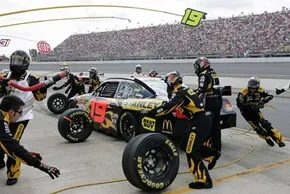
Race teams fill their tires with nitrogen, not air, because the margin for error is razor-thin. A shift of just half a pound of pressure can completely wreck traction and handling. You need a gas that behaves the same way on lap one as it does on lap forty. Nitrogen delivers that consistency.
Зміст
How Humidity Ruins Air Pressure Consistency
Standard air is a mixture of gases, including water vapor. The amount of moisture in that mix depends entirely on the relative humidity where you are standing.
Think about the difference between a humid afternoon in the Southeast United States and a dry race in the desert West. In the humid environment, your “air” contains more water. That water changes the rate of expansion and contraction inside the tire. It makes the pressure unpredictable. In the desert, the air is drier, so the pressure behavior shifts again. If you are relying on standard air, your tire pressure will fluctuate wildly based on the local weather.
Nitrogen is different. It is a single element, not a mix. It does not react with moisture in the same way oxygen does, and it has a much more stable rate of expansion and contraction as temperatures rise and fall during a race.
Why Consistency Matters on Track
Tire pressure is not static. As you drive, friction heats the tires. The air inside expands. If that expansion is uneven or inconsistent, your car will behave differently on the left side than the right, or differently in corners than on straights.
For a team chasing hundredths of a second, that variability is unacceptable. They need to know exactly how the tire will react when it hits 200 degrees Fahrenheit. Nitrogen provides a predictable baseline. It allows engineers to tune the car to a specific pressure and trust that the gas will hold that behavior consistently throughout the race duration.
Where Else You Find Nitrogen Tires
It is not just open-wheel or stock cars. High-pressure tires on large and small aircraft use nitrogen for the same reasons. Aviation systems require extreme reliability. A change in pressure can affect weight distribution and structural load on the landing gear. Nitrogen keeps those systems stable regardless of atmospheric conditions.
Is It Worth the Extra Effort?
For a daily driver, probably not. You will not feel the difference between air and nitrogen on a Sunday morning commute. For a race car, where a half-pound change in pressure is the difference between winning and losing, it is essential. The gas choice is a small part of a massive system, but it is the part that keeps the physics predictable.


