


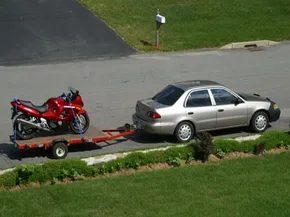
You parked the rig. You went for coffee. You came back to an empty parking spot.
That’s the nightmare scenario for every gearhead hitting the track. You left your pickup and the trailer carrying your prized motorcycle in the same lot. Ten minutes later, it’s gone. Stolen. Just like that.
It happens more often than you’d think. Thieves don’t care about your weekend of high-octane fun. They see a trailer loaded with expensive gear, they see a receiver that isn’t locked, and they take it.
There’s a simple mechanical fix for this specific vulnerability. It’s called a trailer hitch lock.
These devices are brute-force deterrents. They physically wedge the hitch ball mount into the receiver tube on your truck. Without the lock, a thief can just pull the pin, slide the receiver out, and drive away with your ride. With the lock, they need to cut through steel or pick a high-security cylinder. Most will move on to an easier target.
But not all locks are created equal. Some are cheap pieces of junk that rust shut. Others are over-engineered for a task that just needs to work.
Зміст
The Mechanics of Prevention
To choose the right hardware, you need to understand what you’re actually locking.
A standard hitch setup involves two main moving parts:
1. The Receiver: The square tube welded to your truck’s frame.
2. The Ball Mount: The piece that slides into the receiver and holds the hitch ball.
A hitch lock targets the interface between these two. It prevents the ball mount from being pulled out. It also typically blocks the hitch pin hole, so even if they cut the lock off, they can’t insert a new pin to slide the mount out.
Types of Hitch Locks
You’ll see a few distinct designs on the market. Here is how they differ in function and security.
The Tube Insert Lock
This is the most common type. It looks like a heavy-duty padlock with a long, rectangular shackle. You slide the shackle into the receiver tube (the same hole the hitch pin goes into). You then close the lock over the side of the receiver.
* Pros: Cheap. Easy to use.
* Cons: The shackle is exposed. A thief with bolt cutters can snip the shackle off. Some low-quality versions can be rapped loose with a hammer.
The Cover Lock
These units snap over the top of the receiver opening. They often include a locking mechanism that secures the hitch pin hole from the top.
* Pros: Harder to bolt-cut because the locking mechanism is protected by the housing.
* Cons: Can be bulky. May not fit all receiver sizes without adapters.
The Integrated Hitch Lock
Some manufacturers sell ball mounts that have the lock built directly into the design. The locking cylinder replaces the standard hitch pin hole.
* Pros: Minimalist. No extra parts to lose.
* Cons: You have to buy a specific ball mount. If you switch to a different drop/rise mount, you might need a second lock.
What to Look For
Don’t buy the first thing you see at the auto parts store.
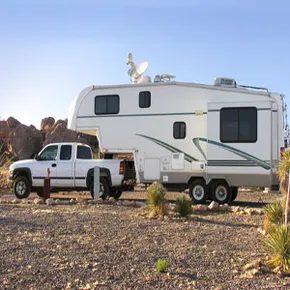

Security isn’t one-size-fits-all. While the goal is always the same—preventing theft—the hardware you need depends entirely on where the vulnerability lies. You can lock the connection to your tow vehicle, secure the trailer tongue, or immobilize the axles themselves.
Receiver Hitch Pins and Locks
The most common point of failure is the hitch receiver itself. This is the square tube attached to your tow vehicle’s frame. A standard hitch pin slides through the cross-hole to secure the ball mount or adapter. Without a lock, anyone can pull that pin out and drive away with your cargo, leaving you with nothing but a loose hitch receiver.
Receiver hitch locks are essentially heavy-duty pins with integrated locking mechanisms. They slide into the receiver tube just like a regular pin. The key difference? You need a key or a combination to remove it. Some designs feature two locking ends, so even if someone cuts the shackle, the pin stays put. Others have a curved or “j-hooks” shape at the bottom, making it physically impossible to pull them straight out without rotating them first.
Matching Locks to Hitch Classes
Hitch classes dictate weight capacity, but they also dictate pin size. Buy the wrong lock, and you can’t install it. Here is the breakdown:
- Class I and II hitches typically use half-inch (1/2″) hitch pins. These are common on smaller SUVs and sedans towing light trailers.
- Class III, IV, and V hitches require five-eighths-inch (5/8″) pins. These are standard on heavy-duty pickups and large tow vehicles.
If you have a Class III receiver, a half-inch lock will wobble and fail. A five-eighths-inch lock won’t fit at all. Measure once.
Coupler Locks: Securing the Trailer Tongue
What if your trailer is sitting in your driveway, unhitched? The receiver lock is useless here. The vulnerability shifts to the coupler. This is the U-shaped clamp on the trailer tongue that grips the hitch ball.
A coupler lock wraps around the coupler shell. It looks like a heavy-duty padlock with a U-bar that slides through the coupler’s mounting holes. Some models include a locking ball that sits inside the coupler, mimicking the hitch ball on your truck. This prevents thieves from lowering your coupler onto their own hitch ball. Without that ball in place, they can’t lift the tongue or maneuver the trailer.
Wheel Locks and Immobilizers
Sometimes, locking the connection isn’t enough. If a thief can disconnect the trailer, they might try to tow it anyway. That’s where wheel locks come in.
These devices clamp onto one or more trailer tires. They work on the same principle as a “boot” put on a parked car for unpaid tickets. A thick steel plate covers the tire, preventing rotation. If the trailer can’t roll, it can’t be stolen. These are especially useful for long-term storage or when parking in high-crime areas. They’re bulky, but they’re effective.
Installation Ease
Installing these locks is straightforward. No tools required for most hitch pin locks. Just insert, turn, and lock. Coupler locks may require aligning the shackle with the coupler holes, but it’s a five-minute job. Wheel locks need to be bolted or clamped onto the tire, which takes a bit more effort but is still manageable for most owners.
Next, we’ll walk through the exact steps for installing a hitch lock on your trailer.
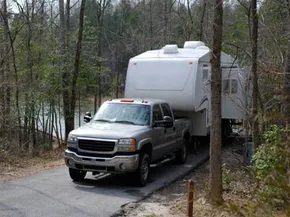

Stopping a trailer from getting stolen doesn’t require a complex security system or a night guard. It requires two pieces of hardware that cost less than a tank of gas. Receiver hitch locks and coupler locks are the first line of defense, and they are significantly easier to install than your daily maintenance tasks.
Receiver Hitch Locks
A receiver hitch lock is a physical barrier that bridges the gap between your tow vehicle and the trailer. It fits crosswise into the receiver tube of the towing vehicle. When you hook up the trailer, the pin slides through a designated hole in the receiver and locks into the trailer tongue.
The mechanism is straightforward. You usually remove a small rubber cap at the end of the pin to reveal the keyhole. Insert the key. Turn. The pin locks. Remove the key. The connection is secure. Without that key, the thief can’t pull the pin. Without the pin, the trailer stays put.
Coupler Locks
The coupler lock attacks the problem from the other end. It prevents the trailer from even being attached. Using most coupler locks requires a specific sequence of steps that turns the coupler into a sealed unit.
- Insert the key to release the top bar.
- Open the coupler housing.
- Place the ball-shaped top inside the coupler.
- Close the coupler over the hitch ball.
- Reinstall the top bar.
- Lock the bar in place with the key.
Once that bar is locked, the coupler cannot open. No ball. No connection. No theft. It is a simple mechanical solution to a complicated problem.
Why This Matters
Thieves look for the path of least resistance. A locked coupler and a pinned receiver hitch turn your trailer from an easy target into a headache. They force the thief to bring cutting tools and time. Most opportunistic thieves won’t stick around for that.
For deeper dives into towing safety, check out articles on RV hitches, towing risks, and loading procedures. You should also look into preventing boat theft if your trailer carries a vessel. Understanding how the gear works helps you protect it.
Sources include Bear’s Truck Accessories, ETrailer.com, Trailer Keeper, and Trimax. Their guides on sizes and locking mechanisms provide the technical backbone for these simple security habits.
The gear is there. The logic is sound. You just have to use it.


