


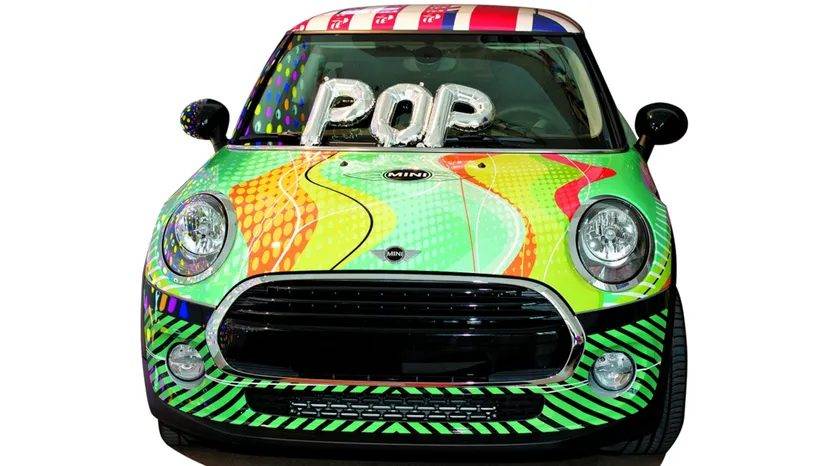
The marketing team at a Texas Mini Cooper dealership didn’t just want to sell cars. They wanted to sell a vibe. When the Dallas Museum of Art announced its 2015 pop art exhibition honoring Andy Warhol and Roy Lichtenstein, the team at Sewell Automotive saw a perfect alignment. Their quirky, style-forward vehicles had a natural home among fans of bold, graphic art.
The result wasn’t a standard sales pitch. It was a collaboration. Mini helped fund roughly half the event costs, showcasing a Lichtenstein-inspired wrapped Cooper and setting up a photo booth to get guests into the right headspace. The goal? To connect with a specific demographic: creative, art-loving people who already resonated with the brand’s aesthetic.
This wasn’t just about a fun night out. It was a strategic move to lower the friction of car shopping. By turning the dealership into a cultural hub, they made the process feel less like a transaction and more like an experience. This is the new frontier for auto retail. It’s not just about horsepower anymore. It’s about hospitality, access, and exclusive experiences.
Star Power and Local Legends
Celebrity dealerships aren’t a new concept, but the scale and strategy have evolved. NFL Hall of Famer John Elway has been in the game since 1989. He built a dealership chain in Denver, Colorado, which he eventually sold for $82.5 million. Today, he owns locations in both California and Colorado. His success proves that sports legacy translates directly to automotive trust.
Then there’s the star power of Hollywood. In July 2018, actor Mark Wahlberg announced a partnership with Jay Feldman, who owns a Chevrolet franchise in Columbus, Ohio. The result was the rebranding of the location to Mark Wahlberg Chevrolet.
Feldman described the move as a blend of Americana and celebrity magnetism. The idea is to offer something special to the Ohio market, leveraging Wahlberg’s name to draw in fans. Will Wahlberg be flipping burgers or signing papers behind the counter? Probably not. But the promise of exclusive merchandise, like license plate frames bearing his name, adds a layer of allure that traditional marketing can’t match. It’s not just about selling a Chevy. It’s about selling a piece of the Wahlberg brand.
Dining and Lounges: The Dealership as a Destination
IKEA figured out decades ago that if you feed people, they stay longer and buy more. Car dealerships are now adopting this playbook.
A Ford dealership in Massachusetts spent $8 million on a new facility that includes the LugNutz Cafe, a full-service restaurant. The Marcotte family, who had previously offered weekend breakfast, saw the cafe as the logical next step. It became the centerpiece of their November 2018 grand opening. The strategy is simple: remove the stress of the showroom by offering a place to relax, eat, and wait.
In Merritt Island, Florida, the Island Lincoln Mercury Land Rover & Jaguar dealership offers “Carbucks” and a Tiki Grill Restaurant. They’ve gone even further, providing a health and fitness center, a library, a retro barber shop, and a video arcade for kids. It’s a one-stop shop for the whole family, keeping customers on the property for hours rather than minutes.
For those seeking luxury, Galpin Aston Martin in Van Nuys, California, offers a members-only lounge called Club Aston. It features a full-service bar and luxurious seating. But the real hook isn’t just the free food. It’s access. Members get to sit in iconic models like the Aston Martin One-77. It’s a tasting menu for the ultra-wealthy, allowing them to experience the car before committing to the purchase.
The Controlled Chaos of Private Test Tracks
A test drive is usually a loop around the block, a quick highway merge, and a return to the lot. It’s safe, but it’s also limited. You can’t really demonstrate off-road capability in a suburban parking lot.
A Subaru dealership in the Chicago area solved this problem by building a private test track. The 9-acre facility, located in Naperville, was built by the city for $1.5 million. The city owns the land but sells memberships to local dealers, allowing them to use the track for customer demonstrations.
For Subaru, which markets itself on all-weather and off-road prowess, this is a game-changer. The track includes cobblestones, a skid pad, high-bank turns, and a hill climb.
“It allows the member dealers to properly demonstrate an automobile in a safe environment away from the traffic of our roads,” said Alec McKean, general manager at Gerald Subaru Naperville.
This setup lets salespeople showcase vehicle features in a controlled, dramatic environment. Customers can feel the stability on the skid pad or the power on the hill climb without worrying about hitting a curb or running a red light. It’s engineering meets entertainment.
The shift is clear. Dealerships are no longer just places you buy a car. They’re places you hang out, eat, watch sports, or test limits. The line between retail and recreation is blurring. And for the customer, that makes the whole process a little less like a chore.
But is there a limit to how much hospitality a dealership can offer before it loses its focus? Some argue that a cafe distracts from the core product. Others say it’s the only way to compete with online buying platforms that offer zero human interaction.
The answer might lie in the data. Early adopters report higher foot traffic and longer dwell times. But longevity is another story. Can a dealership maintain the energy of a pop art opening night, the buzz of a celebrity launch, and the routine of a private track indefinitely?
The industry is watching. The ones that figure out how to sustain these experiences while keeping the bottom line healthy will define the next decade of car sales. The rest will just be selling metal.
Pinpointing the absolute best dealer incentives is nearly impossible. The landscape shifts constantly. But one thing remains clear: retailers across the US are willing to burn cash to close a deal. We’ve seen them throw everything from free vacations to cash rebates at the table just to get you in the door.
Take the Fuccillo Automotive Group. They operate 30 locations spanning upstate New York and Florida. Their strategy? Send buyers on a luxury cruise. The program, dubbed “Cruise With Huge,” isn’t a one-off gimmick. It’s a recurring sales tactic that has run six times.
The latest iteration in December 2017 cost owner Billy Fuccillo roughly $1.5 million. That price tag covered a voyage on the Navigator of the Seas for about 3,200 customers. The itinerary hit Belize, Cozumel, and Grand Cayman Island. For the buyer, it’s a free week of paradise. For the dealer, it’s a high-stakes gamble that reportedly pays off.
Not all perks involve airfare. Some dealers are betting on sports outcomes. Mastria Auto Group in Raynham, Massachusetts, ran a promotion tied to the New England Patriots during the 2010 season opener. The deal was simple. If the team scored a touchdown on a kickoff return, every buyer in the lot received a $5,000 rebate.
The Patriots scored. Thirty-three customers collected cash. It was a risky bet on a single play that paid out for the buyers and likely generated massive word-of-mouth buzz for the dealership.
Then there’s the altruistic approach. Sheehy Auto Stores, with 23 locations in Maryland and Virginia, channels sales efforts into charity. Their promotions aren’t just about moving metal; they’re about raising funds. The American Heart Association has been the primary beneficiary over the last 50 years. The group has helped raise more than $40 million for the cause. It’s a way to build community goodwill while clearing inventory.
This obsession with customer experience isn’t unique to American soil. In Japan, the line between automotive retail and hospitality blurs completely. A used car dealership named Hot Air features a full-service ramen restaurant on-site. The eatery earned a “Bib Gourmand” designation from the Michelin Guide in December 2018. That recognition signals good-quality, affordable food. Why serve noodles in a car lot? Because the wait is part of the experience. If you’re spending hours negotiating, you might as well eat well.
It forces us to ask: what is the true cost of a car? The sticker price is just the baseline. The real value often lies in the extra layers dealers add to make the transaction memorable—or at least memorable enough to talk about.


