Horsepower is the universal currency of automotive performance. We see it on brochures and spec sheets everywhere. But not all ratings are created equal. The gap between a Formula 1 car’s power output and a big rig truck’s capability is massive. These machines serve entirely different masters. One chases speed. The other chases endurance.
Comparing their engineering philosophies reveals why they operate in such different worlds.
Зміст
How Horsepower Actually Works
To understand the disparity, you need to look under the hood. Horsepower isn’t magic. It is a unit of power. James Watt standardized it to measure how much work a horse could do in a minute. Today, it measures how much work an engine performs over time.
Engines don’t naturally produce horsepower. They produce torque. Think about a single piston firing in a gasoline engine. The ignition pushes the piston down. That piston presses on the crankshaft. The crankshaft turns. It feels a specific amount of twisting force. That is torque.
Three variables dictate this force:
– Piston face size
– Pressure from ignited fuel
– Crankshaft diameter (the lever arm)
A bigger crankshaft diameter means a longer lever arm. That equals more torque.
There is a direct mathematical link between torque and horsepower. You convert torque to horsepower using this formula:
HP = Torque * RPM / 5,252
That 5,252 number comes from dividing 33,000 by 2 pi. Imagine walking 33,000 foot-pounds of force in a circle. If you attach a 10-foot pole to a vertical axle, the circumference is about 62.8 feet. The math holds up.
High RPM values favor horsepower. If you keep torque constant but spin the engine faster, horsepower climbs. An engine running at very high revs generates lots of horsepower without increasing its torque at all.
Big Rig Horsepower: Built for Torque, Not Revs
Big rigs are the workhorses of the road. Semi-trucks and 18-wheelers haul heavy loads across continents. Their engineering priorities are reliability, fuel efficiency, and torque. Speed is secondary.
Torque measures turning force. It is crucial for moving heavy loads. It allows a truck to start from a dead stop and climb steep hills without overstressing the engine.
A typical commercial truck produces between 400 and 600 horsepower. That number sounds impressive until you look at torque. These engines often exceed 1,800 lb-ft of torque. They are built to last. With proper maintenance, they can cover a million miles. They operate efficiently under constant load at lower RPMs.
Big rig horsepower is not about peak performance. It is about durability. The engine is designed for endurance. It will outlast the driver.
F1 Car Horsepower: A Masterclass in Engine Speed
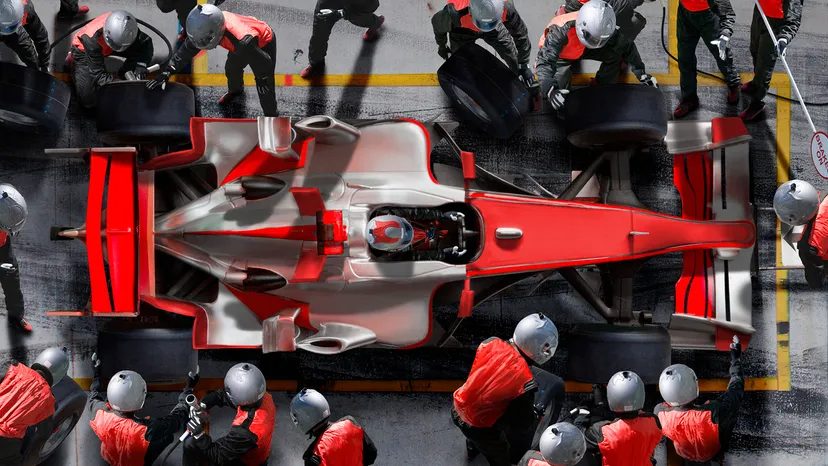
Formula 1 cars are the opposite. They are designed for one thing: speed. These cars are the pinnacle of automotive engineering.
The power units are supercharged 1.6-liter V6 hybrids. They produce over 1,000 horsepower. This output comes from a relatively small engine size. It is a masterpiece of lightweight design and high efficiency.
These engines rev incredibly high. They can hit 15,000 RPM. They squeeze every bit of power from each drop of fuel. The focus on speed and agility means every component is optimized for performance. Exotic materials are used everywhere.
F1 engines are not built for longevity in the traditional sense. They are designed to generate massive power for just long enough to compete in a few races. Then they are rebuilt or replaced. This high-strung nature makes them complex and expensive to maintain.
“F1 engines are not built for longevity. They are designed to generate massive power for just long enough to compete in a few races.”
Why the Difference Matters
The comparison highlights two extremes of mechanical design. One prioritizes longevity and low-end grunt. The other prioritizes peak power and high-RPM efficiency.
Big rigs dominate the logistics industry because they can carry heavy loads over long distances. They do not need to go fast. They need to go far.
F1 cars dominate the track because they need to accelerate quickly and corner hard. They do not need to last forever. They need to be fast now.
Both are marvels of engineering. They just answer different questions.
Torque Over Torque: How Electric Motors Change the Math
Horsepower is a legacy metric. It dates back to James Watt trying to sell steam engines to mine owners. It doesn’t tell the whole story of how a vehicle actually moves. Especially now. With electric powertrains taking over, the old rules of performance are breaking.
Internal combustion engines need to build RPM. They need to spin up to make power. Electric motors don’t wait. They hit peak torque at zero revolutions per minute.
That changes everything.
In a traditional truck or race car, power delivery is linear. You press the gas, the engine revs, the torque curve climbs, and you move. In an EV? You press the gas and the wheels spin. Instantly. No lag. No shift points. Just force.
This is why electric big rigs are being talked about more than ever. They aren’t just quiet. They are violent in their acceleration. The weight of a semi-truck usually kills performance. But an electric motor doesn’t care about inertia the same way a piston engine does. It pushes. Hard. And early.
The Hybrid Engine at the Highest Level
Formula 1 didn’t adopt hybrid technology for charity. They did it because it made faster cars. Since 2014, the MGU-K (Motor Generator Unit-Kinetic) has been standard. It’s not just a backup battery. It’s a weapon.
Here is how it works. When you brake hard into a corner, you’re throwing away energy. Heat. Friction. Waste. The MGU-K captures that kinetic energy. It turns the wheels into a generator. It stores that electricity. Then, on the exit of the corner, it discharges that power back into the drivetrain.
It adds up to nearly 160 horsepower of electric boost. That’s not a trickle. That’s a shove.
So when you see an F1 car accelerate out of a tight turn, you’re not just seeing a 1.6L V6 turbo. You’re seeing a combustion engine fighting alongside a high-voltage electric motor. The result? More torque. Better response. Cleaner emissions. And yes, more lap time.
Why Horsepower Numbers Lie
Comparing a big rig to an F1 car using only horsepower is useless. It’s like comparing a sledgehammer to a scalpel.
A big rig needs to move 80,000 pounds down a highway. It doesn’t need to hit 200 mph. It needs to not die. Electric motors are ideal here because they don’t overheat easily under load. They don’t need air intake. They don’t need complex exhaust systems. They just push.
An F1 car needs to accelerate from 0 to 60 in under 2.5 seconds. It needs to handle G-forces that would liquefy human organs. It needs precision. The hybrid system provides that precision. It fills in the torque gaps that a turbo lag always leaves.
Raw power numbers are static. Real-world performance is dynamic.
The Future Is Electric (And It’s Already Here)
We are past the point of “if” electric motors will dominate. We are in the “how much” phase.
In commercial transport, the shift is happening. Companies are testing electric Class 8 trucks. They aren’t just for short-haul routes anymore. They’re being built for long-haul efficiency. The torque advantage means they can climb hills without downshifting. They can maintain speed with less energy waste.
In racing, the dominance is absolute. The combination of internal combustion and electric boost creates a powertrain that is both efficient and terrifyingly fast.
Horsepower is still a thing.