Gas prices have cooled from that 2008 nightmare, but the obsession with “green” driving hasn’t. Fuel-efficient vehicles are still moving off lots. Automakers are churning out new tech to help you save fuel.
Gas-electric hybrids dominate the scene. They use electric motors to boost gasoline engines for maximum efficiency. That’s not the only trick. These cars are engineered from tip to tailpipe for one goal: economy.
Aerodynamic shapes cut wind resistance. Special tires reduce rolling resistance. Cabin electronics are tuned to minimize engine load. Everything is calibrated to squeeze every last mile from a gallon of gas.
But what happens when one variable changes? Not a malfunction. The environment.
Hybrids are tuned for specific conditions. What if the temperature drops? Can they still perform?
We are exploring this now. Specifically: do hybrids perform well in cold weather?
Old cars hate the cold. They barely start. Today’s hybrids are different. Let’s see how they handle the mercury dropping.
Зміст
Hybrid Car Fuel Economy and Cold Weather
If you track your MPG, you know cold weather hurts efficiency. Cold temps thicken gasoline. The fuel doesn’t mix with intake air properly. The air-fuel mixture becomes suboptimal. A cold mix is also less powerful. You burn more gas to do less work.
Hybrids face this too. They use electric motors at low speeds. The gas engine kicks in for speed or power. In cold weather, that engine runs less efficiently.
It gets worse. Hybrids don’t run the engine constantly. In freezing temps, the engine takes longer to warm up.
Think about your last drive. You get in a cold car. After a few miles, even in traffic, it warms up. In a hybrid, that few-mile trip might only use the gas engine part of the time. It warms up slower. The gas stays cold. The engine stays below peak efficiency.
Thickened gas and cold engines aren’t the only enemies. Cold weather brings snow and ice. Wet winter weather drags down fuel economy for all cars.
Two main culprits. First, snow tires. They are heavier. They have higher rolling resistance than the low-rolling-resistance tires hybrids come with. Fuel economy drops.
Second, grilles get clogged. Snow and road salt build up on the exterior. Air can’t reach the engine. If the engine can’t breathe, fuel economy suffers.
Unremoved snow adds weight. Extra weight means fewer miles per gallon. It’s also a serious safety hazard.
Battery Freeze
Here is one worry you can drop. Hybrid battery packs rarely freeze.
Standard 12-volt batteries can and do freeze in extreme cold. Hybrid batteries are different. They are far less prone to freezing.
Most manufacturers rate their hybrid batteries to perform in weather as cold as -22 degrees Fahrenheit (-30 Celsius).
Hybrid Car Performance on Snow and Ice

Most people assume green driving dies when the thermometer drops. They buy big trucks for the winter, ignoring the fact that fuel-efficient machines struggle in the cold. It’s a logical fear. If your car is light. If it sits low. If it’s built to cut through air rather than plow through drifts.
But the reality is messier.
Hybrids don’t just vanish in a blizzard. They adapt. Or they fail. It depends entirely on which machine you own and how you treat it.
The Physics of Low Stance and Low Grip
Let’s look at why the stereotype exists. It’s rooted in engineering priorities. A hybrid’s job is efficiency. To get there, manufacturers lower the center of gravity. This improves aerodynamics. It also reduces ground clearance.
Deep snow doesn’t care about your drag coefficient. It cares about clearance.
Then there are the tires. Low-rolling-resistance rubber is standard on efficient cars. These tires deform less under load, saving energy. But that same stiffness means less surface area gripping the pavement. On dry asphalt, they’re fine. On black ice? They’re sliding.
Weight compounds the issue. Hybrids are often lighter than their gas-guzzling cousins. Less weight means less downward force on the tires. Less force means less friction. Friction is what stops you from becoming a projectile.
Drivetrain Differences: AWD vs. FWD
However, “hybrid” is a powertrain, not a shape.
You can buy a hybrid truck. You can buy a hybrid SUV with all-wheel drive. These vehicles possess the mechanical grip necessary for serious winter conditions. They are not at a disadvantage.
Even the small sedans have tricks up their sleeves. Most are front-wheel drive. In a rear-wheel-drive car, the engine is far from the driven wheels. In a front-wheel-drive hybrid, the heaviest component—the engine and battery pack—is directly over the front tires.
The weight of the drivetrain presses the drive wheels into the snow, improving traction without adding unnecessary mass to the chassis.
This isn’t all-wheel drive. It’s not as surefooted on deep powder. But it’s significantly better than rear-wheel drive. The weight helps bite into the surface.
Traction control is the other safety net. Modern systems monitor wheel speed. If one wheel spins faster than the others, the system applies braking force to that specific wheel. It transfers torque to the wheel with grip. It’s not magic. It’s just fast math. It prevents the skid before it becomes a spin.
Real-World Comparisons: Prius vs. Yukon
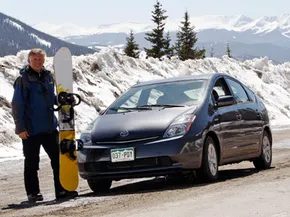
Is a Toyota Prius a Land Rover? No.
Don’t get it twisted. The Land Rover was built to crawl over rocks and wade through rivers. The Prius was built to commute. Comparing them is pointless.
But a GMC Yukon Hybrid? That thing performs identically to the conventional gas model. It has the weight. It has the AWD options. It has the ground clearance. The hybrid system adds zero penalty to its off-road capability. In fact, the instant torque from the electric motors can help get massive loads moving from a standstill.
What about the Prius in a snowstorm?
It survives. You just have to drive differently.
If you swap the summer tires for snow tires, the equation changes completely. Snow tires have softer rubber compounds that stay pliable in freezing temperatures. They have deeper treads. They bite. A Prius on snow tires is a competent winter commuter. It will not race a Land Rover up a mountain pass. But it will get you to work. And it will get you home.
The Economic Trade-Off
Here’s the part most winter drivers forget. The Prius uses a fraction of the fuel the Land Rover does. Even in poor conditions. Even with careful, slow driving.
When summer hits and gas prices spike, the driver of the efficient car doesn’t miss the slush. They miss the savings. They remember the weeks of cautious driving as a small price to pay for months of cheap
Winterizing Your Hybrid: Practical Steps for Cold-Weather Efficiency
The thermodynamics of a cold start apply to every internal combustion engine on the road. Hybrids are not immune. When the temperature drops, battery chemistry slows down and the combustion engine has to work harder to reach operating temperature. Fuel efficiency takes a hit across the board.
But here is the thing: hybrids start from a place of superior efficiency. Even with that winter penalty, they are often still cleaner and more economical than their non-hybrid counterparts. You don’t have to abandon eco-friendly driving just because the mercury falls. You just have to adjust your inputs.
Shed the Dead Weight
Momentum is expensive. Every pound your engine has to accelerate or decelerate costs energy. In a hybrid, that energy recovery is even more critical because you are trying to maximize the regeneration cycles.
Start with the trunk. If you’re not using it, get it out. Carrying unnecessary weight forces the battery and gas engine to burn more fuel to maintain speed. It is a simple physics equation. Heavy cars accelerate slower. They require more braking force. They waste more kinetic energy.
Then look at your roof. Ski racks, bike carriers, roof boxes. If you are not actively transporting gear, take it off. Aerodynamic drag increases exponentially with speed. A roof rack creates turbulence that the engine has to fight against. For a hybrid, that extra load drains the battery faster and engages the gas engine more frequently. Clean lines equal better range.
Tire Pressure and Rolling Resistance
Air contracts when it gets cold. This is basic physics, but it is easily forgotten. Your tire pressure gauge might read perfectly in July, but that same gauge will show a drop in January.
Under-inflated tires increase rolling resistance. The contact patch with the road expands, creating more friction. The engine works harder to turn the wheels. Fuel economy plummets. Check your pressure monthly. Fill them to the manufacturer’s recommended PSI, usually found on the driver’s side door jamb, not the tire sidewall.
Should you switch to snow tires? It depends on where you live. If you are in a region with consistent snow and ice, dedicated winter tires are worth the trade-off. They provide grip that all-season rubber simply cannot match in sub-freezing conditions. Better traction means less wheel spin. Less wheel spin means less wasted energy. You might see a slight dip in peak MPG, but the stability and safety gains often outweigh the efficiency loss. Plus, smoother driving with better grip can help you regain some of that lost mileage.
Drive Smart, Not Hard
Hybrid driving is already about anticipation. Cold weather amplifies the need for smooth inputs. Accelerate gently. Brake early and lightly. Every time you stomp the accelerator, you burn more fuel than necessary. Every hard brake wastes the kinetic energy the hybrid system just recovered.
Keep your vehicle clean. Snow and ice on the body panels add drag. A clean car cuts through the air more efficiently. It also allows you to see better, which reduces stress and erratic driving behaviors.
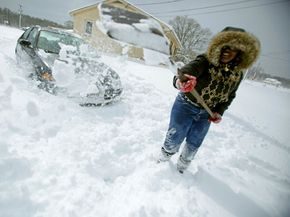
Safety is non-negotiable. Keep an emergency kit in the trunk. A bag of sand or kitty litter, a small shovel, a flashlight, and blankets. If you get stuck in a snowbank, getting out is more important than fuel economy. The extra weight of these items is negligible for daily efficiency but vital in an emergency.
Check your fluids. Anti-freeze levels must be sufficient to prevent engine block cracking. Windshield wiper fluid should be winter-rated. Ice on the windshield obscures vision and adds weight. Clear visibility allows for smoother, more efficient driving.
The Bottom Line
Cold weather demands more from your hybrid. It is a fact of engineering. But by managing weight, maintaining tire pressure, and driving with foresight, you can mitigate those losses significantly. You do not need to change your vehicle. You just need to change how you use it.
The efficiency gap between hybrids and traditional cars narrows in winter, but it rarely closes completely. Drive smart. Stay light. Keep moving.