


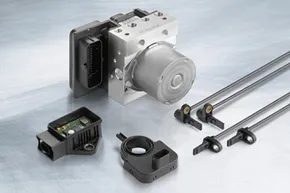
Safety was once a luxury accessory. Now it’s the baseline. Automakers have spent decades and billions of dollars to improve safety standards. Even today’s most affordable compact cars have better protection than the luxury sedans of the 90s. You don’t have to empty your bank account to keep your family safe. Modern cars are bastions of sensors and circuits.
These systems are based on microcircuits. They are watching your activities. They observe how the car works. If something goes wrong, they intervene. Braking is where the biggest gains are made. Stopping safely is the most important factor in avoiding a collision. Almost all cars today are equipped with anti-lock braking systems (ABS). Add Electronic Stability Control (ESC) and you get settings that can help prevent accidents.
But inside the braking system is a more advanced layer of technology. This is called Electronic Brakeforce Distribution (EBD).
Зміст
The Physics of Stopping
ABS prevents the wheels from locking. EBD ensures that the correct amount of pressure is applied to each wheel for effective stopping. This is a problem that cannot be solved with ABS alone.
The weight of the car is not static. It shifts. When you press the brake, the front of the car lowers. The front wheels carry more weight than the rear wheels. Applying the same braking force to all four wheels can cause the lighter rear wheel to lock up while the heavier front wheel remains spinning. That is a recipe for a spin.
EBD corrects this imbalance. Calculate the load on each tire. Adjusts the oil pressure of each wheel in real time. A lighter rear end means less pressure on it. This is even truer if the front end is heavy. It happens in milliseconds.
Why is it important?
You might think ABS is enough. In a panic stop, it is. However, ABS does not take weight transfer into account. It only reacts to the wheel speed. EBD prepares for physics of the stop. This ensures that the car continues to drive in a straight line. Maximize braking performance. Without this, you’d be relying on a system that treats all four wheels the same. They are not.
This technology is not new. But it is becoming the norm. It is a silent miracle of technology. You won’t know it’s working unless something goes wrong. If this happens, it will prevent you from sliding into oncoming traffic.
Is it worth looking for a used car? Or buy a new one? It depends on how you drive. But for most people, this is a non-negotiable layer of protection. It’s not flashy. There are no warning lights that stay on for weeks. It just works.


The only thing standing between you and sliding out of control is friction. It’s simple physics. When you press the gas pedal, friction makes the car move forward. When you hit the brakes, friction slows you down. That’s why ice is scary. The coefficient of friction is close to zero. You can’t speed it up. You can’t stop it.
But friction also provides lateral grip. Without this, the car would not be able to move in the direction indicated by the wheels. Slide sideways. Direction control is completely lost.
Losing this grip is not necessarily due to ice. This happens when you brake too hard. When the tires stop spinning, the power of the car continues to move. This is the wheel lock. The wheels stop spinning completely. They lost all traction. The car becomes like a sled, and as soon as it locks, it drifts in any direction.
The Slip Ratio and ABS
The secret to avoiding slippage is to control your slip rate. This is the difference between the speed of the car and the speed of rotation of the tires. Ideally, there is a tiny slip ratio to maximize traction. But if the tires stop spinning while the car is going 60 miles per hour, the skid becomes catastrophic.
The anti-lock braking system (ABS) monitors this ratio in real time. Adjust the brake pressure to keep the slip ratio at an optimal level. Just enough slip for grip, but not enough to lock.
Shifting the weight complicates things. When you press the brake, the car tilts forward. In front-engined cars, the weight is transferred to the front axle. Increase front tire grip. The rear tires lose it. This imbalance causes the rear wheels to lock up first.
Older hydraulic systems have used a proportional valve to reduce rear brake pressure. This is a static solution. Changes in road conditions and individual tire loads are not taken into account. ABS makes these mechanical valves essentially obsolete for dynamic control.
Introducing Electronic Brakeforce Distribution (EBD)
ABS regulates slip. EBD takes care of weight distribution.
Electronic Brakeforce Distribution (EBD) uses the same sensors as ABS. An electronic control unit (ECU) monitors each wheel individually. When the ECU detects rear wheel slip, it reduces the braking force on the rear wheels. It maintains or increases pressure to the front wheels. This recreates the ideal weight distribution during braking.
EBD also solves cornering problems. When cornering, the outer wheels travel longer and faster than the inner wheels. When the braking system applies the same force to all wheels, the inner wheel locks. This can cause oversteer. The back end turns outwards. You lose the line.
EBD detects excessive deceleration of the inner wheels. It reduces the pressure in these particular tires. It keeps the outer wheels braked hard to maintain stability. The car stays planted.
The hardware behind the logic
These corrections happen in milliseconds. The ECU processes data from the wheel speed sensors, steering angle sensors and yaw rate sensor. Calculate the optimal brake pressure for each corner. Send a pulse to the hydraulic modulators. These regulators adjust the fluid pressure in the brake lines.
How are these electronic wonders achieved? On the next page explain the hardware and software that EBD systems use to independently control the amount of braking force applied to each tire.
Electronic brake force distribution components
The physical hardware is sturdy and durable. These sensors are designed to withstand vibration, heat and moisture. Brake hoses are reinforced to withstand sudden pressure changes. The ECU is waterproof and insulated.
But the real magic is in the code. Algorithms are constantly adapting. they learn. they react. They don’t just react to the road. They react to the driver. And to the car.
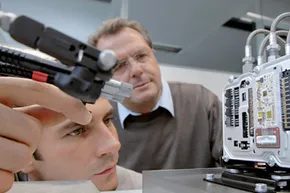
The physical components behind electronic brake force distribution (EBD) are not that different from a standard anti-lock braking system (ABS). The difference is not whether it is metal or plastic. It’s in the code.
There are three main pieces of hardware that enable EBD. You need a sensor to monitor wheel slip. You need a valve that can adjust the hydraulic pressure of each wheel. An electronic control unit (ECU) is needed to do the heavy lifting and calculating exactly how much force is needed where.
The role of the speed sensor in EBD
To determine wheel slip, the system requires two data points. It needs to know how fast a particular wheel is spinning. You also need to know how fast the car is actually going.
If the wheels are spinning slower than the overall speed of the car, it’s losing traction. That’s the start of a skid.
Each wheel has its own speed sensor. None of the sensors measure the car’s forward movement. Instead, the EBD system averages the data from all four wheels. This average becomes the vehicle’s speed baseline.
Modulating Brake Force
The brakes work hydraulically. Fluid gets pumped into lines, pushing the piston towards the rotor. This is where EBD systems come into play.
Electrically actuated valves sit between the master cylinder and the wheel. These valves can be opened and closed quickly. They control the exact amount of fluid that reaches each brake caliper or wheel cylinder. This allows the system to apply more or less pressure to a specific wheel within milliseconds.
The ECU as the Brains
The ECU is basically a small computer built into the ABS module. It takes the raw data from the speed sensors. It calculates the slip ratio of each wheel. Next, commands the modulators to adjust the pressure.
The goal is simple. Keep every wheel’s slip ratio in a safe and efficient range. Not too much slip. Not too little. Sufficient grip to stop without locking.
Yaw Sensors and Stability
Modern EBD installations have a yaw sensor. This device detects how the vehicle rotates around its vertical axis. Think of it as measuring the car’s spin during a turn.
The system compares this rotation data with the input from the steering wheel angle sensor.
This comparison reveals two common problems:
* Oversteer: The rear of the car swings out more than intended.
* Understeer: The front of the car is pushed forward, ignoring the steering input.
EBD can correct these issues by selectively braking certain wheels. When the car understeers, the system applies braking force to the inside rear wheel. This creates a pivot point that helps the nose turn inward. When the car oversteers, the brakes the outer rear wheel. This pulls the back end in line.
This corrective measure typically works in conjunction with the electronic stability control (ESC) to prevent rollover and loss of control.
Is EBD worth it?
The hardware is very advanced. The software is even more so. But will it change the way you drive?
The next page looks at the practical safety benefits of having this system in your car.
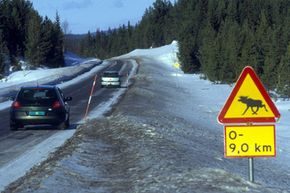
How electronic brake force distribution can save lives in emergency situations
You’re going 50 mph. An obstacle appears. A stopped vehicle. Your instinct is to hit the brakes and swerve. If you use legacy braking setup, you are likely doomed. The weight shift during hard braking causes the front end to rise and the rear end to sink. This change can cause the rear tires to lose traction and lock up. Locked tires do not steer. You are like a projectile sliding straight towards the bumper you are trying to avoid. Even worse, the rear end steps out. It starts to oversteer and spins out. The results are usually bad for everyone on board.
Introducing Electronic Brakeforce Distribution (EBD). This is not a luxury feature. This is the basic safety net. EBD prevents the tires from locking up. Keep contact points fresh. You retain command. This system adjusts brake pressure on the inside and outside wheels during cornering, eliminating oversteer. Avoid obstacles. The car is in perfect condition. The passengers stay uninjured to the passengers. This sounds simple. Because the result is either-or. In other words, live or don’t live.
Driving on roads with low traction
Ice. rain. oil. These conditions cause the asphalt to become a slip-and-slide. Skids happen fast. EBD cannot see the road surface. It has no eyes. It does not know you are on black ice until it’s too late to manual correction. So how does it help? It reads the slip ratio. The wheel speed sensors communicate with the control module in real time. If one wheel is on dry pavement and the other wheel is on ice, the slip ratio between them diverges. The system detects this asymmetry. Adjust the braking force instantly to that specific corner.
There is no magic button. You can’t defy physics. However, EBD makes hard braking as safe as physics allows on slick surfaces. It compensates for different levels of grip that the human foot cannot detect. You can stay in control. You do not enter a uncontrolled drift.
The Trunk Load Factor
Most drivers don’t think about the trunk. They load it with luggage. heavy luggage. This changes the center of gravity. It adds mass to the rear axle. The extra weight increases traction on the rear wheels. A standard mechanical proportioning valve have a fixed curve. It cannot adapt to a loaded car. when the car is light, you may overbrake the rear wheels. If the car is heavy, under-brake them when the car is heavy. EBD solves this problem. It senses the change in slip ratio caused by the added mass. It applies more braking force to the rear tires where the grip is now higher. The stopping distance is shorter. Better stability. You are not just driving a car. You are driving a changing dynamic system that is constantly changing. EBD updates parameters every millisecond.
Why this is important in everyday driving
Safety is not just for race tracks. This is for managing the Groceries. This is for a business trip. EBD works together with ABS (anti-lock brakes). Traction control and electronic stability control are also integrated. These systems form a safety net. They catch mistakes before they lead to accidents. The technology has matured. This is standard. However, understanding how it works will change the way you drive. You trust the system. You can drive with more confidence. When you press the pedal, you know the car is doing heavy lifting.
For more information on security technology, click on the links on the following pages.
Detailed information
Related blog posts
-
car Safety quiz
-
5 crash test videos
-
Top 5 driving and safety videos
-
How the airbag works
-
How traffic tickets work
-
How self-parking cars work
-
How red light cameras work
-
Can cars really survive?
-
Has a crash test ever been performed on a living (or dead) person?
-
How does a laser speed gun measure a car’s speed?
Leave
-
Kari, Larry. “Electronic Brake Distribution: Emerging Technology Offers Service Opportunities.” Imported cars. February 1, 2009. (November 3, 2009) http://www.import-car.com/Article/46362/Electronic.aspx
-
William B. Ribbens, “Understanding Automotive Electronics.” 6th edition. 2003. Elsevier Science. Burlington, Massachusetts


