Engineers are obsessed with the simple paradox of how to make a small engine run like a big one. The answer is usually to force more air into the combustion chamber. This is forced induction. Two major technologies dominate this field. Turbochargers. Supercharger. Both force more oxygen into the cylinder. More oxygen produces more fuel. The more fuel there is, the bigger the explosion. Big bang means more horsepower without increasing the engine’s physical footprint.
But which system is really better? The answer depends on what you value: instant throttle response or peak power. Let’s take a closer look at how these systems work, their advantages, disadvantages and reality.
Зміст
Common goal: Compressed air
Turbochargers and superchargers have the same basic purpose. Compress the intake air. In a naturally aspirated engine, air enters the cylinder through the vacuum created by the downward movement of the piston. Forced induction systems can reverse or enhance this pressure. Pack more air molecules into the same volume.
Air pressure at sea level is about 14.7 psi. A typical boost system adds 6-8 psi. This is a significant increase in density. In theory, this should increase power by 50%. The reality is more messier. 30-40% improvements are typically seen due to reduced thermal efficiency and mechanical losses. Still, that’s a big improvement on an engine of the same displacement.
Power supply: exhaust pipe and belt
The key difference is how each system gets its energy.
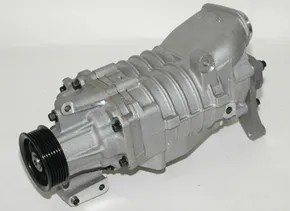
Supercharger is mechanically functional. The belt connects the supercharger directly to the engine’s crankshaft. When the engine rotates, the supercharger also rotates. Think of it like a water pump or an alternator. It gets its power directly from the engine’s output.
Turbocharger works with exhaust gas. Utilizes the residual energy of the waste gas. The hot, fast-moving exhaust moving at high speed rotate the turbine, which is connected via a shaft to the compressor impeller on the intake side. There is no belt. There is no direct mechanical drag in the crankshaft. Energy that otherwise escapes from the exhaust pipe can be recovered.
Turbocharger: the king of efficiency
Turbochargers are the modern choice for efficiency and high-rpm power. By using exhaust gas, it does not burden the mechanical power of the engine, unlike a supercharger.
Advantages
* Fuel Economy: Turbochargers use wasted energy to improve fuel efficiency compared to similarly powered naturally aspirated engines. Same performance, more miles per gallon.
* High rpm power: Turbochargers produce better power at higher engine speeds. Once started, it delivers strong torque and horsepower.
* Downsizing: A small turbo engine equals the power of a larger V6 or V8. This reduces weight and improves vehicle dynamics.
Disadvantages
* Turbo Lag: This is the most commonly reported problem. The exhaust gases must generate enough pressure to spin the turbine. There is a delay between pressing the gas button and acceleration. It feels like the car hesitates before rushing forward.
* Complexity: Turbines operate at very high speeds and high temperatures. It requires a robust lubrication system and precise engineering. Repairs are often expensive and complicated.
Supercharger: Instant throttle response
Superchargers prioritize instant boost. Because it is connected directly to the crankshaft, it provides instant and linear boost.
Advantages
* Instant response: No delays. When you turn the key and press the gas pedal, the power is there. This increases the responsiveness and connectivity of Supercharged cars, especially at low speeds.
* Simplicity: Mechanical structures tend to be simpler. You don’t have to manage exhaust housing or cool hot turbines. Maintenance is usually easy and inexpensive.
* Versatility: Superchargers are suitable for a wide range of applications from small economy vehicles to heavy industrial machinery.
Disadvantages
* Loss of fuel efficiency: Superchargers draw power directly from the engine, creating parasitic drag. This can reduce fuel economy, especially when accelerating quickly.
* Engine load: Direct mechanical connection loads the engine more. Over time, the wear of the internal parts may increase.
Which one should I choose?
The choice between turbocharger and supercharger depends on your driving style.
If fuel efficiency and peak power are a priority, choose a turbocharged engine. Perfect for daily drivers who want big engine performance with small engine’s output. It is also suitable for use in circuits where power transmission at high revolutions is important.
If you value instant throttle response and simplicity, choose a supercharged engine. Ideal for enthusiasts who want a linear, predictable power curve and don’t mind a slight drop in fuel economy. It is also suitable for applications where low torque is important.
Hybrid future
The car industry does not take sides. It’s all about merging them. Manufacturers are developing hybrid forced induction systems.
Some use electrically assisted turbos to eliminate lag. A small electric motor spins the turbine at low rpm and provides instant boost until the exhaust gases take over. Some systems combine the two. The supercharger takes care of the torque at low revs, while the turbocharger takes over the high RPMs. This approach offers the best of both worlds.
The debate is not over yet. It’s really evolving. As electrification changes the landscape, the lines between mechanical and exhaust-driven boost are blurring. The future of performance lies in intelligently combining systems rather than choosing one system.
The choice between turbocharger and supercharger is often a tug of war between technical efficiency and driver preference. It’s not just raw numbers. This is how the numbers feel in the hand. One system offers instant response but may introduce delays, and the other offers linear power transfer but introduces parasitic losses. Objectively, one is not better than the other. These are different tools suitable for different tasks, suitable for different vehicle structures and driving habits.
As manufacturers adjust compressor geometries and improve electronic controls, the traditional differences between the two boosting methods are beginning to disappear. Hybrid systems that combine two technologies are becoming more common and aim to capture the best features of each technology. But the basic goal remains the same. Whether you spinning exhaust gases or use a belt, the goal is the same. It forces more air into the combustion chamber to get more power from the same displacement while maintaining efficiency.
Technical reality
Forced induction systems, such as turbo and supercharger engines, do not produce more power from nothing. It uses the energy already in the exhaust gases and the engine crankshaft to compress atmospheric air. The higher the air density, the more oxygen it contains. The more oxygen there is, the more fuel is burned. As the fuel burns, the force on the piston also increases. More force means more horsepower and torque.
The difference is in the source of the compression energy. Turbochargers utilize the waste energy of the exhaust gases. In theory, this increases efficiency because otherwise lost energy is recovered. However, the exhaust gases are not always abundant and stable. At low rpm, the exhaust gas flow may not be sufficient to spin the turbine, causing “turbo lag” or a delay between pressing the throttle and boosting.
On the other hand, a supercharger mechanically drives the engine’s crankshaft via a belt, chain or gears. It’s always spinning. As soon as the engine starts, the supercharger starts compressing the air. No delays. The power transfer is immediate and linear. trade? Since it takes power directly from the crankshaft, parasitic losses occur. The engine has to work harder to spin the supercharger, which reduces fuel efficiency, especially at low loads.
Which system suits your driving style?
If track performance or peak efficiency is a priority, the turbo setting is generally recommended. Modern turbo technology has eliminated the notorious lag problems of the past. Variable geometry turbos and electrically assisted turbines start almost immediately. They are also standard on most modern consumer vehicles as they help meet strict emission standards without compromising on performance.
If you are building a car with low torque and instant throttle response, a supercharged engine may be a better choice. This is why many muscle cars and high performance SUVs have superchargers. The power turns on when you press the gas pedal. It has the natural feel of a bigger engine, but the benefits of a smaller and lighter block.
The future of Boost
The lines between these two technologies are blurring. More and more we are seeing hybrid setups where the electric motor runs the turbocharger at low rpm to eliminate lag while the exhaust gases take over at high rpm. This combines the