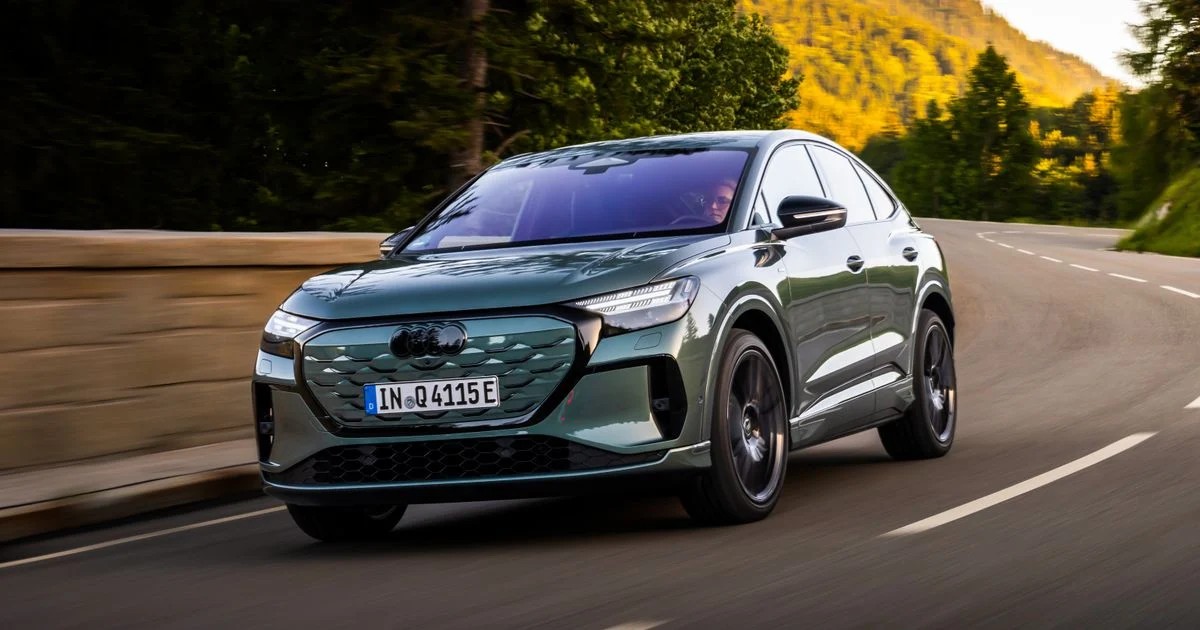
The 2027 Audi e-tron Q4 facelift review results are in. It is quiet. It is plush. It costs a lot.
Audi has tweaked its smallest electric SUV. But “affordable” is a relative term here. This is still the entry point to the Audi brand’s EV lineup. Yet it carries a hefty price tag compared to its siblings in the Volkswagen Group stable. And compared to Chinese rivals like the BYD Atto 3? Even more expensive.
So the real question is simple. Did this light airbrushing actually improve the experience enough to justify the badge tax? We drove it in the German countryside surrounding Munich to find out.
Зміст
What drives up the 2027 e-tron Q4 price compared to VW models?
Let’s talk money.
You are not going to find a bargain here. While exact Australian pricing for the refreshed model is still pending, look at the pre-facelift numbers. The base Q4 45 e-trone kicks off around $84,900. The Sportback sits at $86,50. That is before options.
Competitors are undercutting this aggressively. The VW ID.4 and ID.5? Skoda Enyaq? Cupra Tavascan? All start in the $55,0 You get a very similar MEB-platform vehicle. Even BMW recently slashed thousands off its iX1 and iX entry prices.
Why does the 2027 Audi e-tron Q4 facelight cost more?
The badges. The build quality. And now, slightly more tech. But unless Audi introduces a cheaper, smaller battery variant (a 62kWh unit), expect the entry price to hold firm. You are paying a premium to have those four rings.
The base model price is unlikely to drop unless a smaller battery pack option returns.
Inside the new digital cabin and removed physical controls
Step inside, and the biggest change hits you.
Gone is the old, conventional layout. Audi has swapped it for the “Digital Stage.” Think A5. Think A6. It’s cleaner. Sharper.
The setup involves screens. Lots of them. Standard gets you an 11.9 instrument cluster and a 128-inch infotainment screen in the dash. If you tick enough boxes, you add a 12-inch screen for the front passenger. Plus an AR head-up display.
Here is the controversial bit: the physical climate control knobs are gone. Temperature is now adjusted via the touchscreen.
Does this matter?
In theory, yes. In practice? The system is responsive enough. Even if you hate touchscreens for HVAC, the new layout doesn’t feel frustrating. Audi fixed the user interface issues. The new centre console is lower. Wider. You get under-dash storage. Twin wireless phone pads. Practical.
Another win: the hexagonal steering wheel is largely history. The test car had a rounder design. It feels normal. Less polarizing.
The Sportback variant is what we tested. It sits 18mm lower. Headroom is marginally tighter but still adequate for tall adults. Boot space actually increases to 527 liters compared to the standard SUV’s 515.
How fast does the 2027 audi e-tron Q4 charge?
Powertrains have been simplified. Goodbye, the confusing two-digit codes (Q4 40, 45 etc.).
Hello to a cleaner hierarchy:
- e-tron : Rear-wheel drive. Single motor.
- e-tron performance : Rear-wheel drive. More power. Bigger battery.
- e-tron quattro : All-wheel drive.
- e-tron quattro performance : The quickest. All-wheel drive. High output.
Efficiency improved across the board thanks to updates to the rear-mounted APP350 motor.
The base e-tron uses a smaller 63 kWh pack. Usable capacity is 59 kWh. Range in the Sportback tops 451 km. The bigger 82 kWh pack (77 kWh usable) goes in the performance, quattro, and quattro performance models.
Range figures for the larger pack look like this:
- Performance : 592 km
- Quattro : 573 km
- Quattro Performance : 554 km
Why does the AWD version get less range? Drag. Weight. The front motor adds load.
Fast charging gets a boost. Peak DC charging for the 2027 Audi e-top Q4 quattro performance hits 185 kW. Other variants sit between 160 and 165 kW.
A 10 to 80% top-up takes roughly 27 to 29 minutes across the board. AC charging stays capped at 11 kW.
A new addition is bidirectional charging. Vehicle-to-load (V2L) lets you power devices from a socket in the boot. Vehicle-to-home (V2H) allows the battery to act as backup power for your house in certain conditions. Useful, if rare.
Driving impressions and real world efficiency
The drive is serene. That’s the goal.
We tested the rear-drive, smaller battery version on 20-inch alloys. German roads are excellent. But the Q4 hides imperfections well.
Wind noise is minimal at 120 km/h. The suspension is composed. Not stiff. Just controlled. Steering is light. Precise, but light. Regenerative braking is strong. One-pedal driving feels natural if you tweak the settings via the paddle shifters.
Is it quick?
The base 150 kW motor feels adequate. The lighter 63 kWh battery saves 126 kg over the bigger unit. This keeps the total weight under two tons. It handles two-tonne physics well.
Acceleration builds steadily. Not spine-tingling. But enough for easy highway merging. Overtakes on country roads? Easy. Autobahn speeds? Managed effortlessly.
Efficiency numbers in real-world driving? Solid.
With air conditioning blasting and some higher speeds mixed in, our test car averaged 15.2 kWh/100 km. That translates to about 388 km of real range in warm weather. Close enough to the official claims.
But here is the rub for driving enthusiasts.
The MEB chassis feels inert. Not bad. Just dead. There is no playfulness. No mechanical sympathy. It grips well. It polishes corners. But it does not dance. If you want an EV SUV that drives with a bit of soul, look at the Cupra Tavascan. Or even the BMW iX3.
The Q4 wants to be a sofa. Not a sportscar.
Standard features vs optional extras for 2026-2027
Australian trim grades aren’t finalized, but we can guess.
Entry level brings decent kit:
- 19-inch alloys
- LED headlights with High Beam Assist
- 12.8-inch touch display
- 11.9 digital cockpit
- Heated front sport seats
- Wireless chargers
- Parking sensors front and rear
Move up, and you get 20 or 21-inch wheels. Sports suspension. Matrix LED headlights. Panoramic sunroofs. Sonos audio systems. And that controversial passenger screen.
Safety? It carries over the five-star Euro NCAP rating from 2025. Adult occupant protection scores dropped slightly (-2%), but vulnerable road user scores improved (+13%).
Warranty stays the same. Five years, unlimited km. Roadside assist for five years. Extendable by another two via the Advantage package. Battery warranty covers eight years or 160,0k km.
The verdict on the 2024 audi e-tron q4 review
So.
Do you buy the 202 Audi Q4?
Only if you want an Audi. The updates are subtle. Exterior changes are minor. Paint colors. Lighting signatures.
The interior is much better. The digital suite is intuitive. The loss of climate buttons is the only real complaint.
Charging got faster. Range improved marginally.
But the driving experience? Unchanged. Calm. Quiet. Efficient. Boring? Maybe.
It competes in a crowded market. The price gap between an Audi Q4 and a Volkswagen ID4 or a Skoda Enyaq remains massive.
If you can look past the Audi Q4 facelift cost, it’s a lovely place to be. If you care about dynamic handling? Or value for money? The search continues.
We will see when local specs land.