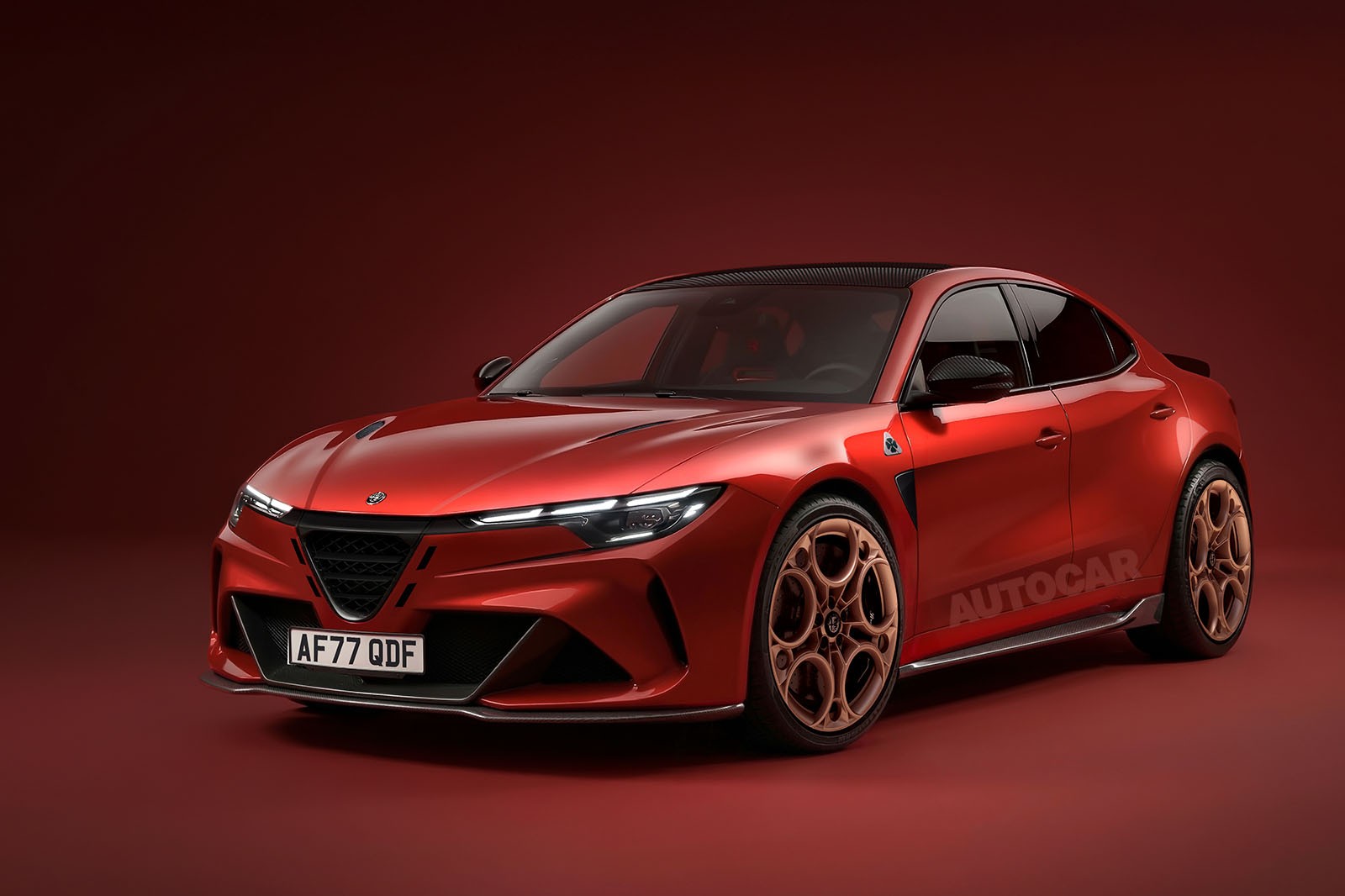
Alfa Romeo is recalibrating its roadmap for its two most iconic models. The next-generation Giulia sedan and Stelvio SUV, originally slated to debut as purely electric vehicles (EVs), will now arrive in 2028 featuring a diverse range of powertrains, including plug-in hybrids (PHEVs) and traditional internal combustion engines (ICE).
This strategic pivot follows a broader trend within its parent company, Stellantis, as the global automotive market faces an uneven transition toward full electrification.
Зміст
A Pragmatic Approach to a Global Market
The decision to delay the launch and include hybrid technology is a response to the reality that EV adoption is not uniform across all regions. Santo Ficili, head of Alfa Romeo, emphasized that the brand must remain globally competitive by catering to varying levels of infrastructure and consumer readiness.
“The world is not ready everywhere for EVs,” Ficili noted, explaining that Alfa Romeo will continue to offer combustion-based engines as long as market demand exists.
By offering a mix of Battery Electric Vehicles (BEVs), PHEVs, and ICE models, Alfa Romeo aims to satisfy a broader spectrum of drivers, from those ready for full electrification to those requiring the flexibility of traditional fuel.
Engineering Challenges and the New STLA Platform
The transition from the aging Giorgio platform —which has underpinned the current models since 2015/2016—to the new STLA Large platform presents significant engineering hurdles. While the STLA platform was designed with an electric-first mindset, it is a multi-powertrain architecture capable of supporting hybrids.
However, integrating combustion engines into an EV-centric design is not a simple task. To make this work, Alfa Romeo must address several technical requirements:
- Thermal Management: Hybrid and petrol engines require significantly more cooling than EVs. This necessitates design changes, such as revised front fascias and larger grilles, to ensure adequate airflow.
- Increased Dimensions: Both the Giulia and Stelvio are expected to grow in size to accommodate the new architecture and improved battery technology.
- Aerodynamics: To maximize the range of the electric variants, the new models will feature more streamlined, aerodynamic bodies.
Design Evolution and Interior Tech
The next generation will adopt the brand’s new design language, recently debuted on the Alfa Romeo Junior. Key visual updates will include:
– Split headlights and distinctive daytime-running lights.
– Arrow-shaped rear lighting and a “ducktail” style rear spoiler.
– A redesigned grille: Due to EU regulations regarding license plate placement, the plates will move from the wings to a position directly beneath the grille.
Inside the cabin, Alfa Romeo intends to balance modern technology with brand heritage. While a large central touchscreen will serve as the primary interface, the brand will retain its signature “cannocchiale” (telescope) instrument cluster, likely transitioned into a fully digital format.
Summary
By pivoting from an all-electric lineup to a multi-energy strategy, Alfa Romeo is hedging its bets against the slow rollout of EV infrastructure. The 2028 Giulia and Stelvio will represent a bridge between the brand’s combustion heritage and its electric future, offering high-performance options like the upcoming Quadrifoglio in both petrol and electric formats.