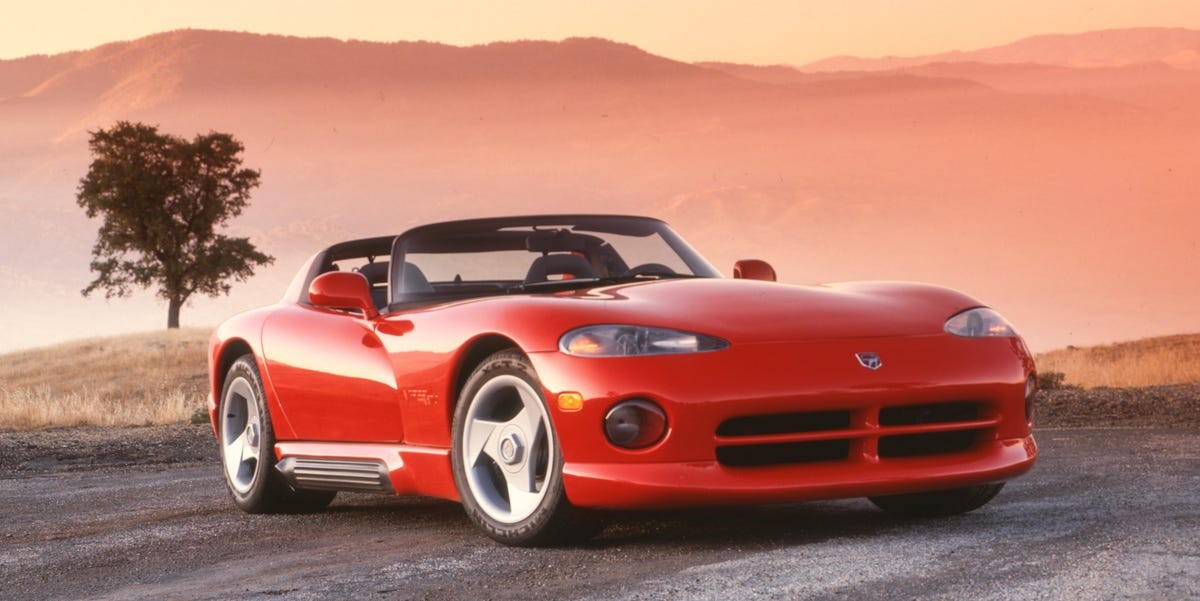
The windows are absent.
Actually, forget “absent.” They don’t exist. There are no side glass panels, no external door handles, and the only shield between your hair and the sky is a canvas flap tied to a metal bar. No hardtop. Just raw exposure.
But here’s the trade. A 10-cylinder heart. 488 cubic inches of displacement. 400 horsepower punching through the atmosphere. This thing hits the quarter-mile in 13.2 seconds, leaving the Chevrolet Corvette ZR-1—a car that takes itself far too seriously—dusting in the rearview.
Wind tears through your face. Your eyebrows lose all structural integrity. The engine screams at a pitch that registers as a physical vibration in your chest.
You forget about the missing hardware. You forget about safety standards. You’re driving the most visceral machine since chariot racing became a spectator sport.
That’s the mission. Speed. Hard stops. Grip. And terror-adjacent joy for everyone within earshot.
Engineering Brutality
Under the arresting plastic skin sits a steel tube frame. Tough. Rigid. The suspension uses unequal-length control arms to keep the giant tires planted, backed by brakes that actually stop the weight. Because this thing tips the scales at 3450 lbs.
It costs about $55,000. You get in by reaching inside like a burglar. The handle is Chrysler-standard. Clunky. Normal. A weird contrast to the wildness outside.
Government regulators forced them to add inside door locks.
Because you can reach in and pull the lock from the outside, you now have a door that can be secured by anyone standing next to you. Irony aside, climbing in is easier than in a Corvette, thanks to lower rockers. Watch out for the heat vents, though. Those side exhaust pipes glow.
Sit down. The bucket seats hold you. The dash looks like it was sprayed with gray sandpaper. White instruments stand out. Controls are simple. Familiar.
Start it.
The Noise Problem
Every press of the starter brings a spike of adrenaline. Ten cylinders, each displacing 799 cc, coming alive. It should sound glorious.
It doesn’t.
The engineers struggled with the exhaust. Separate side pipes. Federal noise limits capped at 80 dB-A. They tried. They failed. Below 3000 rpm it hums like a commercial delivery vehicle. Above that threshold, it roars. Not with melody, but with the aggressive, industrial vacuum of God’s own Dustbuster.
Is that really how they tuned the exhaust note?
Driving it in traffic isn’t scary. The clutch is heavy but linear. Shifting is surprisingly easy. The engine is flexible. It pulls from idle without hesitation or bucking. Steering is light. Brakes are precise, zero free play. Despite looking like it belongs on a wrestling set, the car handles like a house cat in city limits. The six-speaker stereo works, mostly, though the wind swallows the highs at speed.
There is one annoyance. No dead pedal for the left foot. Just… nothing.
The Blind Spot
Visibility is bad. Surprisingly bad for a car with no sides. The windshield frame is thick. Low. Close to your eyes. You spend your early minutes ducking under the frame to find road signs. Eventually you slide down in the seat just to see the horizon.
The roll bar blocks the top half of your inside mirror.
Leave town. This car exists for the open road.
On smooth pavement, the Viper feels right. The Michelin XGT-Z tires are wide, very wide. On uneven surfaces, they jump. They juke. Trying to find traction over ripples, they transmit every texture directly into your spine. Hit a bump at high speed in a corner? The car gets light. It shuffles.
On straight roads, big waves in the asphalt can twist the heading. The suspension pumps. It feels unsettling.
But mostly, it is stable.
Tested on California Route 33, the car held the line. It understeered politely, predictably. The tires gave warning before losing grip. Initial steering response snaps, then smooths out. The ride isn’t harsh. The frame absorbs the shock. It feels solid. Connected.
Don’t let that comfort fool you.
This car generates speed effortlessly. The grip is deceptive. You are faster than you realize. When the limits arrive, they do not offer a second chance. They bring trouble.
Is that the appeal? The danger?
Not exactly. It’s the potential. The seriousness. The fact that a machine from this manufacturer demands respect. The original Cobra had this spirit. The replicas do. Now the Viper does.
And maybe, just maybe, that’s the biggest win.
We’re used to dismissing Chrysler as the boring uncle of auto makers. The Viper changed that word. For one bright, loud moment, it didn’t mean “reliable station wagon.” It meant speed. Passion. Noise.