You probably don’t think about how your engine stays cool. That’s fine. As long as the temperature gauge sits in the green, who cares? But do you actually know what kind of cooling system is under your hood?
If you’re driving anything built in the last forty years, it’s almost certainly water-cooled. A mix of water and antifreeze circulates through the engine, absorbs heat, and dumps it into a radiator. It’s efficient. It’s complex. It’s the standard.
But some engines don’t need that soup. No radiators. No water pumps. No hoses bursting in the dead of winter. It sounds like magic, but it’s just physics. Specifically, it’s a throwback design called an air-cooled engine. You’ve probably seen one. You just didn’t know what to look for.
Зміст
How Air-Cooled Engine Design Actually Works
The concept is brutally simple: blast air over the engine to keep it from melting.
Modern water-cooled setups rely on a closed loop. Coolant picks up heat, moves to the radiator, air cools the coolant, and the cycle repeats. Air-cooled engines want none of that. They rely on direct exposure. To be fair, every engine is technically air-cooled eventually, since even radiators need airflow to shed heat. But we’re not splitting hairs here. We’re talking about engines that skip the liquid middleman entirely.
So how do they manage? Fins. Lots of them.
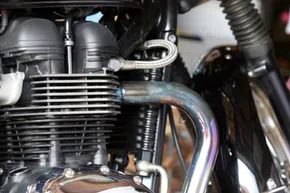
Aluminum fins extend outward from the cylinder walls and heads. These fins dramatically increase the surface area exposed to the air. Heat transfers from the metal to the fins, and then away into the atmosphere. In cars, a fan forces air over these fins. In motorcycles and airplanes, the vehicle’s forward speed pushes enough air through the engine bay to keep temperatures in check.
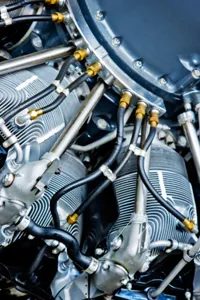
Some setups get more aggressive. Ducts channel air to the hottest spots. Aircraft engines often use baffling systems to trap high-pressure air against the fins, maximizing heat transfer.
There’s another trick up their sleeve: horizontally opposed cylinders. Think boxer engines. The cylinders face away from each other, spread wide apart. This layout lets air flow freely around every cylinder, unlike the tight pack of a traditional inline or V-engine. Some even add oil coolers to manage lubricant temperature, since the oil takes on some of the thermal load.
Does it sound like magic anymore? Probably not. It sounds like engineering that prioritizes simplicity over efficiency.
Where You’ll Still Find Air-Cooled Engines
So if water-cooled is the standard, why do air-cooled engines still exist? They haven’t vanished. They’ve just retreated to specific niches where their quirks are actually advantages.
You won’t find them in your average sedan. But look closely at these sectors:
- Classic and Enthusiast Cars : Volkswagen Beetle, Porsche 911 (pre-1998). These are the poster children for air-cooled tech. The sound, the maintenance, the smell—part of the appeal.
- Motorcycles : Harley-Davidson, Ducati, Honda. Many bikes still use air-cooled or air/oil-cooled engines. Why? Less weight. Fewer failure points. And on a bike, airflow isn’t a problem when you’re moving.
- General Aviation : Most small piston-engine planes use air-cooled engines. Reliability is everything up there. A coolant leak at 10,000 feet is a disaster. A hot engine is just an annoyance you manage with power reduction.
- Small Engines : Lawnmowers, generators, chainsaws. Simplicity wins here. You don’t need a radiator for a mower that runs for an hour on weekends.
Why Did Cars Switch to Water-Cooled?
If air-cooled is simpler, why did Volkswagen and Porsche eventually switch to water-cooled engines?
Efficiency. Noise. Emissions.
Air

Why air-cooled engines still matter in 2024
You won’t see them rolling off a modern car assembly line. Not really. The era of the air-cooled sedan is dead, buried under emissions regulations and the relentless march of thermal efficiency demands. But dead? Hardly.
Hop on a motorcycle. Start a riding mower. Climb into a Cessna 172. You’re looking at the same fundamental tech that powered the original Beetle. The air-cooled engine isn’t gone; it just moved to applications where its specific quirks are actually features, not bugs.
The pros and cons of running without coolant
Let’s strip away the romance for a second. An air-cooled setup has no radiator. No water pump. No coolant hoses. No antifreeze.
That’s it.
If that sounds like a dream for anyone who has ever stared at a wet spot under their car with dread, you’re right. No coolant leaks. Ever. You never have to replace a water pump. The weight savings are real, too. Fewer parts mean less metal. And in the dead of winter? They warm up fast. No waiting for the thermostat to open up. No risk of freezing fluid cracking your block.
But there’s a tax.
Heat management is a nightmare compared to liquid cooling. Air is a terrible heat conductor compared to liquid. To make up for it, you need surface area. Lots of it. Those fins on a VW boxer or a small aircraft piston aren’t decoration. They’re the entire cooling system.
And then there’s the fan. The big, ugly, power-sucking fan. In a car, that fan robs horsepower. It’s a trade-off: you lose efficiency to keep the engine from melting. For a high-performance sports car or a daily commuter, that’s a bad deal. The consensus in the automotive world is clear: the drawbacks outweigh the benefits for passenger cars. They overheat too easily. They’re louder. They’re harder to tune for modern emissions standards.
But put that same engine on a dirt bike? It’s perfect. Put it on a small plane? It’s reliable. The application dictates the engineering.
How air-cooled engines actually work
It’s simpler than you think.
Let air flow over the engine.
That’s the premise. But “flow” is doing a lot of heavy lifting. In a car, that air is forced. A fan pulls it through the engine bay, over the fins, and out. In a motorcycle, the forward motion does the work. In a plane, the propeller slipstream handles it.
The fins? They’re heat sinks. They pull thermal energy away from the cylinder walls and heads. Without them, the engine cooks itself. With them, you have a margin of safety. Until you don’t.
The reality check for enthusiasts
So, are they reliable?
For the machines they were designed for, yes. A small aircraft engine can last thousands of hours with minimal fuss. A trail bike can be abused, dropped, and driven through mud, then air-dried and ready to go. The simplicity is the reliability.
But try to squeeze that simplicity into a 2000-pound sedan that needs to meet EPA standards? It becomes a headache. The air-cooled engine in a car context is often seen as a relic. A charming one, sure. The Porsche 911 (930/964 era) is a legend. The VW Bus is an icon. But from a pure engineering standpoint? It’s a compromise.
You get simplicity. You get weight savings. You get that raw, mechanical sound.
You give up thermal consistency. You give up power density. You accept that your car will behave differently in July than it does in January.
Is that a bad thing?
Depends on what you’re building. If you’re chasing lap times in a climate-controlled garage, maybe. If you’re building a Baja buggy or restoring a classic that’s supposed to feel like 1974? It’s the only way to go.
The technology isn’t dead. It’s just specialized. And for those of us who like to know how things work, that’s a good place to be. Simple. Exposed. Honest.
What’s wrong with that?