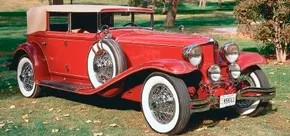
Errett Lobban Cord didn’t just play the game. He broke it. Then he bought it. Then he lost it.
The old adage says you avoid criticism by doing nothing. Cord chose the opposite path. He got criticized constantly. He was a whirlwind. In 1924 he was a car salesman. By 1926 he was president and chief stockholder of Auburn. He was thirty-one. The youngest automaker president in America. By the early 1930s he owned Duesenberg too. Plus aviation. Shipping. Taxicabs. An empire built on a simple, ruthless formula.
Dump common stock until the price crashes. Buy controlling shares for pennies. Repeat.
But empires are hard to run. Especially when the boss is distracted by planes and cabs. The auto division bled. Heavy losses. In 1937 Cord sold everything. The new owners shut down production immediately. Enthusiasts still hold a grudge. They feel he abandoned the dream.
Fair enough. But for ten years Cord built some of the most magnificent cars ever conceived. 1928 brought the Auburn Speedster. 1929 delivered the Duesenberg Model J. And the Cord L-29.
The L-29 is the interesting one. The one that almost worked. The one that changed everything, even if it failed commercially.
Зміст
The Engineering Compromise Behind the Cord L-29 Front-Wheel Drive
Cord saw a gap in the market. His Auburns were eight-cylinder brutes. The Duesenbergs were exotic, untouchable luxury. He wanted something in between. A car that bore his name. And featured a radical new feature: front-wheel drive.
He called it the L-29.
The engineering wasn’t Cord’s. It was Harry Miller’s. Race-car builder. Proponent of “horse-pulls-cart.” Van Ranst helped too. They took the 298.6-cubic-inch Auburn straight-eight engine and twisted it into a knot.
To put the power in the front, the engine had to be mounted backward. The clutch and transmission faced forward. The cylinder head was modified so the water outlet was up front. The crankcase was altered for a rear engine mount.
It was messy. One authority claims the L-29 engine had over 70 unique parts. Advertised power was 125 horsepower. Actual output was 115. It didn’t hit 125 until 1932, when they bored out the cylinders.
The transmission was a three-speed sliding-pinion gearbox. It sat behind the differential. Just like Miller’s 1927 Indianapolis racer. Brakes were inboard. Mounted against the differential, not the wheels. This reduced unsprung weight. Good for ride. Good for handling.
Quarter-elliptic leaf springs in front. Semielliptics in back. Houdaille-Hershey shock absorbers all around. Premium Cardan constant-velocity universal joints in the driveshafts.
Sounds solid. Until you look at the physics.
Why the 1929 Cord L-29 Had Traction and Handling Problems
The layout created a monster. A 137.5-inch wheelbase. Massive. But the weight distribution was wrong. More than half the car’s weight sat on the rear wheels.
The rear wheels did nothing. They didn’t drive. They just dragged.
On hills? No traction. On ice? Useless. On gravel? A liability.
Then there were the U-joints. They couldn’t handle the dual duty. Steering. Driving. Braking. The pounding wore them out mercilessly. They failed with frequency.
These were fixable problems. Engineering can solve almost anything given time. But Cord wasn’t patient. He wanted the car out before 1930. It debuted six months early. He chose speed over perfection.
It was a gamble. A bad one.
Al Leamy’s Styling Saved the Cord L-29’s Image
But oh, the looks.
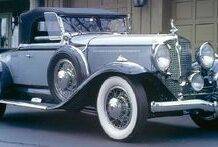
The long hood allowed designer Al Leamy to do something revolutionary. With help from body engineer John Oswald, they crafted a flowing ensemble. Hood and fenders merged into one smooth line. The front-wheel drive kept the car low. Sleek.
The grille was sheetmetal. It completely enclosed the radiator. An industry first. No mesh. No chrome bars. Just smooth, uninterrupted metal.
It looked sensational.
Four factory bodies: sedan, brougham, phaeton, cabriolet. All supplied by Cord subsidiaries. Celebrities bought them. Coachbuilders went wild. Custom bodies appeared everywhere.
The price was right. $3100 to $3300. For a front-wheel drive V8 (well, straight-8) with this styling, it should have sold out.
It didn’t.
Market Reality Killed the Cord L-29 Sales
Front-wheel drive was unproven. The $3000 market was conservative. Buyers wanted Packards. Lincolns. Cadillacs. They knew those cars. They didn’t know the L-29.
And timing? Terrible. Late 1929. The Wall Street crash. People were jumping out of windows. Or just sitting at home, unemployed.
Performance didn’t help. Compared to a Packard or a Lincoln, the L-29 was a slug. Zero to sixty in 25 seconds. Top speed barely 75 mph. One writer called it “pleasant tepidity.”
It was slow. But the styling almost made it excusable.
Almost.
The L-29 couldn’t make money. It limped along until 1932. Virtually no changes. Total production: 5010 units.
By 1935, a used-car guide listed the cash value of an L-29 convertible at $145.
A failure. Commercially.
Today, we look at it differently. The Classic Car Club of America certifies it. We appreciate the audacity. The failure of the L-29 taught Cord what didn’t work. The U-joints. The weight distribution. The market resistance.
He fixed it. He learned. And in 1936, he returned with the Cord 810.
The story continues. The redemption arc is just beginning.
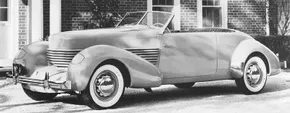

The 810 fixes the L-29’s fatal flaw with a V-8
The Cord nameplate didn’t just come back in 1936. It arrived with a solution. The 810 kept the front-wheel drive that defined the brand but fixed the packaging nightmare of its predecessor. The old L-29 shoved a long straight-eight engine way behind the front axle. It was heavy. It was awkward. The 810 swapped that for a V-8 from Lycoming. Half the length. Half the problem.
This shorter engine sat right behind the front axle. The differential and clutch assembly stretched forward to the transmission, which lived slightly ahead of the axle line. Weight distribution improved. Traction followed. A tighter 125-inch wheelbase helped too. It wasn’t just a tweak. It was a structural rethink.
How the 810’s transmission and suspension changed the drive
The tech inside was ahead of its time. The front suspension used independent trailing arms linked by a single transverse leaf spring. Smooth. Stable. The transmission offered four forward gears instead of the standard three. But the real headline was the Bendix “Electric Hand” preselector.
You didn’t shift like a normal driver. You selected the gear with a switch-like lever on the steering column. Then you stabbed the clutch to engage. It felt futuristic. It worked.
The engine itself was a 288.6 cubic-inch V-8. Standard output hit 125 horsepower. Adequate. But the optional Schwitzer-Cummins centrifugal supercharger changed the math. That blower pushed output to 170 horsepower. Later tuning bumped it to 190. A standard 810 did 0-60 in 20 seconds. Top speed? 90 mph. The supercharged version hit 60 in 11-13 seconds. It topped out at 110 mph. One of the fastest production cars in prewar America.
Why Gordon Buehrig’s styling still dominates the conversation
Performance is impressive. The looks are legendary. Gordon Buehrig designed the 810. He had help from Dale Cosper, Dick Robertson, and Paul Laurenzen. The design originally started as a concept for a “baby Duesenberg” that never happened.
The result was unforgettable. The “coffin-nose” hood sloped smoothly to the ground. No radiator grille. Just horizontal louvers. Minimal trim. Pontoon fenders. Blown models showed off exposed exhaust pipes.
The headlights were concealed. You flipped them up with manual cranks. An industry first. The body was unit construction. The hood opened from the front. There was a separate license plate light. Full wheel covers. A hidden gas cap. Inside, the dash was turned metal, filled with needle gauges. Sedans had a radio speaker mounted in the ceiling. Buehrig scavenged parts to make it work. Even used some Auburn leftovers.
Which body styles were available and what did they cost?
Cord offered four models at launch. The Westchester sedan. The Beverly sedan. The main difference was upholstery. Then there were the convertibles. A two-seat Cabriolet. A four-passenger Phaeton.
Prices started around $2,000. Much cheaper than the L-29. For 1937, the model became the 812. Changes were minor. But two long sedans joined the lineup. The Custom Beverly and Custom Berline sat on a 132-inch wheelbase. Prices ranged from $2,960 to $3,575.
Why the Cord 810 failed despite its brilliance
The 810 and 812 had more problems than the L-29. The Cord Corporation was running out of money. The budget was shoestring. Engineering cut corners. Too much hand labor meant inconsistent build quality. Good intentions didn’t matter. E.L. Cord’s empire collapsed in 1937. The Cord automobile went down with it. Along with Auburn and Duesenberg.
Production numbers were low. 1,629 units of the 810. 1,278 of the 812. Unlike the L-29, which collectors ignored for years, the 810/812 started gaining value almost immediately. The styling was too good to forget. It inspired postwar revival attempts and shoddy replicas. None of them mattered. The original remained the standard.
“Peerless styling would be a motivation for several postwar revival attempts and shoddy replicas, but none would have even the original’s modest success.”
The cars are gone. The design remains.