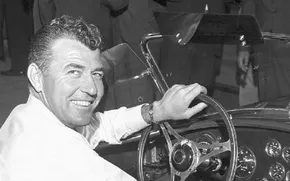
By 1965, when the Ford Mustang rolled out of Dearborn, Carroll Shelby and his Cobras were already etched into the American muscle car pantheon. The high-performance variants he would later extract from that simple pony car were destined to join that same elite lineage.
But the man behind the badge was a study in contradictions. Born in Leesburg, Texas, in 1923, Shelby lived a life that bounced between the cockpit and the ranch. He taught flight instructors for the Army Air Corps during World War II, drove trucks, worked the land, and sold goods. It wasn’t until he got his hands on a humble 1952 MG-TC that chicken ranching took a back seat to racing sports cars.
If you picture Shelby, you probably picture a lanky Texan in a black cowboy hat, flashing a wide, disarming grin. That folksy “aw shucks” persona was partly real, partly calculated. The legend goes that in 1953, Shelby arrived late to a race in his work overalls. He noticed the crowd’s reaction and decided to lean into it. The farmer’s overalls became the “Texas tuxedo.” It was a brand image, but it worked.
Shelby wasn’t just a driver; he was a businessman with an alchemist’s touch. He understood how to combine disparate elements—engineering, marketing, and raw speed—to create something worth more than the sum of its parts.
His racing career in the mid-to-late 1950s spanned the U.S., Europe, and Latin America. He piloted Aston Martins, Maseratis, and Ferraris alongside heavy hitters like Masten Gregory, Dan Gurney, and Phil Hill. He even took a few Formula rides in 1955 and 1958.
He was a fierce competitor who could nap anywhere. “Wake me up when it’s time to grid,” he’d say. His driving peak arrived in 1959. A friendship with John Weyer of Aston Martin paved the way for a pairing with Ray Salvadori. They took the wheel of an Aston DBR for the Le Mans 24 Hours. They didn’t just finish. They won outright.
Зміст
From Driver to Builder
That victory at Le Mans wasn’t just a trophy. It was leverage. Shelby had proven he could win against factory-backed European teams with a mix of talent and grit. This credibility allowed him to transition from just driving cars to modifying them.
The infrastructure for American performance was nascent. While Detroit was focused on volume, Shelby looked at the Ford Mustang’s lightweight frame and saw potential. The engine bay was tight. The suspension was soft. But the potential was undeniable.
Shelby’s approach was brutal in its simplicity. He took the best American V8s available and shoved them into the lightest possible body. The result was a car that handled like a sports car but hit with the force of a heavyweight boxer.
“He had the unique ability to combine elements so that their sum becomes greater than the total of its parts.”
This philosophy defined the early Shelbys. They weren’t just faster Mustangs. They were different animals entirely. The collaboration between Ford and Shelby changed the landscape of American automotive performance, shifting the

The Cobra Takes Shape
Heart failure forced Shelby out of the cockpit, but it didn’t stop him from staying in the game. He moved to Southern California. He started distributing Goodyear tires. He also launched America’s first performance driving school. But his mind never left the garage. He had a vision. He wanted a pure sport car. Light. Trim. Powerful. Fast enough to outrun anything, whether on the street or the tarmac.
The opportunity arrived in September 1961. Ford had just unveiled the high-revving “Fairlane 221” small-block V-8. Around the same time, Shelby heard a rumor. England’s A.C. Cars was looking for a new engine supplier for its sleek, two-seat Ace roadster.
The logic was instant. The engine and the chassis fit together like they were born in the same mold. Shelby didn’t just watch. He acted. He negotiated with A.C. to buy Aces and with Ford to get engines. He skipped the standard 221. Instead, he requested the beefier 260-cubic-inch V-8. This pairing created the Shelby Cobra, debuting in February 1962.
It wasn’t long before he upped the ante. By the end of that same year, Shelby was offering a faster 289-cid version. He built these beasts at his small shop in Venice, California. The legend grew. By 1965, he had unleashed the brutal 427 Cobra. It became a timeless classic. Its status was cemented in early 2007 when Shelby’s own personal Cobra, the 800-horsepower “Super Snake,” sold at auction for a staggering $5.5 million.
Carroll Shelby’s Mustangs
The transition from Cobra to Mustang was inevitable. The Shelby Cobra GT 500 wasn’t just a Mustang. It was a muscle car with a specific pedigree. It changed the landscape of American performance.
Ford muscle cars dominated the era. They were top performers. They set the standard. The story of the Ford Mustang is one of inception to dominance. It started in the early 1960s. It continues today with all-new models. But the roots are in that raw, unfiltered power.
The 1965 and 1966 models captivated the nation. They thundered onto the scene like nothing else. Sales topped a million. The appeal was instant. The look was aggressive. The sound was unmistakable.
This wasn’t just about transportation. It was about emotion. It was about speed. The Cobra GT 500-KR proved that a Mustang could be more than a pony car. It could be a machine. A tool for driving enthusiasts who knew the difference between torque and horsepower.
The legacy remains. The cars are still on the road. The stories are still told. But the original spark? That’s what matters.

From Detroit to Dodge: Shelby’s Post-Ford Evolution
The partnership between Lee Iacocca and Carroll Shelby wasn’t just a marketing stunt. Iacocca, then chief of Ford Division, saw the 1965 Mustang’s potential. He knew the pony car would sell. But he wanted dominance. He wanted an American machine capable of humiliating the Chevrolet Corvette on the track.
That meant going to Shelby.
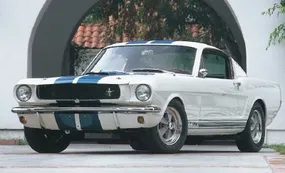
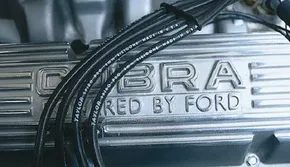
Shelby’s Cobras already carried Powered by Ford badges. The racing pedigree was there. The mechanics were ready. Together, they built the 1965 Shelby GT-350. It wasn’t a luxury cruiser. It was a race car with a license plate.
The R-models did exactly what Iacocca predicted. They swept the Sports Car Club of America’s B-Production class. National titles in 1965, 1966, and 1967 were theirs. The GT-350 was a benchmark. Street-legal versions were still difficult to catch.
But the relationship soured.
Ford changed direction. The stock Mustang grew heavier. It became more commercial. Shelby hated it. The engineering philosophy drifted too far from the track-focused purity he demanded. By 1970, the split was final.
Shelby walked away from Dearborn.
The next decade was a blur of ventures. Shelby’s name alone drove sales. He didn’t just build cars. He built brands.
Consider the chili mix. A spicy Texas blend that capitalized on his rugged image. Then there was the deodorant. Pit Stop. Yes, underarm deodorant. It sounds absurd now. In the 1970s, it worked. The fame was the product.
Legal battles also consumed time.
Imitation Cobras flooded the market. Counterfeits ruined the brand’s integrity. Shelby sued. He dragged companies through courts for years. Some cases dragged on well into the 1980s. He wasn’t just protecting a logo. He was protecting the identity of what made a Shelby special.
The comeback wasn’t long in coming.
By the early 1980s, Lee Iacocca had moved. He became chairman of Chrysler. He called Shelby back.
This time, the focus was different. Turbocharged Dodges. Coarse. Potent. The Chrysler Turbo Eagle and Charger were the result. They weren’t elegant. They were brute force.
Shelby didn’t just engineer them. He shaped their soul.
He served as the spiritual conscience for the next big American project. The Dodge Viper.
The Viper wasn’t a Cobra replica. It was an evolution. It echoed the Cobra’s lineage. It carried the same raw, unfiltered intent. Shelby’s influence was visible in every curve. He ensured it stayed true to the core philosophy.
The cycle continued.
Ford, Chrysler, Shelby. The names change. The goal remains. Build something fast. Make it American. And make it matter.
The GT-350 started a revolution. The Viper finished what the Cobra began.
Shelby didn’t just make cars. He defined what an American performance car could be.
Where does that leave the modern era?
The specs have

The Late-Stage Revival
A heart transplant didn’t slow Carroll Shelby down. If anything, it sharpened the edge. The man behind the legend remained shrewd, colorful, and fiercely competitive until the end. He moved operations to Las Vegas, opening a modern facility to keep the flame alive.
There, he built the Series I “new Cobra” in 1999. It was capable. It was also star-crossed.
The shop churned out continuation Cobras using new-old-stock parts. They even converted 1960s Mustangs into “new” GT-350s. These weren’t replicas. They were reborn machines.
Then came the official return.
In 2003, Shelby signed on as a consultant for Ford. The high-performance division needed his name. His reputation. The partnership was announced with the 2004 Shelby Cobra concept. This car leaned heavily on the midengine Ford GT supercar. It looked exotic. It promised speed.
The momentum hit peak power in 2005.
Shelby helped Ford unveil the 2006 Shelby Cobra GT500. The numbers were staggering. 500 horsepower. That was enough to scare competitors and excite enthusiasts. The Texan had done it again. He bridged the gap between classic muscle and modern supercars.
“The relationship was once again infused with Mustang magic.”
The legacy didn’t end with the engine bay. It extended into every bolt, every curve, every drop of oil. The collaboration between Shelby and Ford became a blueprint. High-performance models were no longer just about displacement. They were about identity.
For those tracing the lineage of these machines, the history is rich.
- The 1965 and 1966 Ford Mustang models captured the nation. They sold over a million units. The thunder was real.
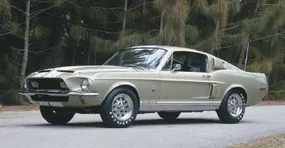
- The 1968 Shelby Cobra GT 500-KR was more than a Mustang. It was a statement. Profiles and specs show a car that demanded respect.
- Ford muscle cars dominated the era. They weren’t just fast. They were tough.
The story continues in the details. The specs. The photos. The history that refuses to fade.