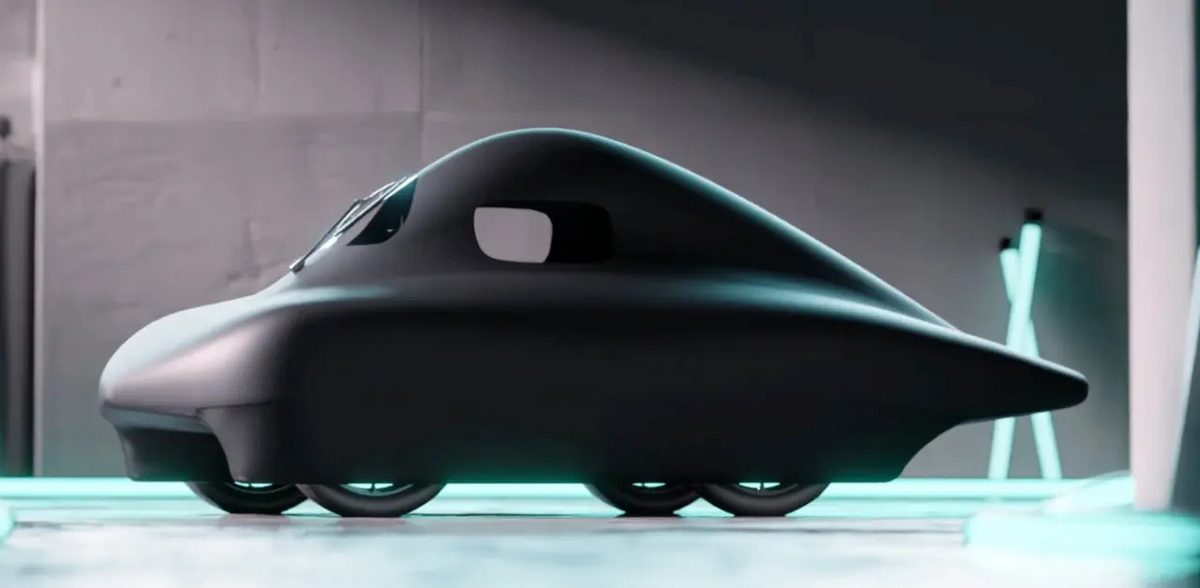
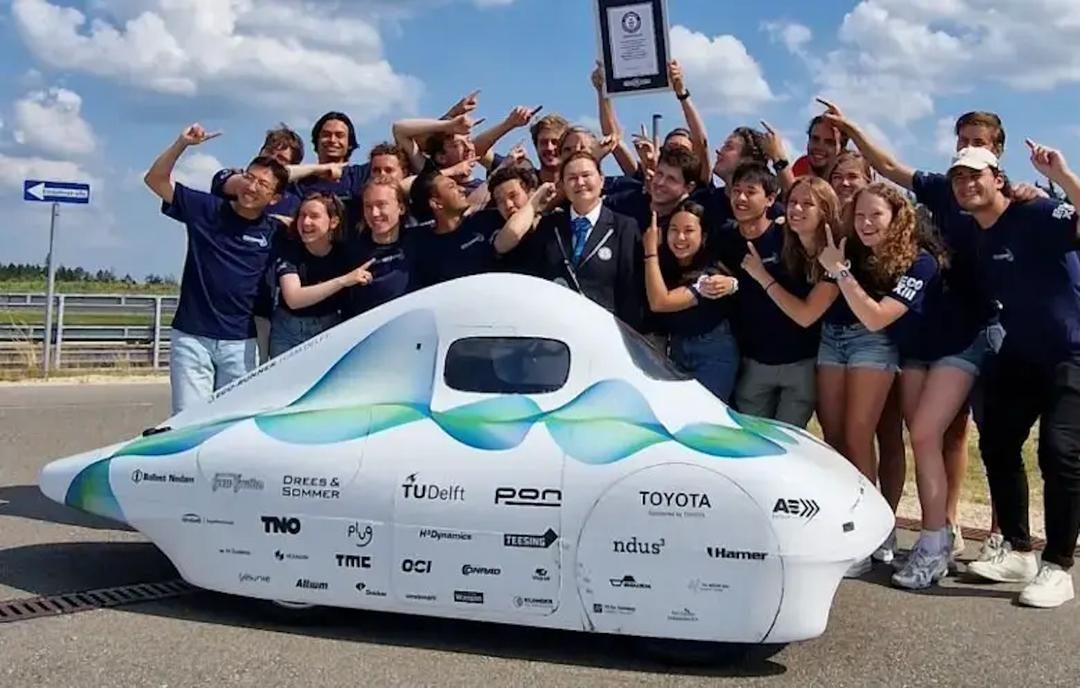
The Eco-Runner is not your average concept car. It is a hydrogen-powered vehicle designed with one singular goal: extreme fuel efficiency. This latest iteration, the Eco-Runner XIII, has just secured a Guinness World Records certification for the longest distance driven on the energy equivalent of one liter of gasoline.
The numbers are staggering. The car covered 2,488.45 kilometers. To put that in perspective, it required more than 100 times less energy than any current internal combustion engine vehicle to achieve the same distance. The total fuel consumption for that entire run? Just 950 grams of hydrogen. That is less than one kilogram.
Зміст
How the hydrogen fuel cell technology works
The mechanics are straightforward if you know the basics. The vehicle is powered by an electric motor driven by a hydrogen fuel cell. Hydrogen is burned in the fuel cell to generate electricity, which then spins the wheels. The only byproduct of this reaction is water. No smoke, no carbon dioxide, just water.
The key to this efficiency lies in the design. The car has a strange, aerodynamic aesthetic that serves a purpose. Combined with its feather-light weight, these features allow the vehicle to squeeze out maximum kilometers from minimal energy expenditure.
The Delft University project timeline
This project is the brainchild of a team of 24 students from the Delft University of Technology in the Netherlands. They assembled the Eco-Runner XIII in February, unveiled it in March, and then prepared it for the record attempt.
The record run took place on the test track in Immendingen, Germany. The car began moving at a steady 45 km/h on June 22 and came to a stop on June 26. Four days of continuous driving. No refueling.
A history of beating its own records
This is not the first time the Delft team has pushed the boundaries. The Eco-Runner is actually the 13th version of the prototype. The project started in 2005 with the Eco I, a three-wheeled vehicle that managed 557 kilometers on just one liter of gasoline.
The team switched to hydrogen in subsequent models, refining performance year after year. A major design shift occurred in 2021 when the prototype gained a fourth wheel, transforming it from a three-wheeler into a true, albeit tiny, car.
Before the recent record, the latest version had already demonstrated endurance, driving for 36 hours without a break to cover 1,195.74 kilometers. The new record more than doubles that previous distance.
The team’s objective remains consistent: beat its own record every year. The Eco-Runner XIII just did exactly that.
The Solar Benchmark: Why Sunswift Still Has the Edge
That record is solid. But it’s not the ceiling.
Look at Sunswift. The Australian solar car set a different kind of standard. It covered 1,000 kilometers in under 12 hours. That works out to a sustained average of 85 km/h.
Compare that to the Eco-Runner’s pace. The gap is significant. Speed and efficiency aren’t just about covering distance; they’re about how fast you can move that distance without burning more energy than you capture. Sunswift proved that solar power can handle high-speed, long-duration runs with real-world performance metrics that most student-built prototypes haven’t touched yet.
What Comes Next: The Iterative Loop
The Eco-Runner team isn’t done. Every year, the next cohort of students takes the previous iteration and pushes it further. The goal is always the same: go farther on the same amount of energy.
It’s a classic engineering feedback loop.
1. Take the current best.
2. Identify the drag, the inefficiencies, the weight.
3. Redesign.
4. Test.
But here’s the thing: beating a 1,000 km / 12-hour solar benchmark isn’t just about better batteries or lighter frames. It’s about aerodynamics, power management, and how the car interacts with the sun itself. Sunswift’s performance suggests that with the right engineering, solar cars can stop being slow, gliding curiosities and start being genuinely fast, high-throughput machines.
For the next Eco-Runner team, that’s the target. Not just “more range,” but speed with range. Can they close that 85 km/h gap? Maybe. But until they do, the Australian benchmark stands as the practical limit of what solar propulsion can actually do at speed.