Building a 1:24 scale ’68 Mustang kit from Tamiya or Aoshima costs you less than $10 and a weekend of glue fumes. You get satisfaction. You get a clean shelf item. But you don’t get the smell of aged vinyl or the weight of a real steel hood.
Restoring a full-size classic is a different beast entirely. It requires hundreds of hours, a budget that bleeds, and a level of frustration that makes “curse word” a polite description of your shop atmosphere. The difference between a finished project car and a rusted pile of scrap usually comes down to one thing: sourcing. You can have the best paint booth in the Midwest, but if you can’t find the correct headlight grommets or a non-cracked firewall, you’re stuck.
Here are ten places to hunt for those missing pieces.
Зміст
Swap Meets: The Word-of-Mouth Network
If you are new to the restoration grind, skip the online forums for a moment and go to a swap meet. Think of them as traveling markets where vendors pay for floor space and you wander through hundreds of tents. It is chaotic. It is loud. It is exactly what you need.
Why go there instead of just ordering from a website? Because classic car restoration is a word-of-mouth game. You can ask a vendor at a stall, “Is this part original or a repro?” and get an answer that includes history, not just a part number. You can talk to other enthusiasts about what to avoid, which suppliers rip people off, and which specific year models have hidden flaws. The information density is unmatched.
“Restoring a classic car is a word-of-mouth game, and specialty swap meets are the A-1 source for this kind of information.”
Check sites like OldRide.com for upcoming events in your state. Go early. Talk to everyone. You might find the rare bracket you’ve been hunting for, or you might just find out that the “original” part you almost bought is a common counterfeit.
Brick and Mortar Specialty Stores
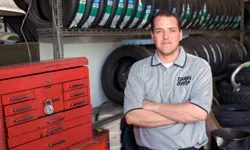
Online auctions are convenient, but they lack tactile verification. You cannot touch a part on eBay. You cannot check the fit of a hinge before you buy it. Local brick-and-mortar stores, particularly those specializing in a specific marque like Ford, Chevrolet, or Porsche, offer a safety net.
Walking into a dedicated shop allows you to handle the item. You can compare it against your existing parts. You can ask staff who often have decades of experience with specific chassis numbers. While the price might be higher than a private seller on Craigslist, you save the cost and headache of shipping a $500 part that turns out to be the wrong year. It is a premium for certainty. If your restoration is a high-value project, that certainty is worth the markup.
- Advantage: Physical inspection before purchase.
- Disadvantage: Higher prices than private sales.
- Best for: Critical safety components, expensive sheet metal, and parts where fitment is tricky.
Do not underestimate the value of a local expert who can tell you that the “original” part is actually a 1967 replacement for a 1965 car. That kind of knowledge saves you from subtle mismatches that show
Online Forums: Where the Knowledge Lives
You are not the first person hunting for classic car parts. You are not the last. That history is preserved in online forums, and it is a massive advantage if you know how to use it. The value here is context. Swap meets offer physical inventory. Clubs offer community. Forums offer the accumulated wisdom of thousands of restorations.
Specificity is key. Do not join a general “vintage auto” board if you are fixing a 1929 Ford Model A. You need the niche. Search for your make, model, and year followed by the word “forum.” If you are restoring a ’68 Mustang, go to the Mustang-specific boards, not the general GM or Ford threads. Within those communities, you can often find threads dedicated to specific restoration projects or, better yet, threads where someone has already tracked down the exact component you are missing.
No one likes a poser. Read first. Be helpful when you can.
When you finally ask for help, be specific. State the part name, the VIN, and what you have already tried. Be direct. Be humble. People on these boards have spent years sourcing rare components. They will share their leads if you show respect for the community.
7: Knock-off Manufacturers
This is the gray area of the parts world. Original Equipment Manufacturer (OEM) parts are gone. Remanufactured parts are expensive. Knock-offs, or aftermarket reproductions, fill the gap. These are companies that reverse-engineer discontinued parts and produce new ones.
The quality varies wildly. Some manufacturers produce components that are indistinguishable from the originals. Others produce parts that fit poorly, wear out quickly, or require significant machining to install. The danger is assuming a knock-off is a direct replacement without verifying compatibility.
Before buying, check the manufacturer’s reputation in the specific forum you joined. Ask who has used these parts on the same model. Ask about longevity. Ask if the part requires modification. A $50 knock-off that saves you $500 is a bargain. A $50 knock-off that warps in a month is a loss.
6: Specialty Resellers and Surplus Stores
These are the hidden gems. Not every shop sells new parts. Some specialize in surplus. These are inventory items from manufacturers that went out of business, or overstock from distributors that never sold.
The advantage here is pricing. Surplus parts are often marked down significantly because the seller needs to clear shelf space. The disadvantage is uncertainty. You do not always know how long the part has been sitting. Rubber components can dry rot. Metal components can develop rust. Electrical components can degrade.
Call ahead. Ask about the condition. Ask if the part is new in the box or used. If it is used, ask for photos. If it is new, ask for the date code. These details matter. A part that has sat in a warehouse for ten years is not the same as a part that shipped last month.
5: Salvage Yards and Pick-and-Pull
This is where you go when the part is rare, discontinued, and not being manufactured. You are not buying a new component. You are buying a used one, pulled from a donor vehicle.
The process is labor-intensive. You go to the yard. You look for a vehicle that matches your
The Vintage vs. Modern Replacement Dilemma
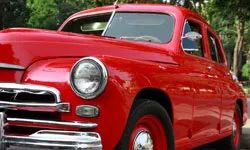
There is a fundamental tension in any restoration project. You can chase an original piece, complete with its era-specific imperfections, or you can grab a modern reproduction that runs right out of the box. It comes down to your tolerance for authenticity versus your desire for friction-free performance.
Ask yourself what the car means to you. If swapping in a knock-off fender cheapens the vehicle in your eyes, keep hunting for the original. If your goal is simply to look the period-correct without sacrificing sleep or budget, a high-quality reproduction is the pragmatic choice. Visual components, like body panels, are often safer to source from salvage. A reclaimed fender won’t cause mechanical failure, and if you match the make, model, and year, it will fit. Functional parts are a different story. When replacing moving or safety-critical components, verify the quality of the new part. Don’t assume “new” means “good.”
Before you buy anything, spend time in the trenches. Visit swap meets, hang out in rebuild shops, and look at friends’ projects. Learn to spot the difference between a solid vintage component and a flimsy modern imitation.
Where to Find Inspiration and Guidance
Classic car magazines remain one of the best sources for both inspiration and technical advice. Publications like Hot Rod are packed with ideas that can make you want to tear down your current build and start over. The more specific the magazine is to your vehicle’s make, model, and year, the more valuable it becomes.
While most major titles now have searchable online databases, there is still value in the physical object. Flipping through pages allows you to see projects in context, something a digital search query often misses. It’s a tactile way to learn how experts solve specific problems. If you are struggling to find niche publications, directory services can help you locate them, but knowing the specific title that covers your car is the fastest route to relevant information.
Sourcing Parts from Wrecking Yards and Body Shops
This is where the physical search begins. Wrecking services and auto body shops are the primary hubs for sourcing original components. They hold the inventory that online listings often miss. When you visit these locations, you are looking for specific attributes: correct year, correct manufacturer, and acceptable structural integrity.
For visual parts, a wrecking yard is often the cheapest and most authentic source. You get the metal, the paint layer, and the original stampings. For functional parts, you need to inspect the wear patterns and corrosion levels. A part that looks fine on the outside might be compromised internally. Always compare the part in hand against your car’s specifications before committing to a purchase. The goal is to find a piece that fits mechanically and aesthetically without compromising the long-term integrity of the restoration.
You’re not buying a part. You’re hunting it.
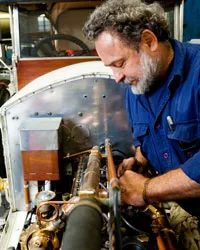
Most vehicles skip the polite stage of the body shop and land straight in the crusher. But a lot of cars die a slower, more interesting death. They sit in a yard for weeks. Months. Sometimes years. This is where the smart money is. The guys running these operations know what holds value. They pull the good stuff off the frame before the torch hits it.
Some of these operations are small. One guy, a pickup truck, a backyard full of running engines and straight fenders. Others are industrial beasts. Fleets of tow trucks. Used car lots that feed the backlot. A hundred acres of rusting shells.
You need to find the right one for your project. And “right” usually means “knows someone who knows someone.”
Call your local towing companies. Hit up the wrecker on your street. Ask who they send their totaled classics to. Word of mouth is the only reliable database here. If you want a specific, hard-to-find component, you’re not just shopping. You’re networking.
How to Source Classic Car Parts from Local Salvage Yards
This is the dirt-cheap route. Also the most labor-intensive.
You’re going to drive out there. You’re going to put on boots. You’re going to carry a pry bar and a flashlight into a maze of rotting metal. You’re looking for the diamond in the rough, which is exactly why you need to know exactly what “rough” looks like.
The cardinal rule: know what you are looking for.
If you’re not sure if a carburetor is a Carter or a Holley, don’t go. If you can’t tell the difference between a stamped steel hood and a genuine factory replacement, don’t go. The salvage yard is not a learning environment. It is a filtering mechanism. It keeps the unprepared out and rewards the prepared.
There is a specific list of places that do this right. OldRide.com maintains a database of 59 salvage yards across the country that specialize exclusively in classic car parts. These are not general auto wreckers. These are curators of dead machines.
The yard is not for the novice. It is for the expert who knows that the $200 frame in the back is worth more than the $500 frame in the front because of a single hidden bracket.
You are not saving money by being lazy. You are saving money by being precise.
Where to Find Niche Classic Car Enthusiast Groups and Clubs
Sometimes the part isn’t in a yard. Sometimes it’s in a garage.
Clubs and organizations are the second tier of the hunt. These are the people who restore, maintain, and sometimes dismantle their own vehicles. They are the ones who have the obscure gasket, the correct gauge cluster, or the specific trim piece that was discontinued in 1964.
Why do clubs matter? Because they hold inventory that never hits the open market.
A member with a project car that didn’t work out might have a perfect transmission. They don’t need to sell it to a scrap dealer. They need to sell it to someone who will actually install it and drive it. The transaction is direct. The price is often better than retail. The part is usually verified by someone who knows the car intimately.
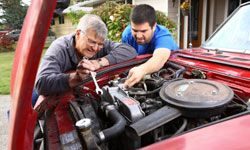
There is a specific loneliness in finishing a restoration. You can wax the hood until it hurts your eyes. You can align the door gaps to a fraction of a millimeter. But standing alone in your garage, the satisfaction is hollow until you hand a wrench to someone else who knows what a torque spec actually feels like. That shared recognition is rare. It only comes from other people who have bled on their own projects.
Clubs are the physical manifestation of that community. They function like a high-stakes forum where the stakes are literal metal and paint. You swap numbers for rare brackets. You debate whether a specific carburetor float is worth the money. It is the on-the-ground version of digital chatter, but the parts are real and the advice is immediate.
Why Online Dealers Are Convenient But Expensive
The digital shelf is deep. Search for “1967 Mustang fuel pump” and you will find hundreds of options. Most dealers have searchable databases that filter by make, model, and year. You type in your specs, click buy, and the part arrives in a few days.
Usually, it looks brand new. It is ready to bolt on. That convenience has a price tag. This is often the most expensive route to sourcing components.
If your budget is flexible and your time is scarce, this is the way to go. You are buying speed. You are buying certainty. If you have been restoring cars for years and your bank account is not exactly bursting, keep looking. There are cheaper ways.
How Online Auctions Change the Search Strategy
Auctions flip the dynamic. You are not buying from a store with inventory. You are buying from another person. This changes the risk profile and the price.
You can find gems. You can find junk. You need to know the difference before you bid. The appeal is simple: you might get a part for half the dealer price. The downside is that “as is” means exactly what it says. There is no return policy. There is no warranty. If the gasket cracks in the mail, that is on you.
This is where the enthusiast knowledge pays off. A novice buys the part because the listing says “good condition.” An experienced restorer looks at the photos, notices the hairline crack near the mounting hole, and walks away. They know that a cracked mounting hole will strip the threads on the engine block.
Auctions are not for everyone. They require patience. They require a sharp eye. They require the confidence to ignore the shiny stuff and grab the ugly, functional piece that will actually fit your car.

The trade-off lands on one word: cheap. You are paying for the convenience of a specialty dealer, or you are paying for your own due diligence. It is your call.
Where can I sell vintage car parts?
You have options. Swap meets are still alive, though the crowd skews older. Online peer-to-peer marketplaces like eBay are the volume engine. Sellers list fenders, trim, and engine components. You are competing with wreckers and individual enthusiasts, not corporate inventory. That dynamic keeps prices below what you see at high-end specialty sites.
The catch is verification. At a salvage yard, you physically inspect. You hit a part with a pipe wrench. Solid metal rings true. Rust crumbles. You know what you have. On an online platform, you trust the listing. You look at seller ratings. You scrutinize photos. You read the description. You cannot scrape corrosion or test structural integrity from a screen.
The trade-off of cheap versus easy is up to you.
Which are the best sources for discontinued auto parts?
It depends on your restoration goal. Are you building a show piece? Or is “looking classic” sufficient?
If you are chasing authenticity, new imitation parts might fail the test. To the untrained eye, a knock-off fender looks identical. But you know it is a reproduction. Does that cheapen the car in your mind? If yes, source NOS (New Old Stock) or used OEM components. If no, modern reproduction parts are the cheapest, easiest route. They arrive new. They fit. They save hours of hunting.
Online valuation tools exist to track classic car values, but they do not price the peace of mind you get from a genuine panel.
You make the call. Cheap is cheap. But the inspection cost is hidden in the risk.