


The 1978 Harley-Davidson FXS Low Rider didn’t just sell well. It dominated. In its first full calendar year of production, this machine became the brand’s best-selling motorcycle. It accounted for nearly one-fifth of all Harley-Davidson sales that year. That is a massive market share for a single model in a crowded lineup.
Зміст
The Factory Custom Origin Story
To understand why the 1978 FXS Low Rider was such a hit, you have to look at where it came from. Harley-Davidson’s first “factory custom” arrived in 1971. They called it the FX Super Glide. It was a hybrid. Engineers mated the frame and engine of the large FL-series touring twins with the front forks and trim of the XL Sportster. The “FX” designation stuck to that formula.
By mid-1977, the company refined that concept. They rolled out the FXS Low Rider. It kept the big FL-series frame and the robust 74-cubic-inch V-twin engine. But it dropped the seat height to a mere 27 inches. This made the bike accessible. Almost any rider could plant their feet flat on the ground.
Design and Aesthetics
The Low Rider looked nothing like Harley’s other 1977 new model, the XLCR. The Sportster-based XLCR was square. It looked sporty. The FXS Low Rider was different. It had a low, muscular flow to its profile. It looked meaner. More substantial.
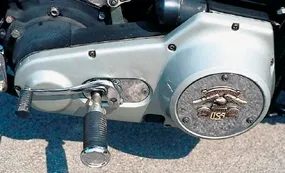
The fuel tank was a split “Fat Bob” design. It gave the bike a heavy, grounded stance. You could see the weight in the metal. The final drive used a multi-row chain. It was a simple, reliable setup that kept the mechanicals clean.
1978 Production Details
For the 1978 model year, Harley stuck with the 74-cubic-inch engine. This would be the last year for that specific displacement. Harley bumped the displacement up to 80 cubic inches for the 1979 models. So if you are looking at a ’78, you are looking at the end of an era for the 74.
The bike came with both kick and electric starters. This was a transitional period. Some riders still wanted the kick. Others wanted the push-button convenience. Harley gave them both.
Color Options and Market Impact
When you bought a 1978 FXS, you had limited choices. Initially, the bike only came in metallic gray with orange script. It was a stark, industrial look. If you wanted black and white, you had to wait until late in the model year.
That limited palette didn’t hurt sales. The 1978 Low Rider outsold every other model in the Harley-Davidson line. It proved that the factory custom market was ready for low-slung, powerful bikes. It wasn’t just for purists who built their own rigs anymore.
Why It Matters Today
The 1978 Harley-Davidson FXS Low Rider represents a turning point. It bridged the gap between traditional touring frames and the emerging cruiser style. The 74-cubic-inch engine was
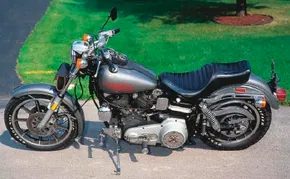

The Low-Slung 1978 Harley-Davidson FXS Legacy
The 1978 Harley-Davidson FXS wasn’t built in a vacuum. It was a calculated remix of the era’s most potent streetfighter DNA, a true “factory custom” that stripped away the touring baggage to focus on raw, low-slung aggression. While the Big Twin department was busy pushing wide-glide aesthetics, the FXS carved out a niche by combining the muscular presence of the Sportster with the practical, approachable ergonomics that defined the model line.
Why the 27-Inch Seat Height Changed the Game
The defining stat of the FXS wasn’t its horsepower. It was the ride height. At just 27 inches from the ground, the seat sat significantly lower than the standard Sportster models of the era. For a lot of riders, especially those under five-foot-nine, standard Harleys were a workout. You had to stand on your tiptoes, balance awkwardly, or slide off one leg to kill the engine.
The FXS solved that.
This lower profile wasn’t just a gimmick. It made the bike accessible to a wider demographic without sacrificing the aggressive stance. You could plant both feet flat. That confidence at a stoplight or in a parking lot changes how you ride. You’re not fighting the bike; you’re in control. It fit almost any rider, effectively democratizing the Sportster experience.
Engine Specs and Power Delivery
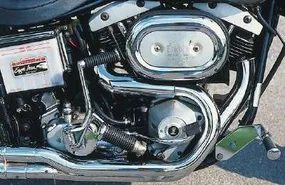
Under the tank lay the 883cc Evolution engine, or “Evo” as the community would later call it. This was the peak of the pre-Evo transition for some, but the FXS typically utilized the high-output Shovelhead or early Evolution depending on the specific month of production in 1978. Let’s be precise: early 1978 models still carried the legendary Shovelhead V-Twin, while later updates began the shift. Regardless of the valve cover shape, the power delivery was linear and torque-heavy.
| Spec | Detail |
|---|---|
| Engine | 883cc Air-Cooled V-Twin |
| Configuration | 45-degree, OHV, Twin-Cam (Shovelhead or early Evo) |
| Transmission | 4-speed manual |
| Seat Height | 27 inches (686 mm) |
| Weight | Approx. 530 lbs (curb weight) |
| Brakes | Drum front, Drum rear (with optional disc upgrades in some markets) |
The 4-speed transmission kept it simple. No overdrive. Just mechanical connection. The FXS didn’t have the top-end speed of a Daytona, but it had enough mid-range punch to pull away from traffic. It was about urban agility.
Styling: The “Low Rider” Aesthetic Before It Was Cool
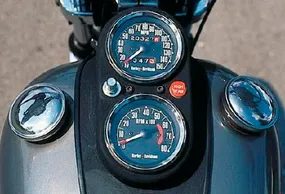
Harley didn’t use the “Low Rider” badge for the FXS in 1978. That nameplate would later be applied to the lower-slung Sportsters in the early 80s. But the FXS was the low rider. It featured minimal chrome, a chopped rear fender, and a solo seat that emphasized the bike’s length. It looked like it



Where to Go Next
If the chrome and horsepower got your heart racing, keep digging.
Classic Motorcycles covers the vintage stuff. The air-cooled singles. The British twins. The pre-war exotics. It is a deep dive into machines that defined generations before EFI and ABS became standard.
How Motorcycles Work strips the metal down to the nuts and bolts. No fluff. Just the engineering reality. You will see how a four-stroke cycle actually moves a piston. How a chain drive transfers torque. It is the mechanics behind the myth.
Harley-Davidson Motorcycles is its own universe. The V-twin rumble. The tax on fun. The cultural weight of a logo that means more than the bike itself. Whether you love them or hate them, you cannot ignore their footprint.
Pick a lane. Or all of them.
🏍️


