


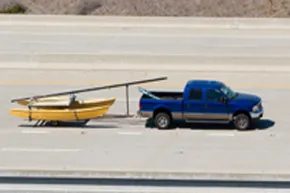
The weekend has arrived. I filled the truck with gas. The towing hitch was tied tightly. The Friday rush hour has finally calmed down. Then your buddy gets into a sedan and tows a 20-foot fishing boat behind him. He hangs it on a hook.
You take a break. You think about telling him that your half-ton pickup truck isn’t designed to tow that much weight on the highway. But then you hesitated. Perhaps the manufacturer is too careful with this specification. I’ve been drawn to it before. It is a short walk to the lake. So you don’t say anything.
This is a bad move.
We often consider towing capacity ratings to be recommendations rather than strict limitations. We saw a lot of numbers in the manual and thought there was a lot of room for error. But in reality, gross vehicle weight rating (GVWR ) is a serious issue. This is not just marketing. This is the maximum gross vehicle weight rating (GVW ) that the chassis, suspension and brakes are designed to handle. This figure includes the weight of the vehicle itself, fuel, passengers, cargo and most importantly, the trailer.
Exceeding this limit will not only void the warranty; It can damage the transmission. The suspension is distorted. Most importantly, you can endanger your life and the lives of others on the street.
Зміст
Failed physics
Knowing the towing capacity of your truck is more than just memorizing numbers. It’s about understanding the mechanical reality of what happens when a hitch is overloaded. When we talk about Gross Trailer Weight (GTWR ) and Gross Trailer Weight (GTW ), we are talking about physics.
Towing is not a passive activity. It takes a beast of a machine. The body needs to be strengthened. You need a sturdy suspension hitch that won’t buckle under pressure. A motor with sufficient torque and cooling power is needed. You need a hitch that won’t snap like a dead branch.
Think of it this way. You wouldn’t drive a 1992 Ford Ranger across a bridge made of Lego and expect it to hold the weight of a grand piano. Also, don’t force the truck to load more than its rated capacity. Suspension compresses. The braking distance increases. The steering wheel becomes vague and dangerous.
“Exceeding the GVWR can not only damage your vehicle, but also endanger your life and that of others.”
Illusion of empty space
Many drivers cling to the idea that “trucks feel strong”. They don’t feel pressure in the transmission. Premature wear of the brake pads is not observed. When I stopped, I didn’t hear the moaning of the leaf springs.
But damage will be done. This is cumulative.
When your car is overloaded, it doesn’t just put a strain on the engine. This puts a strain on the body. Putting pressure on the tires. When a tire is overloaded beyond its rating, it is prone to blowouts when driving on the highway. A flat tire when towing a 20 foot boat can be a disaster.
If you are someone who likes to live on the edge and believes that rules should be broken;


You might think your pickup truck can handle the extra weight for one short trip. It’s like asking your weak engine to carry her heavy backpack across the room. It might be able to do something about it. But are you really asking it to do this? Probably not. I know that pushing it too hard can lead to mechanical failure.
If you do the same to your truck, you will suffer too. Vehicles are designed to withstand certain forces. The design reflects this limitation. This is why commercial trucks carrying large volumes of cargo are equipped with large wheels. They have more powerful engines. They have stronger brakes and suspension systems than passenger cars.
When you exceed your truck’s towing capacity, things start to fall apart. The brakes start to fail. The increased weight can cause the tires to break. The engine runs harder and overheats. Heat can overload the transmission. The service life of the gearbox is reduced. You may not see results right away. Gradual wear and tear will eventually lead to failure. The best case is a frequent visit to the workshop. The worst case scenario is a disaster.
If you insist on pulling too heavy loads, you may not see the effects of wear and tear. The extra weight at the rear of the vehicle affects braking performance. This interferes with steering control. When loading into the back of the truck, the front tires rise up. There is little to no traction on the road. If the front tire is not firmly on the ground, stability and drivability deteriorate. Brakes are designed to stop a limited weight. In an emergency, deceleration of the vehicle takes a long time or does not work at all.
Thanks. I will stop pushing this weekend. Your truck and your health will thank you.
Mount error
Trailer hitches also have a limited towing capacity. You should be aware of this limitation. If your truck claims to carry 5,000 pounds (2,268 kilograms) but only has a towbar weight of 2,500 pounds (1,134 kilograms), you’re out of luck. Bolts may click or snap. This compromises safety for the highway. Always choose the lowest rating shown on your vehicle.
Frequently asked questions about truck towing capacity
How do I find out the towing capacity of my truck?
See owner’s manual. You can also calculate it yourself by subtracting your truck’s curb weight from its gross vehicle weight (GCVWR).
What size truck to tow 20,000 pounds?
There are many options for towing heavy loads. The 2021 Ram 3500 6.7L High Output Cummins Turbo Diesel I6 has a maximum towing capacity of 37,100 lbs.
How much does it cost to tow a small truck?
Light trucks typically have a towing capacity of about 5,000 pounds. This capacity varies depending on the configuration of the truck.
What is the average towing capacity of my truck?
The average truck has a towing capacity of about 4,000 to 7,000 pounds. This mainly depends on the make and model of your truck.
Is GVWR the same as towing capacity?
No. Towing capacity is the vehicle’s maximum towing capacity and GVWR (Gross Vehicle Weight Rating) is the vehicle’s maximum towing capacity without a trailer.


